ARRIVING IN TURKEY
So many people had recommended visiting Turkey on my previous travels that I needed to see it for myself. I was already staying in Heraklion, Crete, and Istanbul was only a relatively short flight away. Logistically, it made sense to add Turkey as another leg of the trip. The airfare was reasonable, so I booked my flight.
The taxi driver who took me to the Heraklion airport squeezed two other women—and a lot of luggage—into the car. My main concern was not missing my flight, so I just went along with the arrangement. The driver admitted that if the airport police spotted us, he was sure to be fined. We kept our heads down as we approached the terminal. He didn't get caught, and we all made our flights!
Turkey is a very large country, and for much of my trip I traveled from place to place on a tour bus. I realize not everyone enjoys spending several hours a day on a bus, but I actually like it. You get to relax and watch the countryside go by.
I had never done back-to-back trips like this before and wondered how I would handle a busy three-week itinerary. After some initial doubt, I quickly fell into the tourist routine and was very happy with my decision. Those three weeks were packed with history and culture, which kept me completely engaged.
MY FIRST DAYS IN ISTANBUL
Arriving at Istanbul Airport was easy. The airport is enormous, modern and impressive, although it is quite a distance from central Istanbul.
Outside the terminal, I searched for the rideshare meeting area but found the scene chaotic, so I decided to take a taxi instead. I negotiated a flat rate before leaving.
I think the driver was unaccustomed to dealing with a solo woman traveler. He asked if it was okay for him to smoke—at least he asked. I said no. He then offered some kind of potion to cover up the smell. He eventually gave up and was not pleased.
I had two days on my own before joining my tour group. I stayed at the Millennium Istanbul Golden Horn, a boutique-style hotel with a definite chill Istanbul vibe. It was conveniently located near a tram stop, making it relatively easy to reach the major sights. Once I figured out how to buy and use the Istanbulkart, I was on my way.
BASILICA CISTERN IN ISTANBUL
Early the next morning, I headed to the Basilica Cistern , which turned out to be a good decision because a long line formed later.
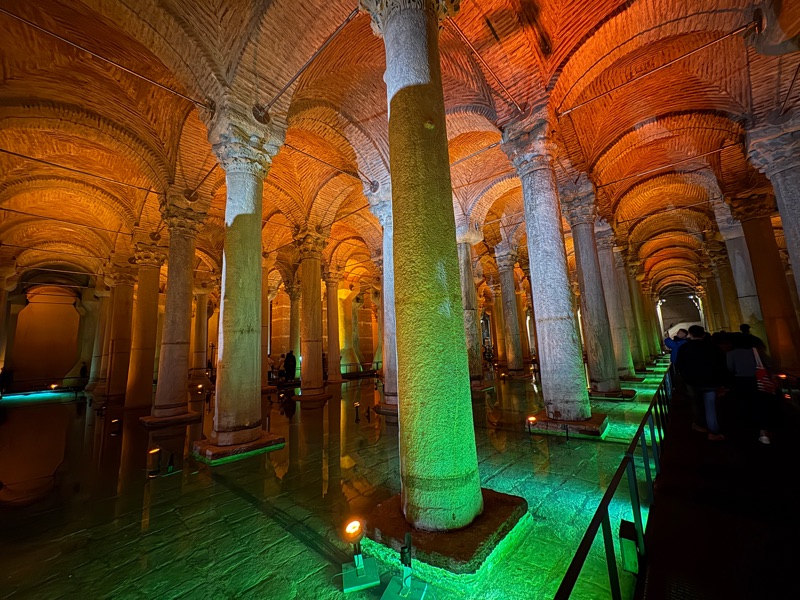
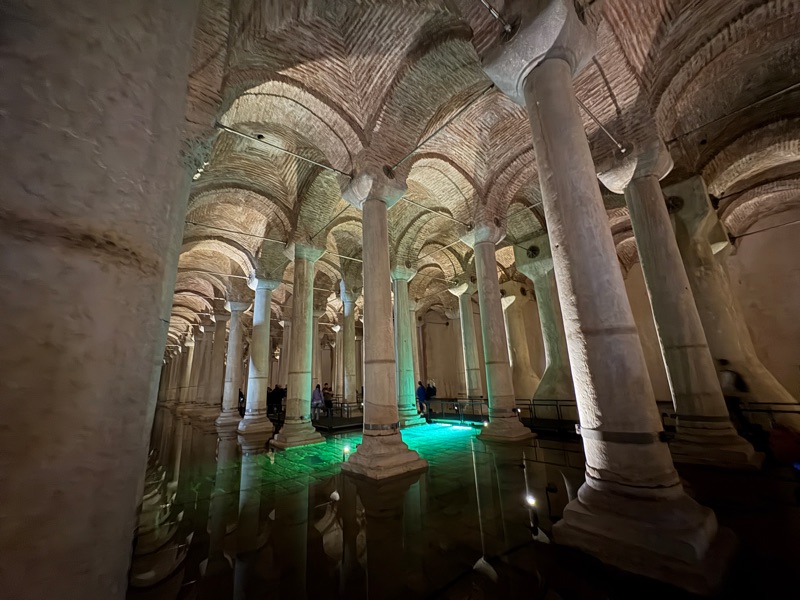
Built during the Byzantine era in the 6th century, this enormous underground cistern was constructed to store and supply water to parts of Constantinople.
Getting there by tram was a little tricky for me. I had to make a connection and then walk to another stop, and I didn't find the directions particularly obvious. I eventually asked someone to point me in the right direction. Part of the adventure of traveling solo is figuring these things out as you go!
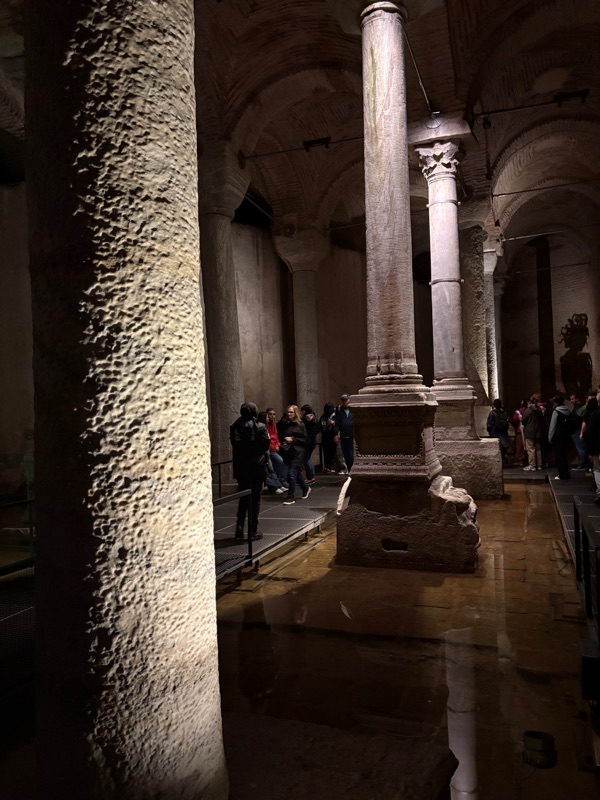
Inside, hundreds of columns rise from the water beneath vaulted ceilings, illuminated by dramatic lighting. Elevated walkways make it easy to explore the enormous underground space.
Personally, about 30 minutes was enough time for me. I thought the admission price was rather high, but the Basilica Cistern is one of Istanbul's major attractions, so I sucked it up as a vulnerable tourist.
Halloween came early this year.
 .
. 
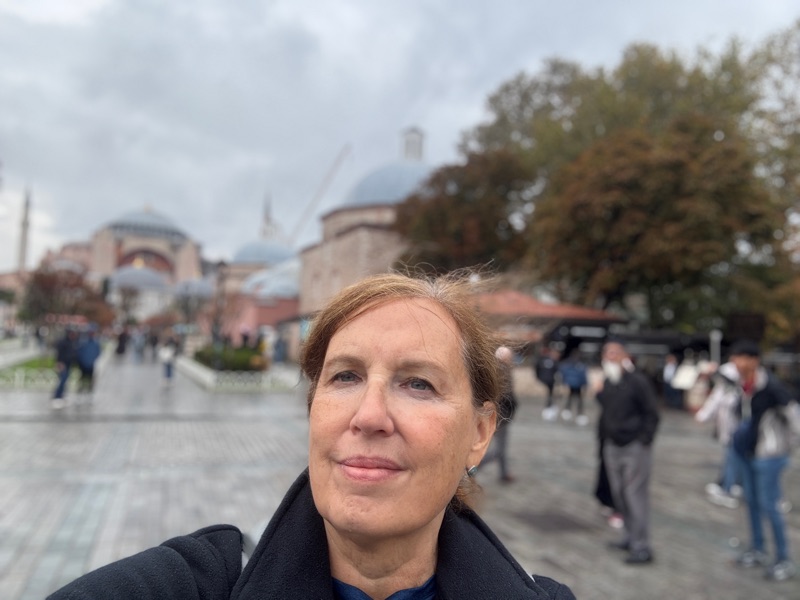
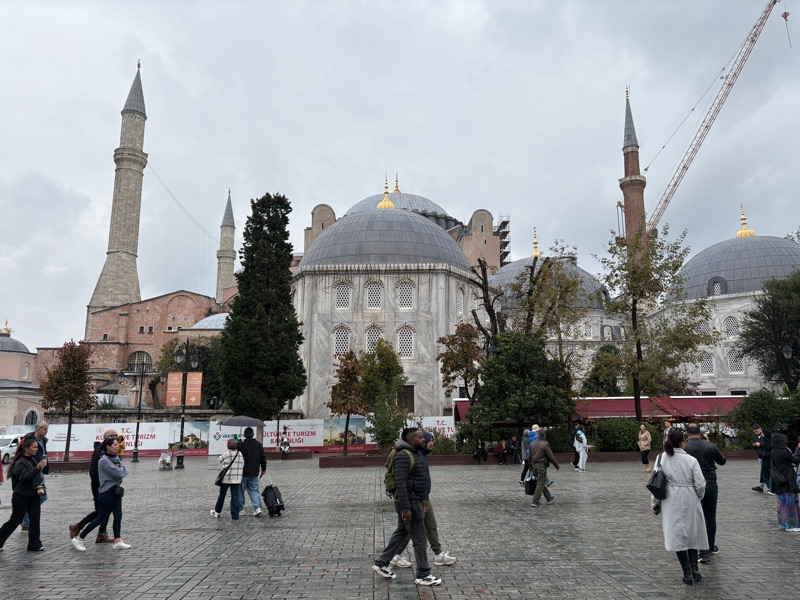
Then, I took a quick walk to the main square for a peek at Hagia Sophia and the Blue Mosque. These sites are on the group itinerary so there was no need to jump on line.
Turkey is a secular republic with a predominantly Muslim population. The modern Republic of Turkey was founded in 1923 following the collapse of the Ottoman Empire, which had ruled for centuries.
Under Mustafa Kemal Atatürk, the new republic introduced sweeping political and social reforms aimed at creating a modern, secular state. Turkey remains constitutionally secular, although the role of religion in public and political life continues to be an important part of the country's ongoing debate.
Economically, Turkey has faced significant challenges in recent years, particularly high inflation. As a visitor, I sensed some of those economic pressures during my trip.
Istanbul's Egyptian Spice Bazaar
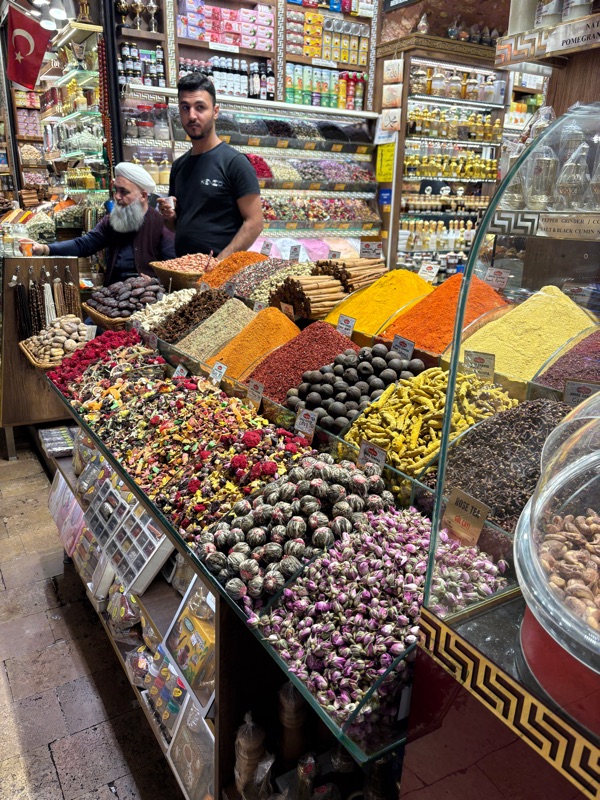
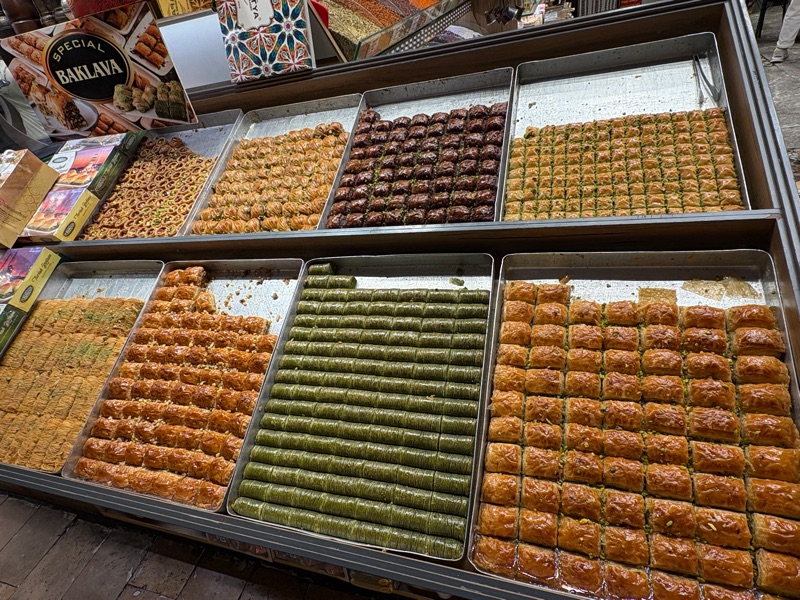
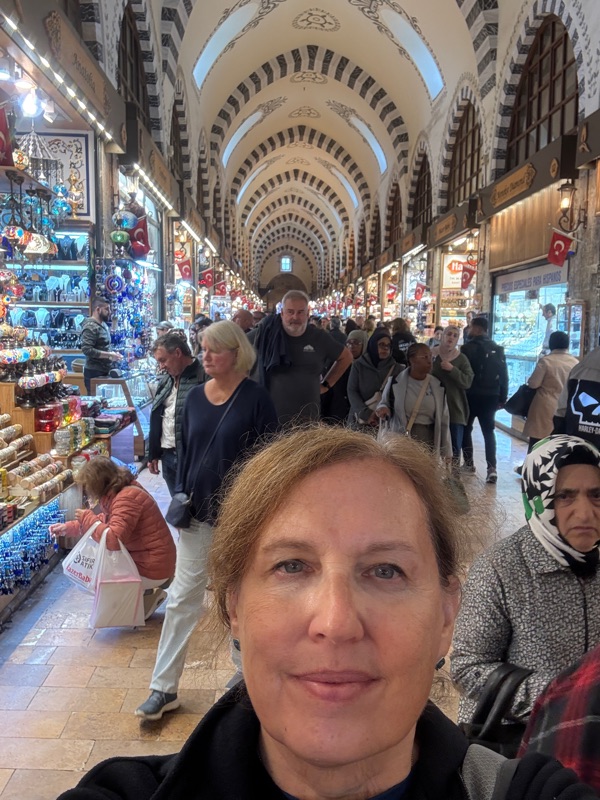
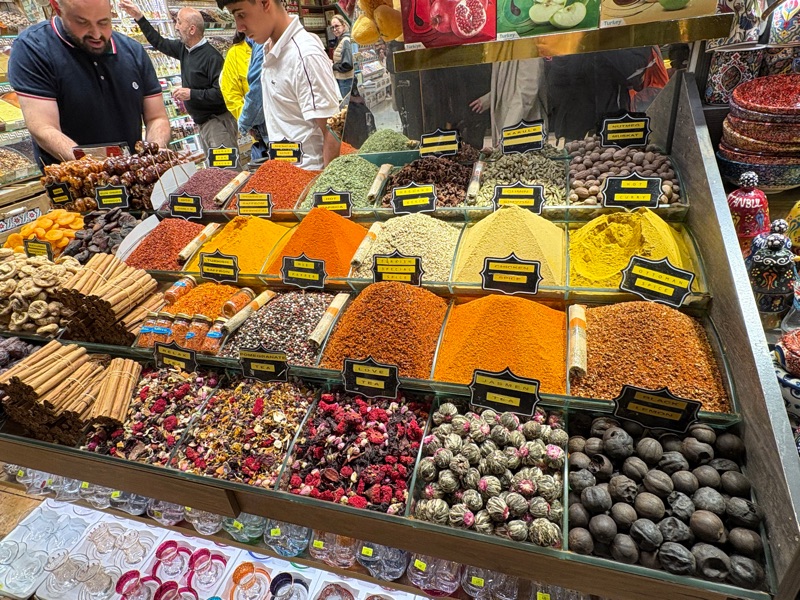
Then it was off to Istanbul's Egyptian Spice Bazaar, a feast for the senses with its colorful displays and wonderful aromas.
The market was packed with tourists when I visited. For me, about an hour was enough time unless you have a serious shopping spree in mind. I went mainly for the experience, and it was definitely worth seeing.
 .
.  .
. 
Galata Tower and the Galata Neighborhood
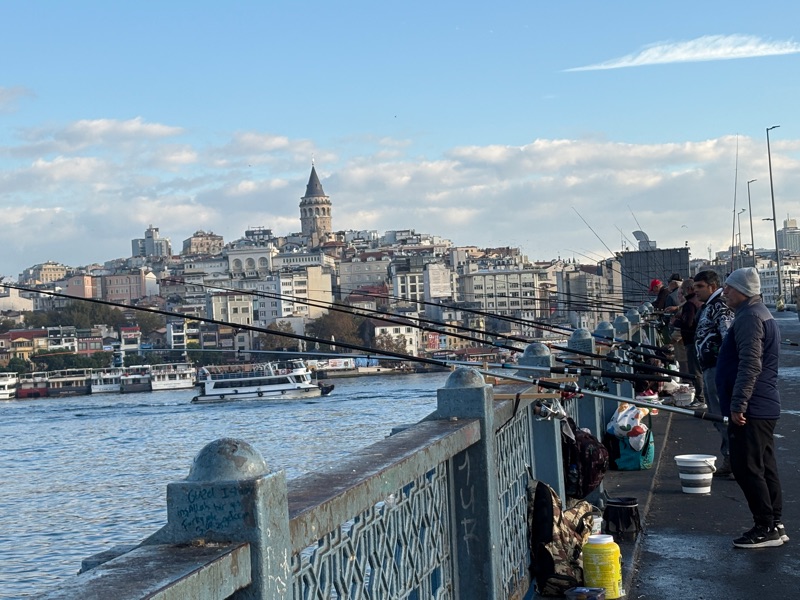
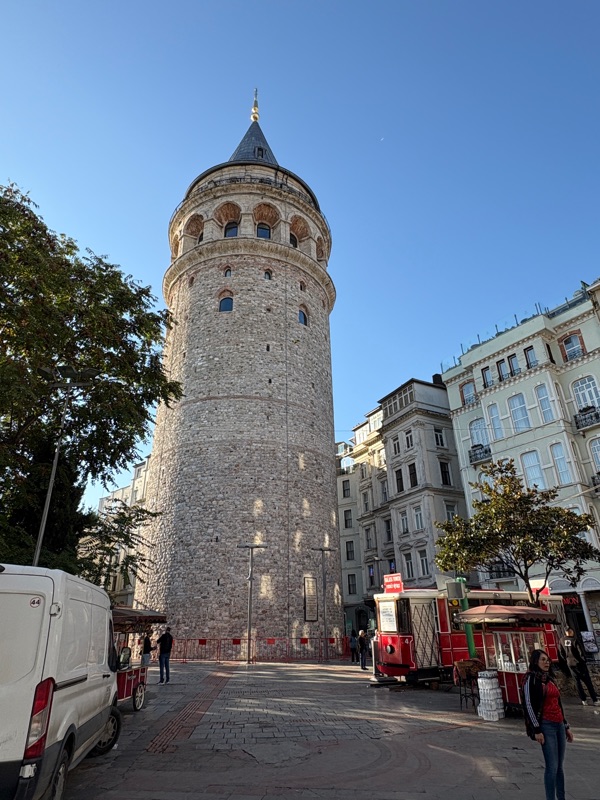
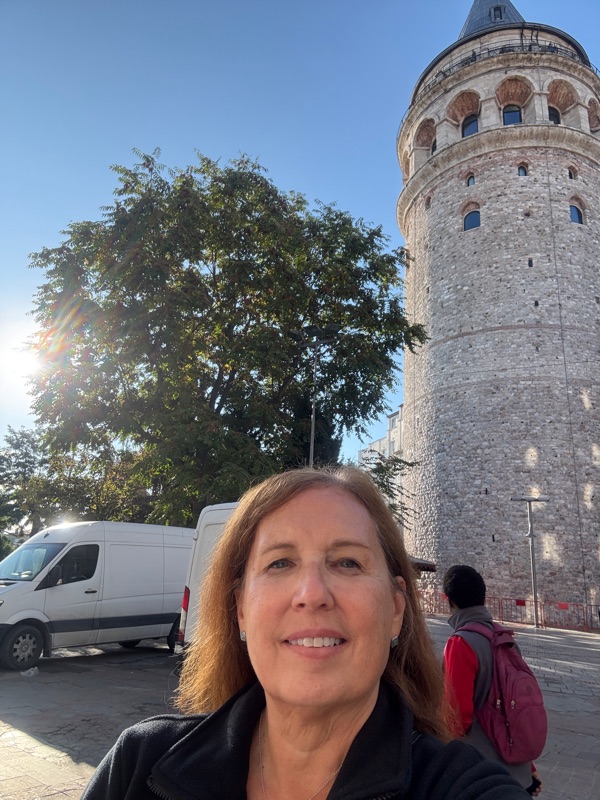
The next day, I decided to visit Galata Tower , which wasn't included on my tour itinerary. The Galata neighborhood is known for its historic streets, shops, cafés and restaurants, so I figured I might as well explore it on my own.
There is even a romantic legend that a couple who climbs Galata Tower together for the first time will eventually marry. I wasn't going to be testing that theory on this solo trip!
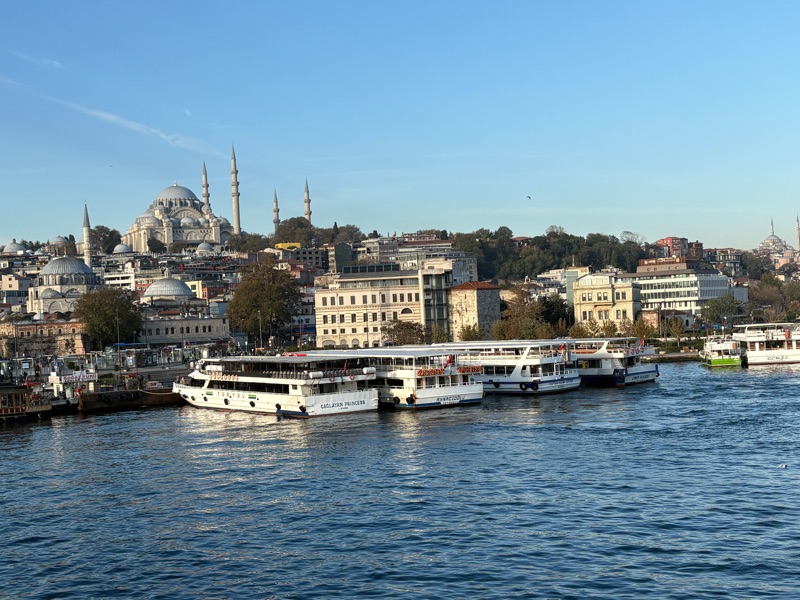
I got an early start and jumped on the tram during rush hour, then crossed the Galata Bridge over the Golden Horn on foot. The fishermen were already lining the bridge, although I didn't see any catches yet.
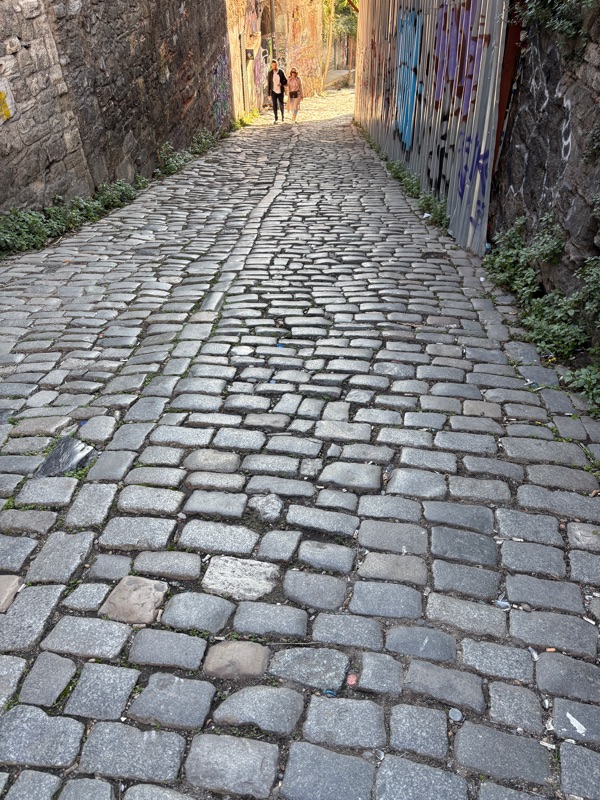
Getting to the tower was easy enough, except that my GPS guided me up a steep cobblestone hill. Good thing it wasn't raining.
The tower itself was about what I expected. I decided the admission price to go to the top was more than I wanted to spend, so I declined. I wandered around for a while and then made my way back down the hill, retracing my steps.
Galataport
Nearby Galataport stretches along the Bosphorus waterfront and includes Istanbul's cruise terminal along with numerous restaurants, cafés and shops. It's worth checking out if you're already exploring the Galata area.
TIP: Smoking is very common in Istanbul, and I frequently encountered cigarette smoke, particularly around outdoor cafés and restaurants. If you're sensitive to smoke or have respiratory issues, this is something to be aware of when planning your visit.
MY FIRST TURKISH HAMAM EXPERIENCE
If you visit Turkey, you may want to experience a traditional Turkish hamam, or Turkish bath. I wasn't completely convinced that I wanted to do it, but I'm glad I gave it a try.
If you're very modest, a traditional hamam may take you a little outside your comfort zone. Depending on the hamam and the type of service you choose, there may be varying levels of privacy, so it's worth knowing what to expect beforehand.
My experience began with a vigorous full-body scrub that exfoliated the skin and left it incredibly soft. This was followed by a wonderful foam wash and massage. The whole experience was relaxing and refreshing.
I went to a local spa just a few minutes from my hotel where nobody spoke English, and I wasn't always quite sure what the hand gestures meant! I seemed to be something of a curiosity, but everyone was very nice.
I'm glad I tried a hamam while I was in Turkey. It was one of those experiences that took me a little outside my comfort zone—which is part of the fun of traveling somewhere new.

HAGIA SOPHIA
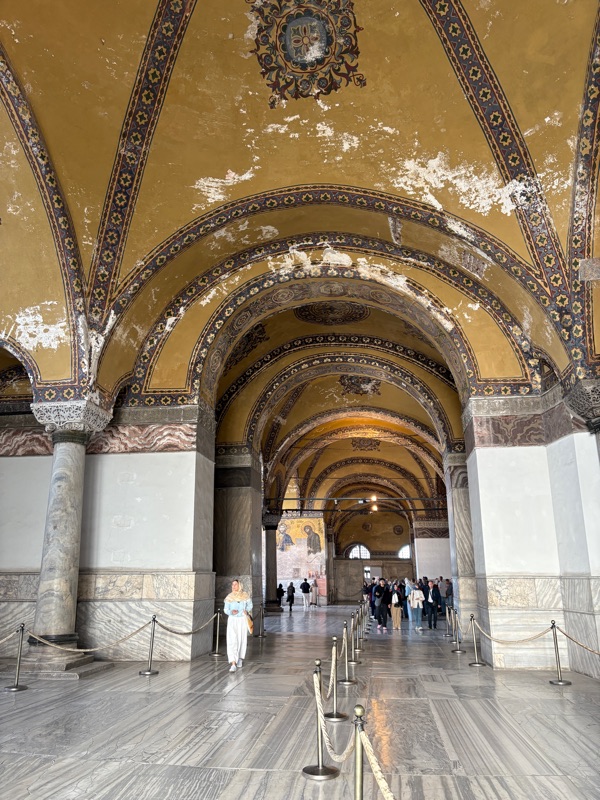
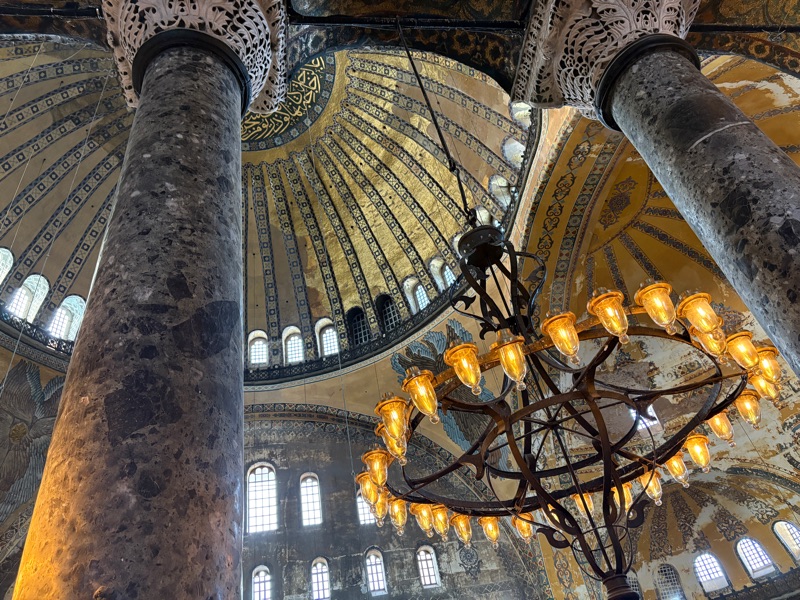
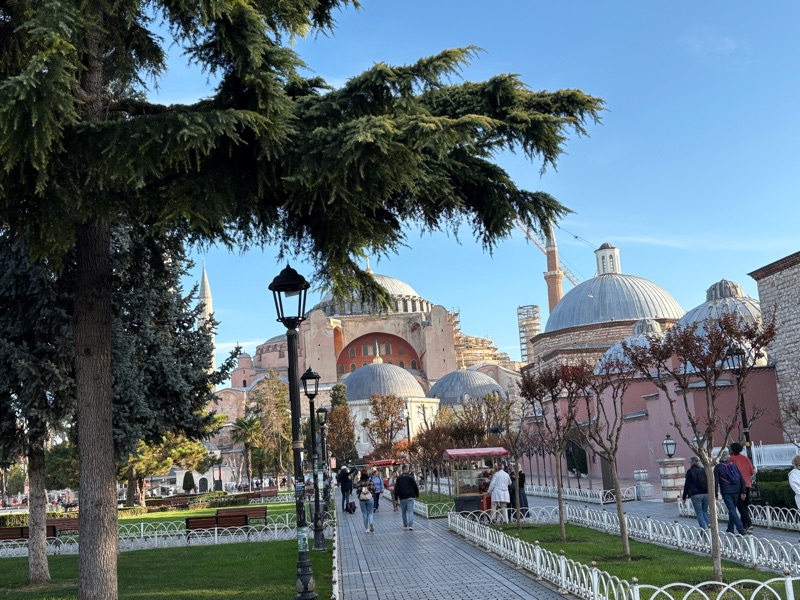
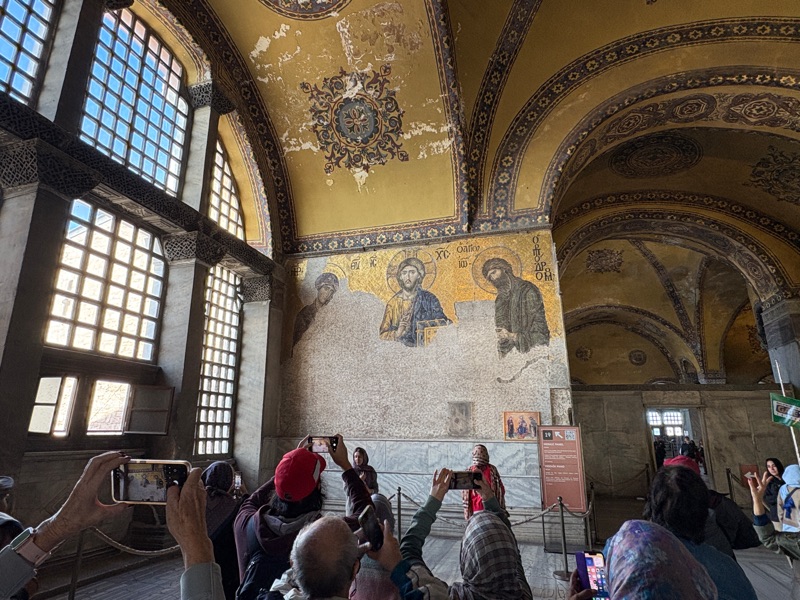
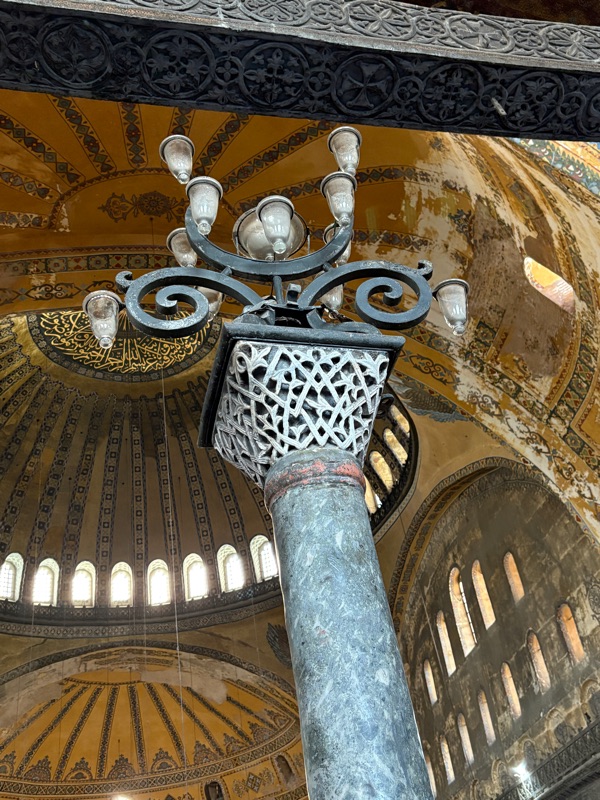
The following morning, I visited one of Istanbul's most famous and impressive landmarks, the magnificent Hagia Sophia. Its enormous scale and extraordinary history make it one of the city's must-see sights.
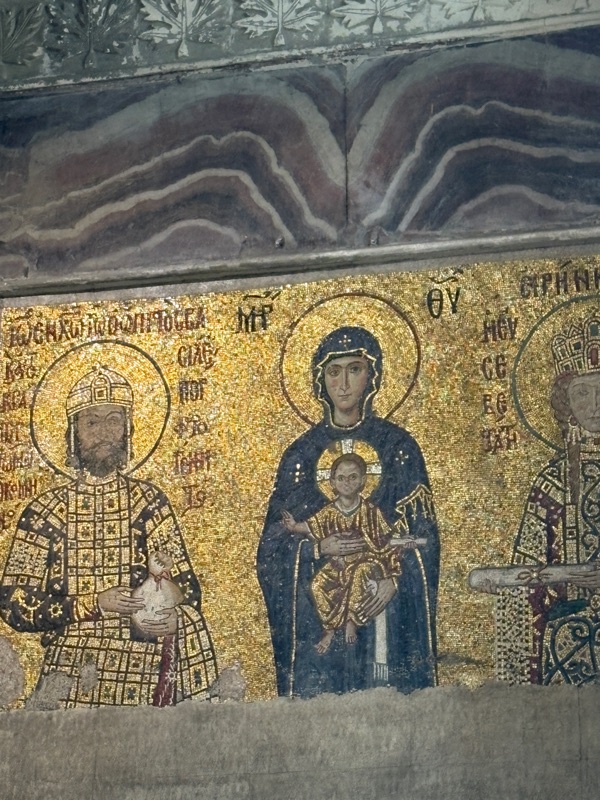
The present Hagia Sophia was completed in 537 during the Byzantine era and originally served as a Christian cathedral. Following the Ottoman conquest of Constantinople in 1453, it was converted into a mosque. It became a museum in 1935 and was reconverted into a mosque in 2020.
What amazed me most was seeing the surviving Byzantine mosaics after so many centuries. Standing inside a building that has witnessed nearly 1,500 years of history really does feel like stepping back in time.
THE BLUE MOSQUE
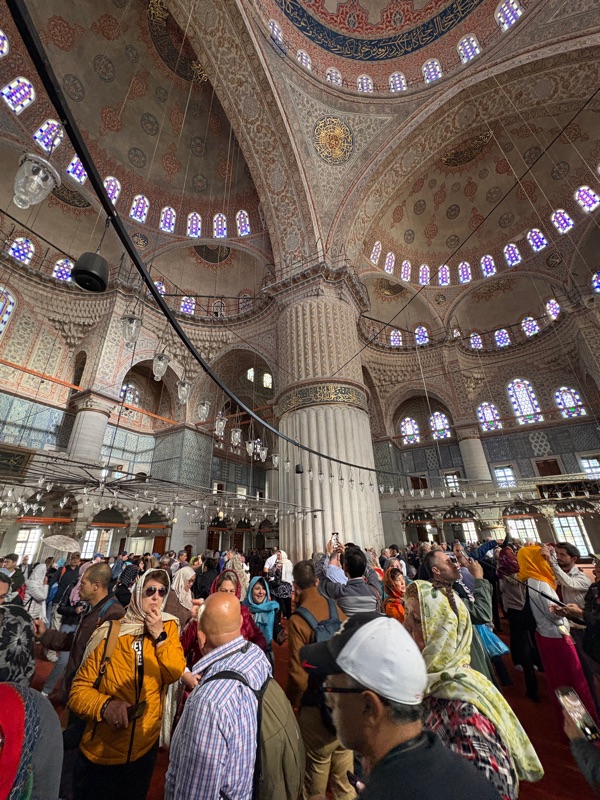
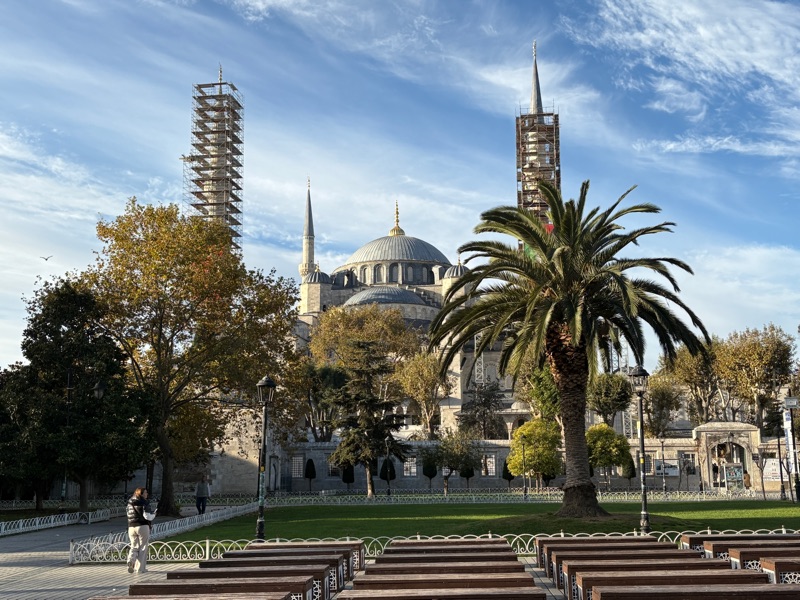
Directly across from Hagia Sophia is another of Istanbul's great landmarks, the Blue Mosque, officially known as the Sultan Ahmed Mosque.
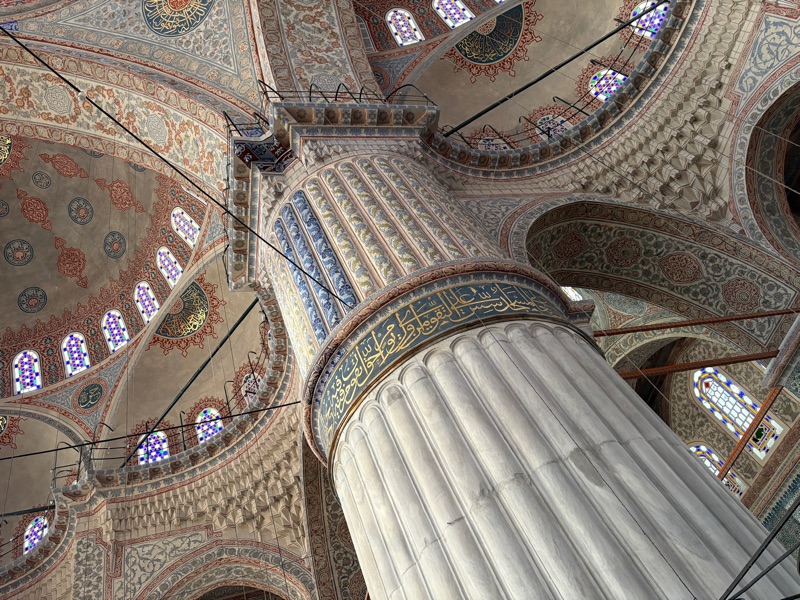
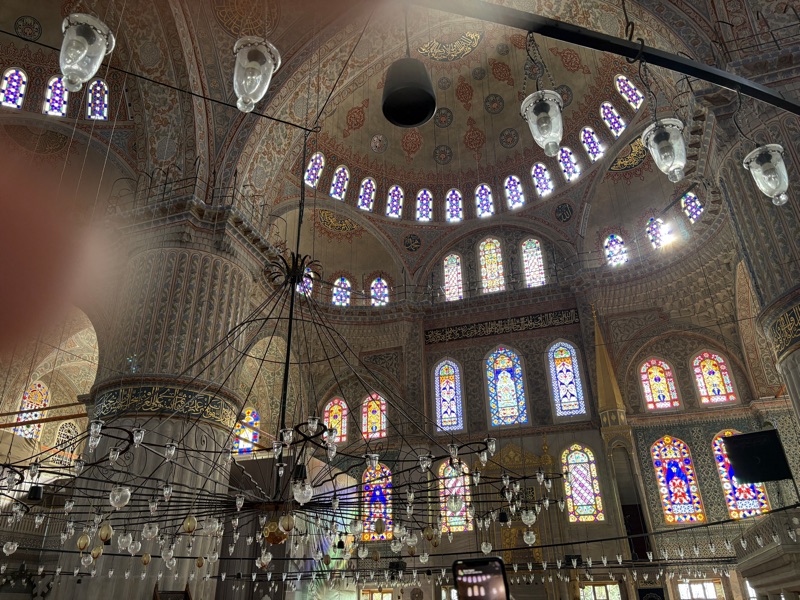
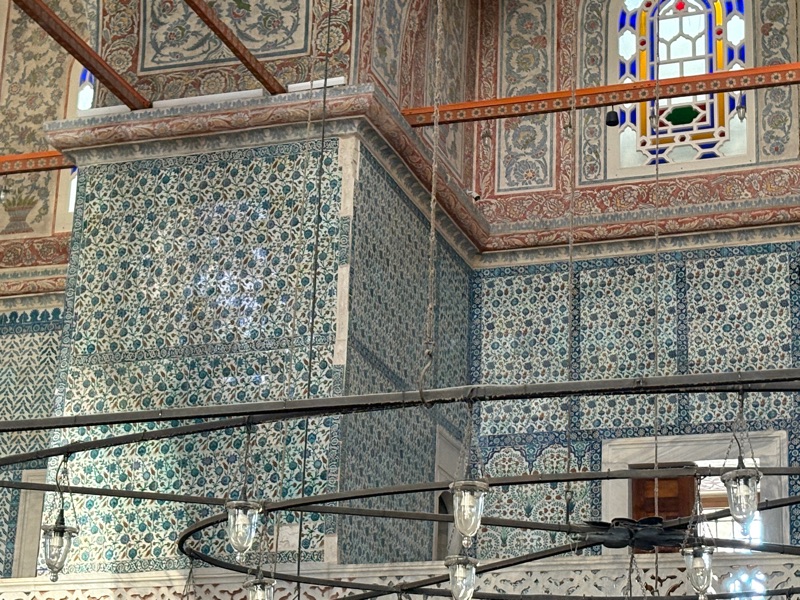
Built in the early 17th century during the reign of Sultan Ahmed I, the mosque is famous for its cascading domes, six minarets and beautiful interior decorated with thousands of İznik tiles, many in shades of blue.
The Blue Mosque remains an active place of worship, so visitors should be respectful of prayer times and dress requirements. Shoes must be removed before entering, and women are generally required to cover their hair. Appropriate coverings may be available for visitors who need them.
Seeing Hagia Sophia and the Blue Mosque facing one another is one of the most memorable sights in Istanbul.
THE GRAND BAZAAR
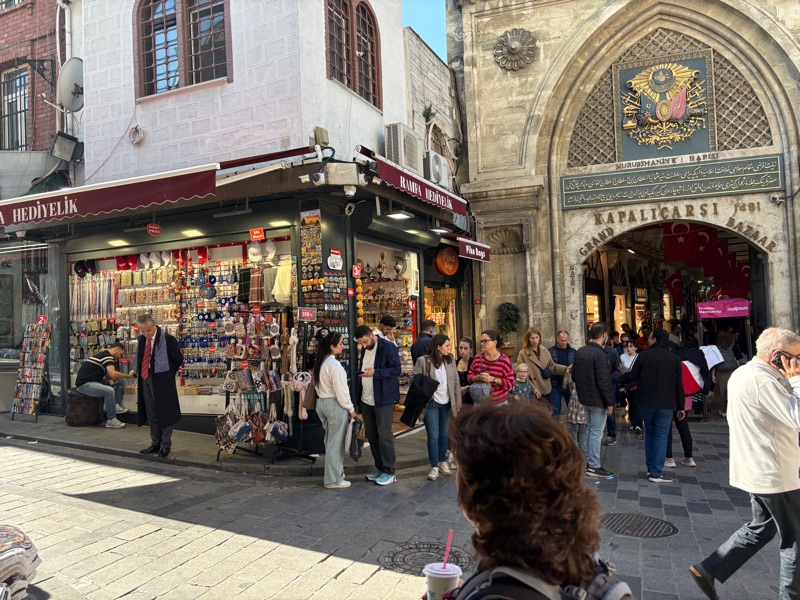
The Grand Bazaar is a shopper's paradise and can be completely overwhelming to navigate. With seemingly endless lanes of shops, it's easy to lose track of both time and direction.
Bargaining is part of the shopping experience, although I found there seemed to be less flexibility when it came to jewelry. You could spend hours wandering through the bazaar and still see only a fraction of it. Every so often, you need to come up for air so you don't get dizzy from all the choices!
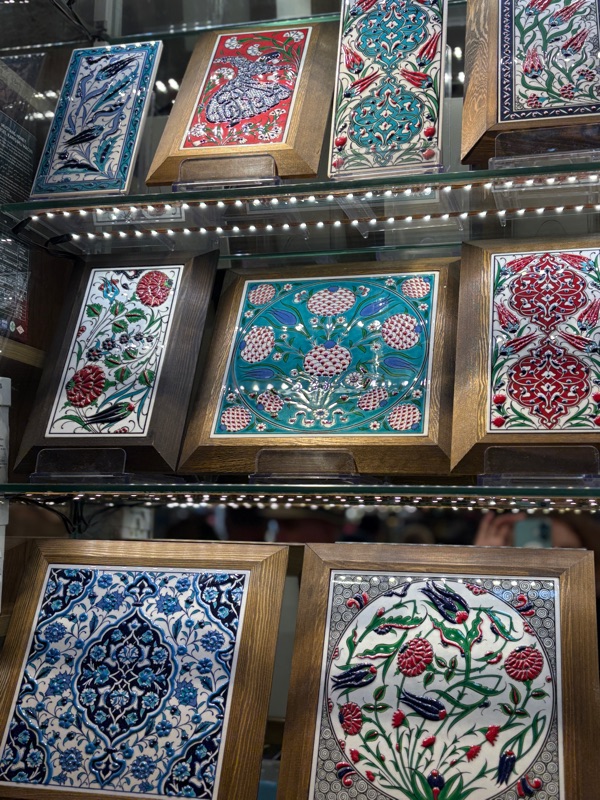
The local goods are awesome—tea sets, rugs, pottery, scarves, lamps and so much more. Even if you're not planning to buy anything, wandering through the Grand Bazaar is an experience in itself.
The streets surrounding the bazaar are also filled with shops, and I found some good deals there as well. If you still have the energy after tackling the Grand Bazaar, they're worth exploring.
TROY (Troia) WHERE LEGEND MEET HISTORY
Near Çanakkale, you can visit the archaeological site of Troy and walk among the remains of this legendary ancient city.
Most of us are familiar with the story of the Trojan Horse—the legendary wooden horse used by the Greeks to secretly enter the fortified city of Troy. Greek soldiers supposedly hid inside the horse, which was left behind as an apparent gift.
Although the Trojan War is most famously associated with Homer's Iliad, the Iliad does not actually tell the story of the Trojan Horse. The horse appears in other ancient accounts, including Homer's Odyssey.
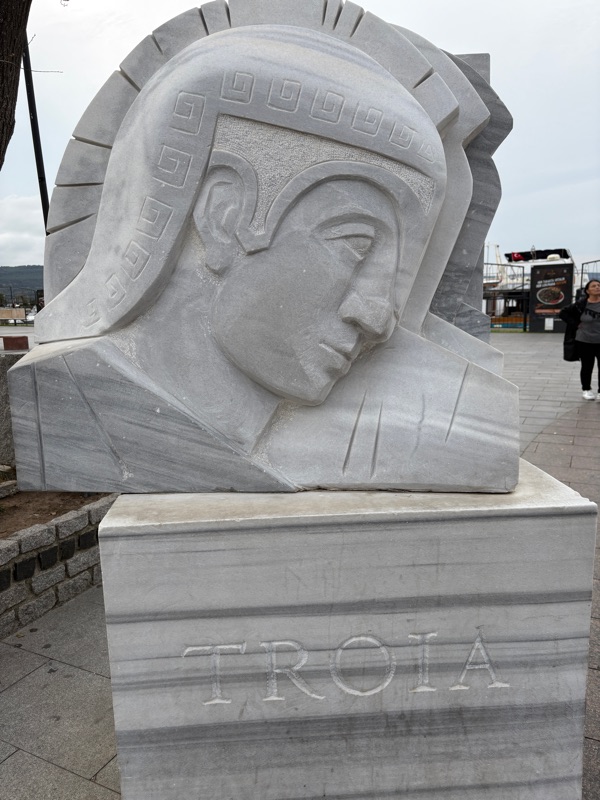
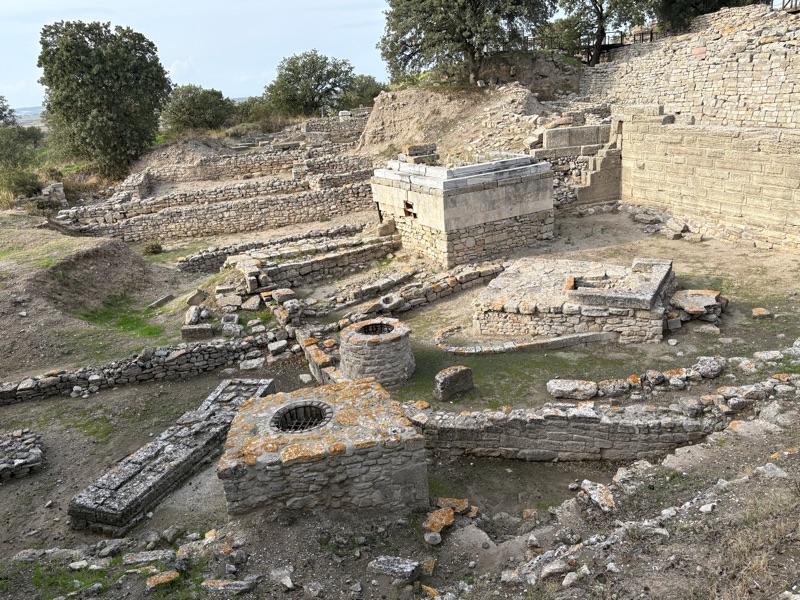
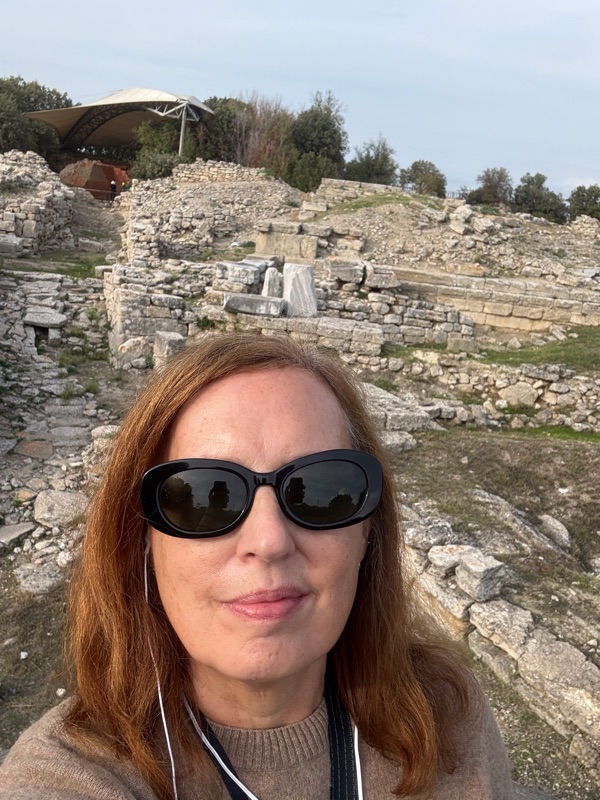
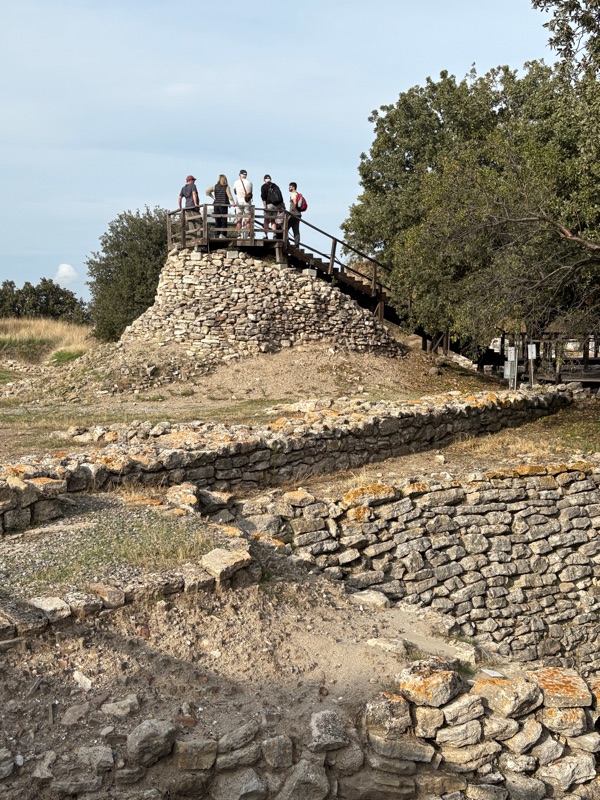
For centuries, Troy was regarded by many as a place of legend. In the 1870s, German archaeologist Heinrich Schliemann excavated at Hisarlık in present-day Turkey, where archaeologists identified the remains of multiple ancient settlements built one on top of another. The site is now widely accepted as the location of ancient Troy.
Of course, the original Trojan Horse is nowhere to be found!
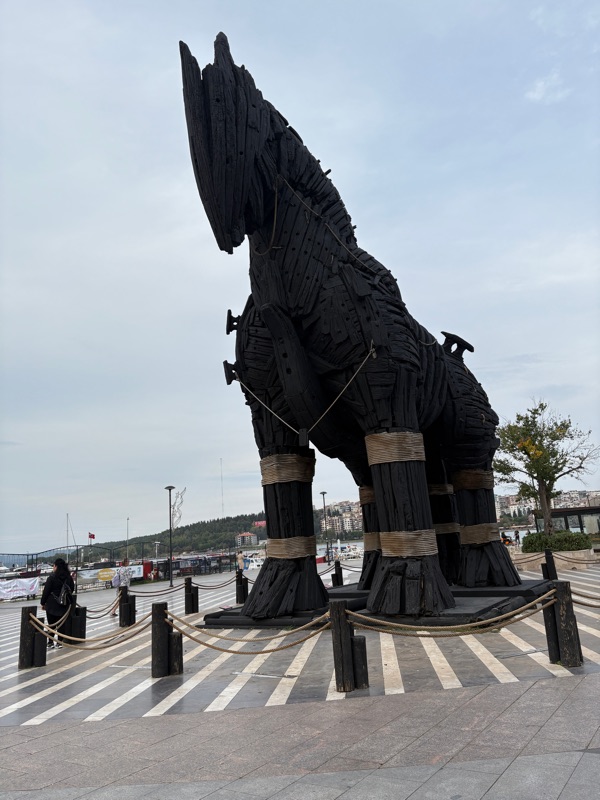
A facsimile of the wooden "Trojan Horse" from 2004 Brad Pitt movie in downtown Canakkale.
PERGAMON: AN ANCIENT CENTER OF LEARNING
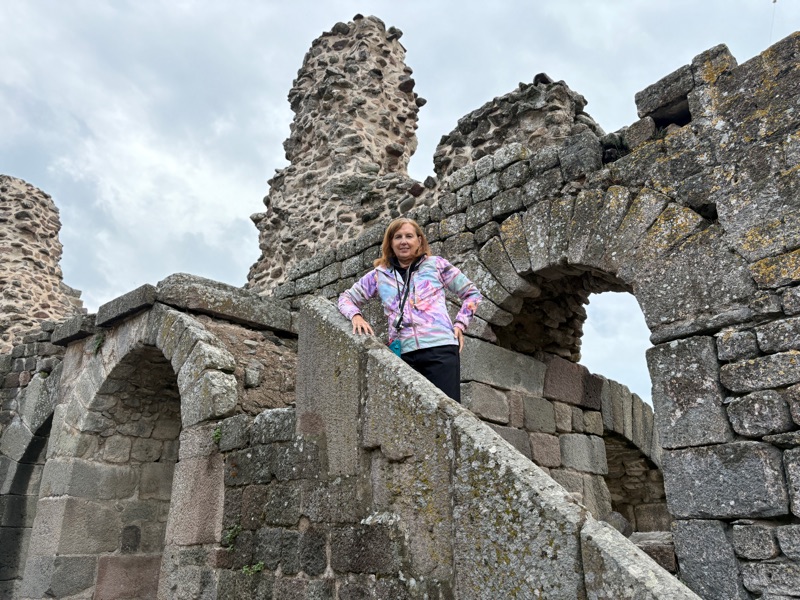
Call me weird, but I love ancient ruins. I love walking where people walked thousands of years ago and feeling a connection to the civilizations that came before us.
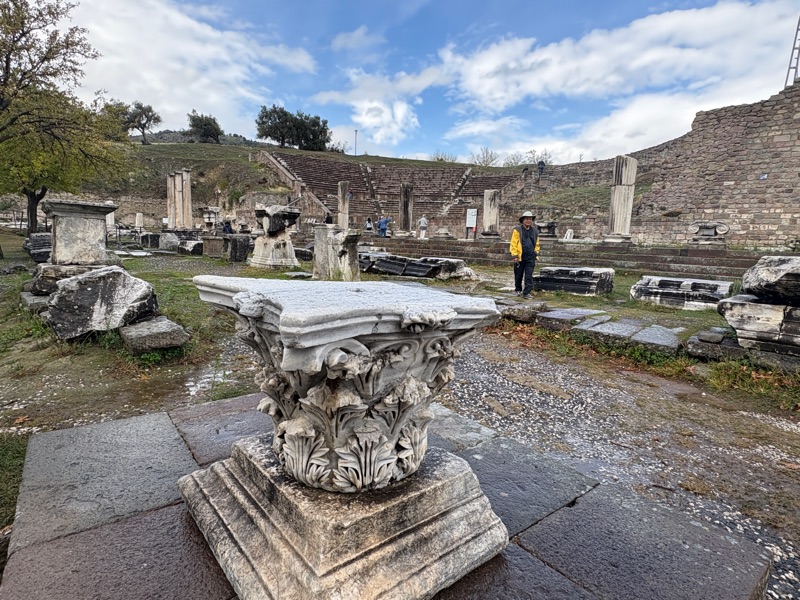
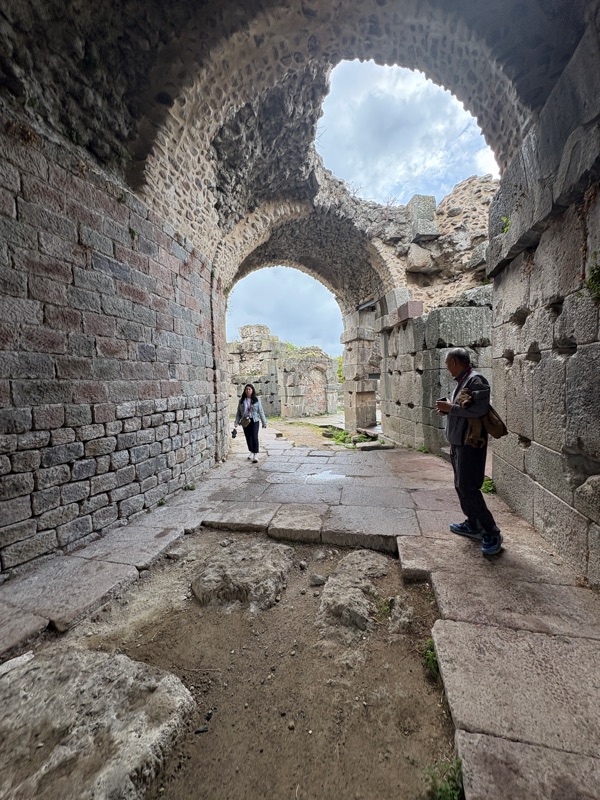
Pergamon, near the modern city of Bergama and north of Izmir, was one of the most important cities of the ancient Hellenistic world. It became the capital of a powerful kingdom and a major center of culture, medicine and learning.
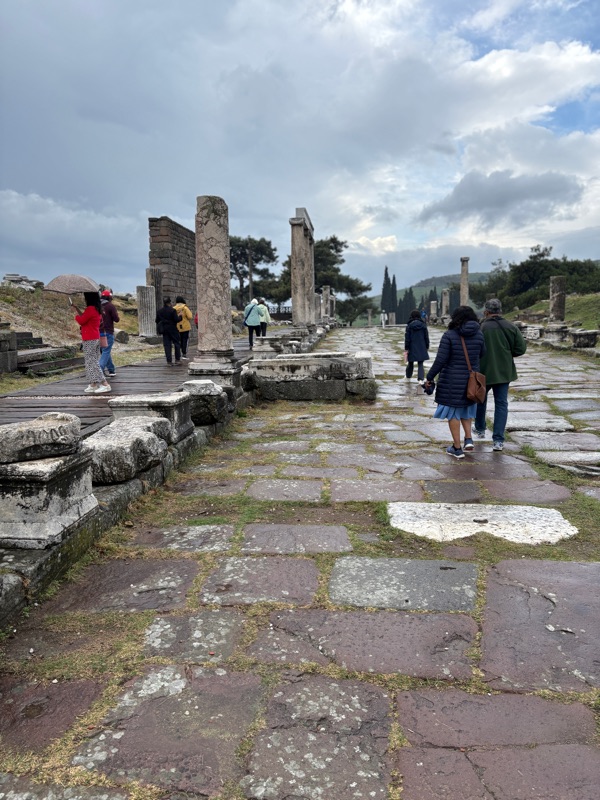
The ancient ruins include the Asclepion, a healing center dedicated to Asclepius, the Greek god of medicine. People came here seeking treatment using methods that included bathing, exercise and other therapies—something like an ancient medical and wellness center.
Pergamon was also famous for its impressive library and monumental architecture. Walking through the ruins gives you another glimpse into just how sophisticated these ancient civilizations were.
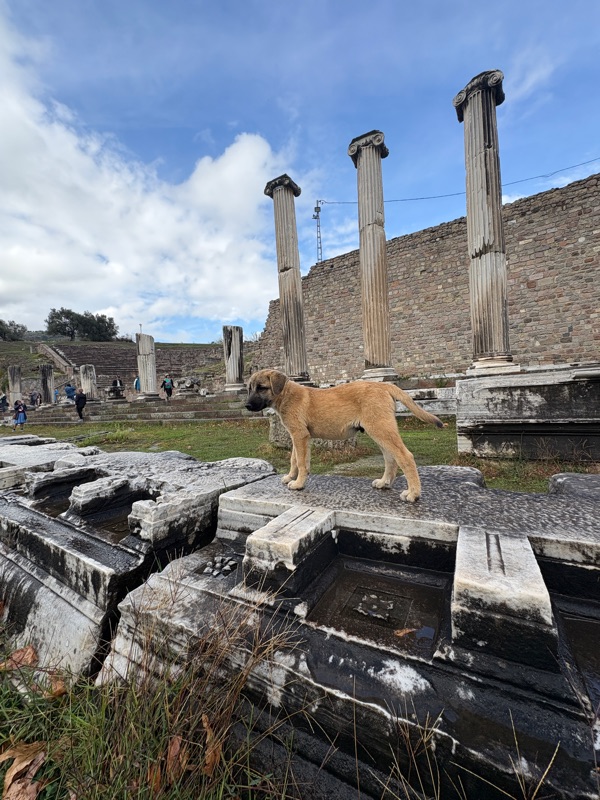
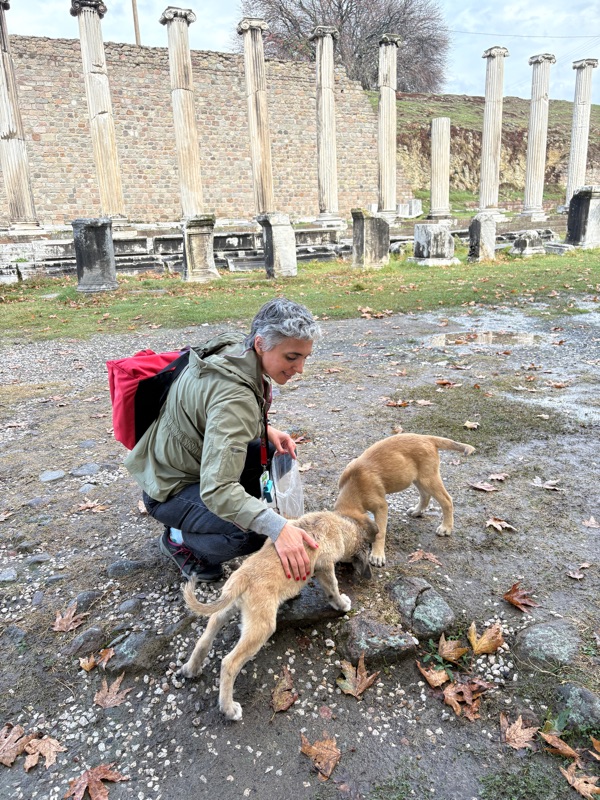
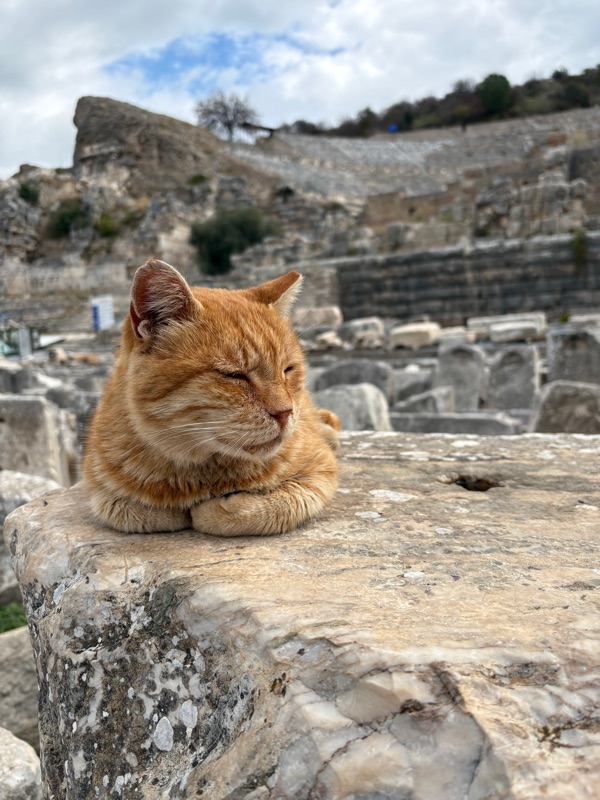
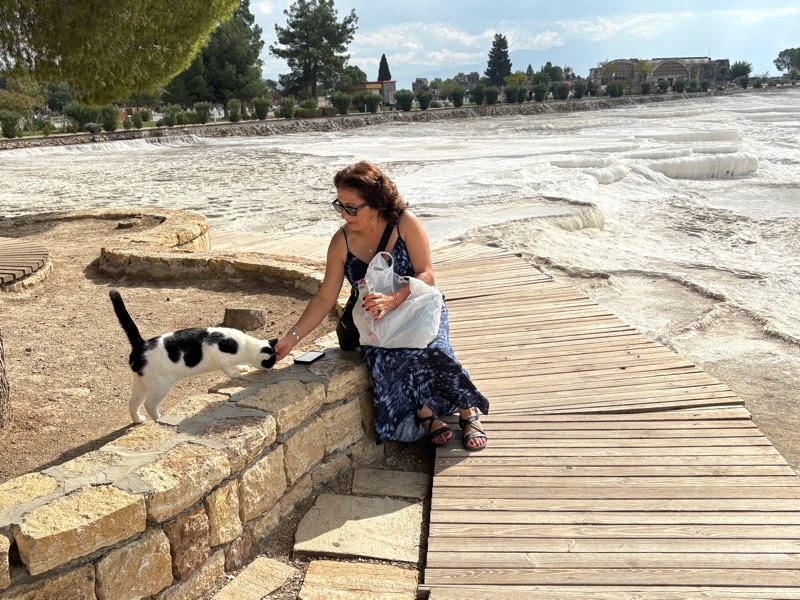
Separately, street dogs and cats are cared for by the locals on a regular basis in Turkey. Several people carried dog and cat food with them to feed these very tame animals. You can find them at all the historical sites.
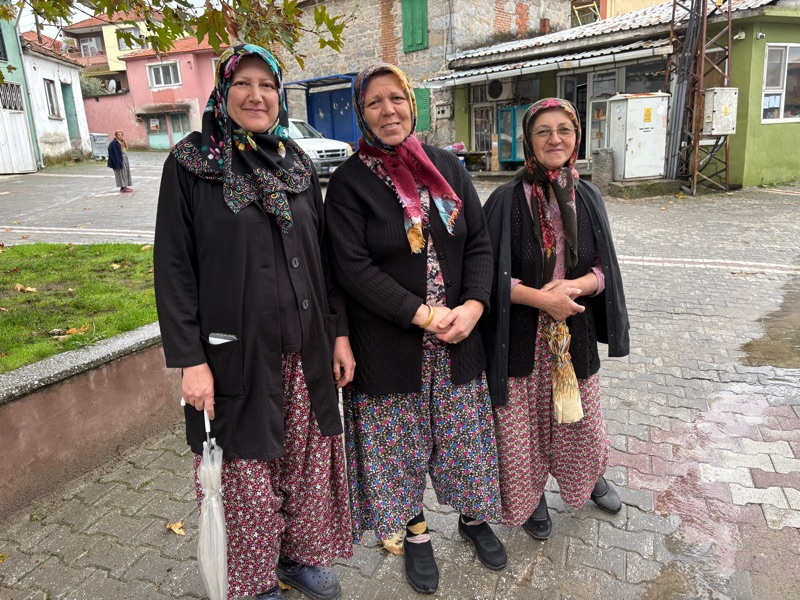
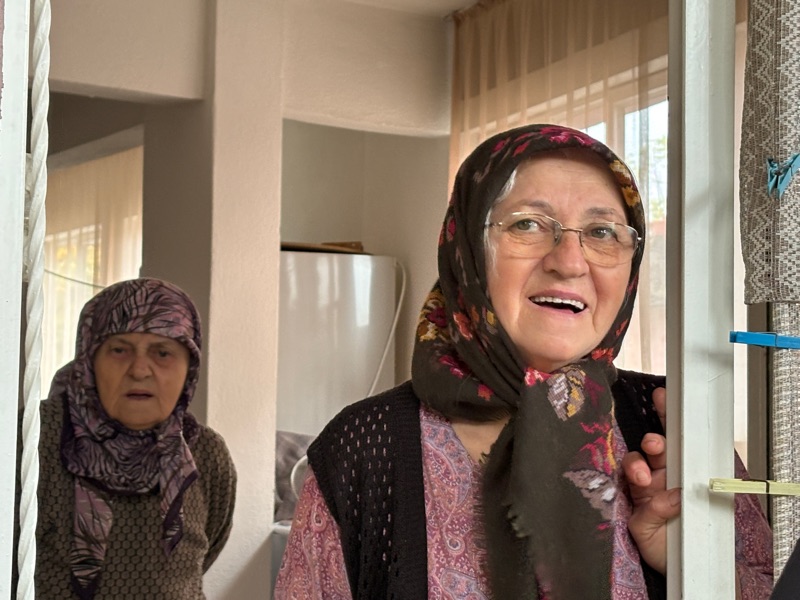
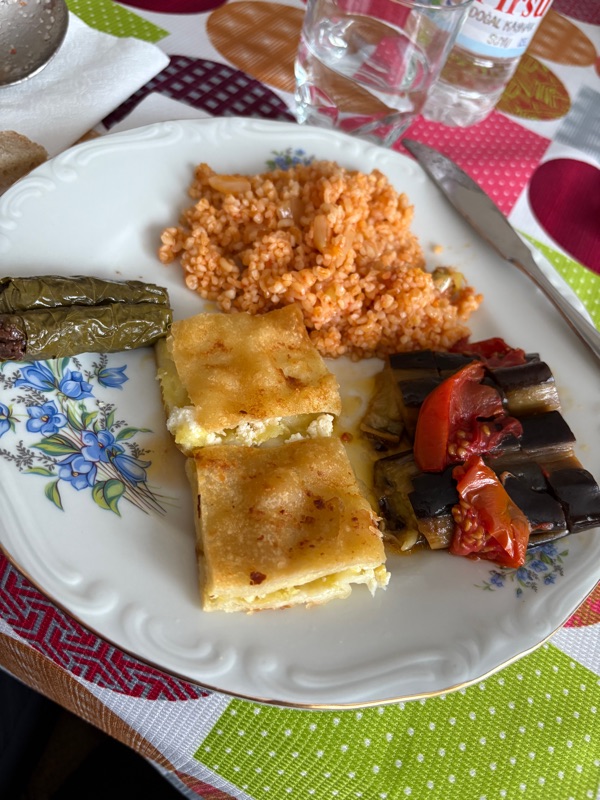
Local village women invited us for a home cooked lunch . They showed us around their homes, were all very hospitable and the food was tasty. The real thing.
IZMIR, TURKEY - ATM MISHAP
Well, it was bound to happen at some point.
I was running low on local currency, so decided one evening in Izmir to go to the bank ATM around the corner. A message flashed on the screen with a random warning and then the machine swallowed my card! I've heard of this happening in Turkey unfortunately. I immediately thought that I was prey to a scammer. My anxiety jumped up a notch about my cash provisions. It was a restless night.
I called Yazmen, our tour manager, and she said she would call the bank the next day. I politely waited until the next afternoon when she took a break from her tour guide duties.
After we returned from Ephesus, we walked over to the bank just before closing. She explained what had happened in Turkish to the bank official, I signed some documents, presented my passport, and they fetched my card. I was feeling really thankful to Yazmen for her help.
I now carry a backup ATM card when I travel for peace of mind.
Word of caution: use the bank ATM during the day when the bank is open, just in case. 😌
EPHESUS: ONE OF THE GREAT CITIES OF THE ANCIENT WORLD
Ephesus was one of the great cities of the ancient Mediterranean world. Although its history stretches back much further, the city flourished particularly during the Roman period, when it became an important commercial and cultural center and one of the major cities of Roman Asia.
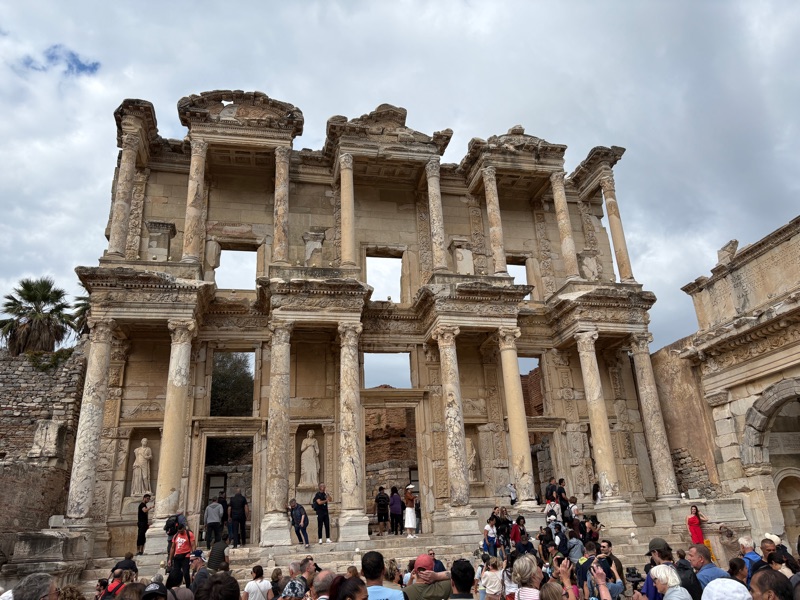
One of its most spectacular surviving monuments is the Library of Celsus, built in the 2nd century AD. Its magnificent reconstructed façade is one of the most recognizable sights at Ephesus. The library is believed to have once held thousands of scrolls.
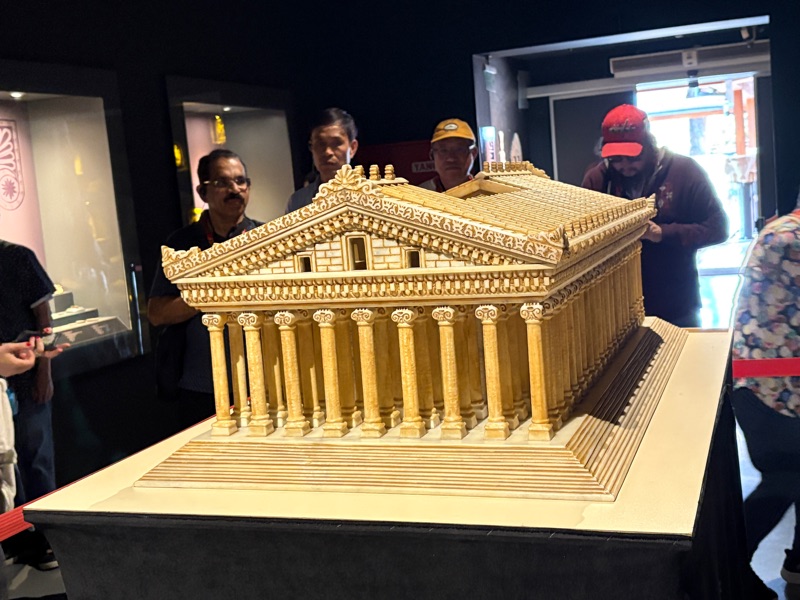
Nearby stood the Temple of Artemis, one of the Seven Wonders of the Ancient World. Very little of the original temple survives today, but its history gives you some idea of just how important Ephesus once was.
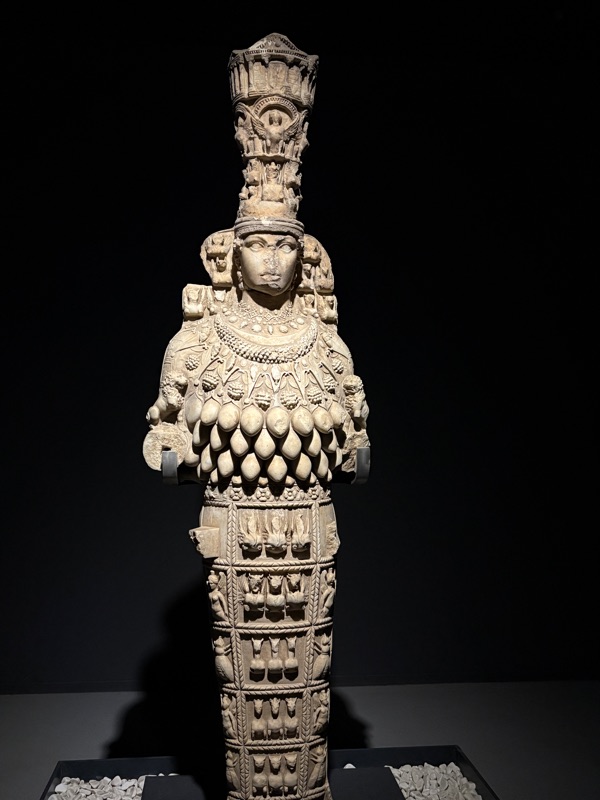 Statue of Artemis
The Temple of Artemis was one of the seven wonders of the world but only one column still exists.
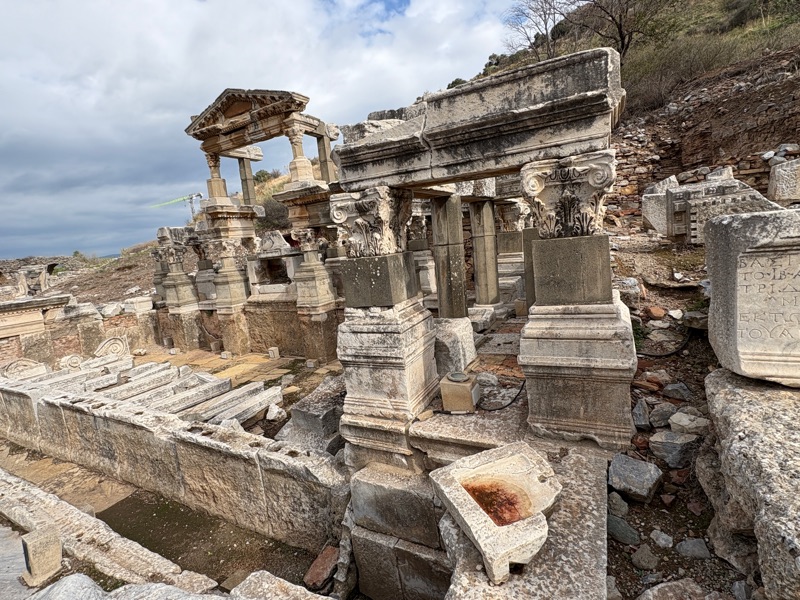
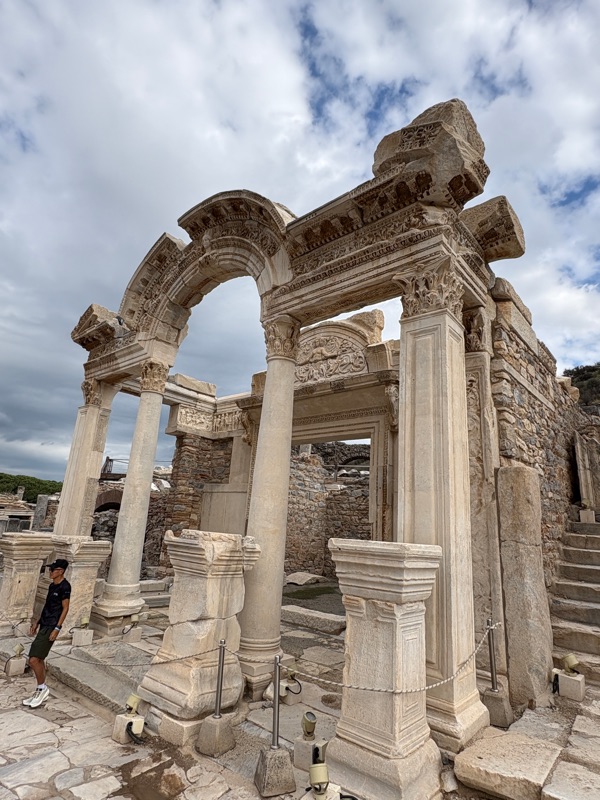
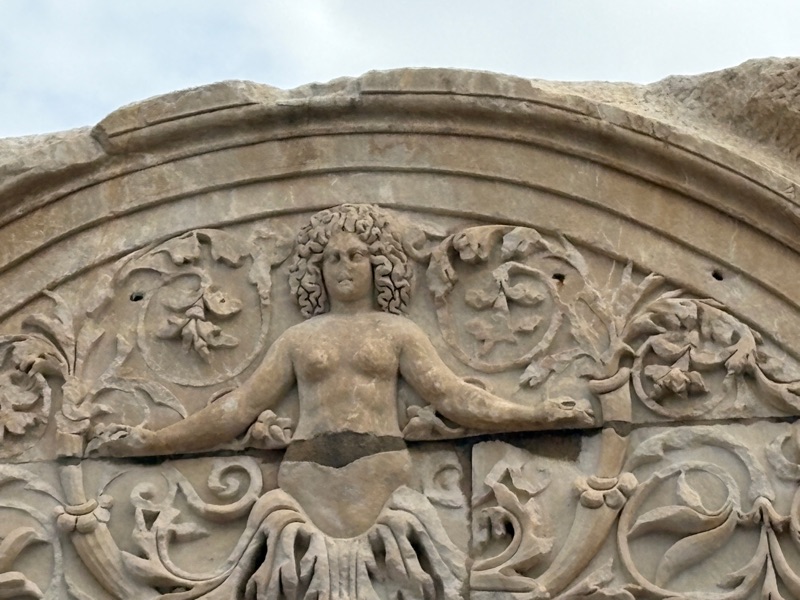
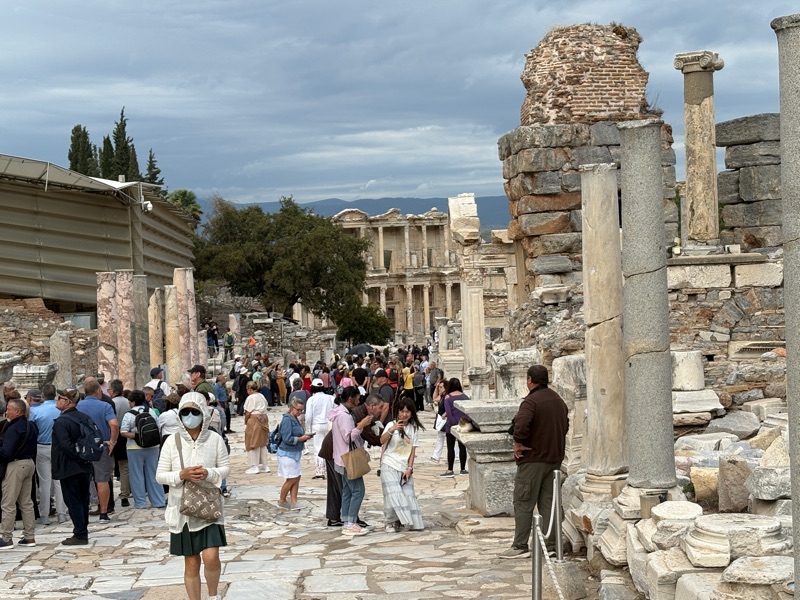
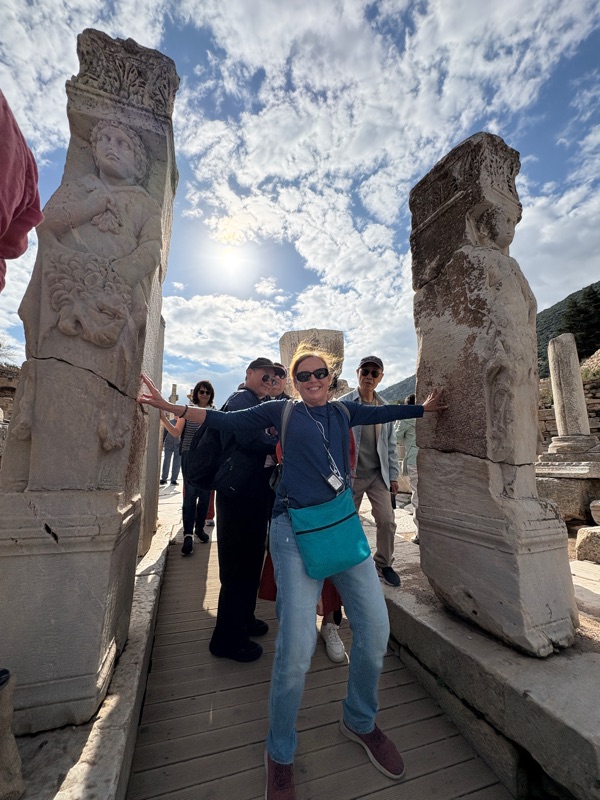
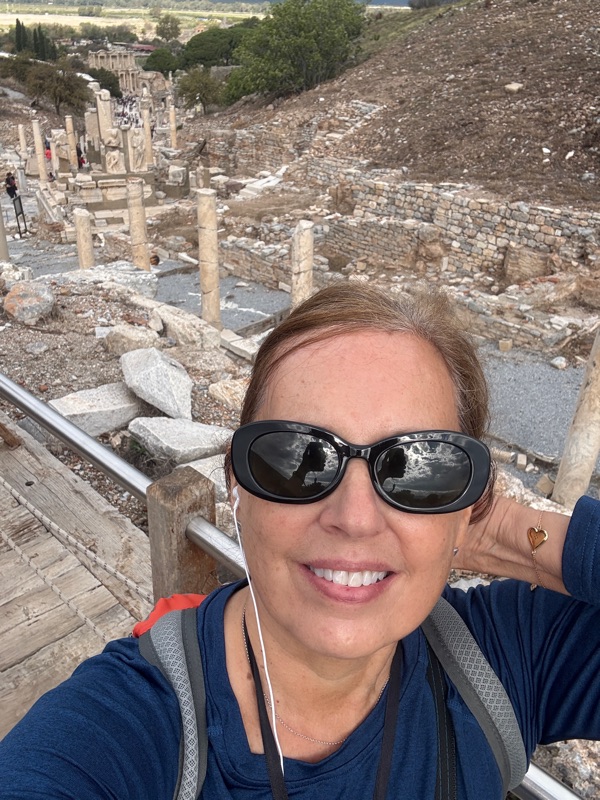
Walking through Ephesus, you follow ancient marble-paved streets once lined with fountains, temples and public buildings. The site also contains remarkable terrace houses, where wealthy residents lived in homes decorated with mosaics and frescoes.
What impressed me most was the sheer size of the city. It's difficult to appreciate how enormous and sophisticated Ephesus was until you're actually walking through it.
TIP: Ephesus can become extremely crowded, particularly when cruise ships are in port at nearby Kuşadası. If you have flexibility, try to visit early in the day or at a time when fewer large tour groups are arriving.
CHRISTIAN SITES NEAR EPHESUS
Ephesus is also near several important sites associated with early Christianity.
The House of the Virgin Mary, located on a hillside near Ephesus, is traditionally believed to be the place where Mary spent the final years of her life. Today, it is a pilgrimage site visited by both Christians and Muslims.
Nearby are the ruins of the Basilica of St. John, built during the Byzantine era on a site traditionally believed to be the burial place of John the Apostle.
Whether or not you accept these traditions, visiting these sites adds another fascinating layer to the long and complicated history of the Ephesus region.
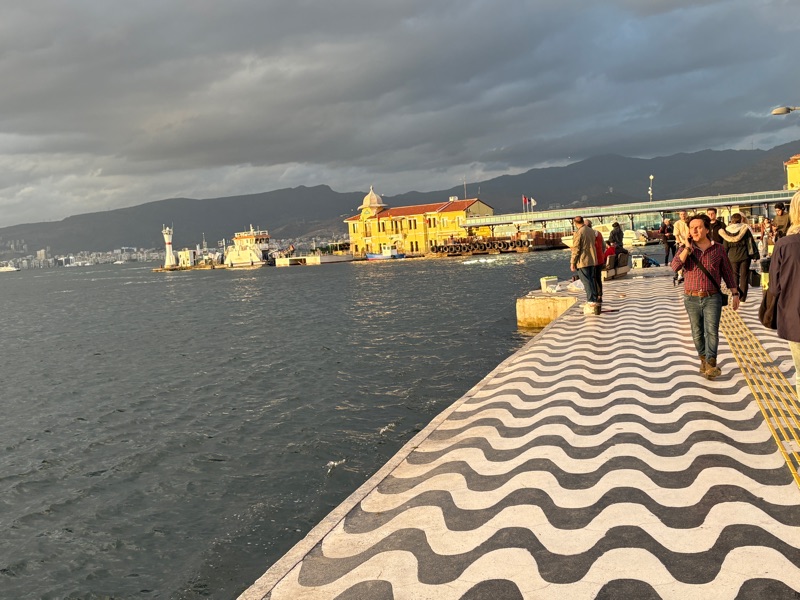
We stayed in Izmir, the 3rd largest city in Turkey and about an hour's drive from Ephesus.
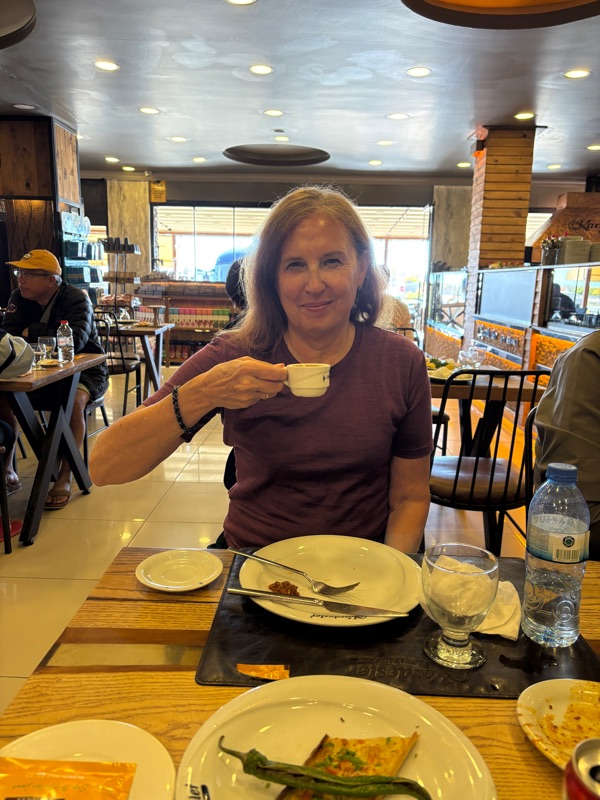
Turkish Coffee-thick but good
PAMUKKALE AND THE ANCIENT CITY OF HEIROPOLIS
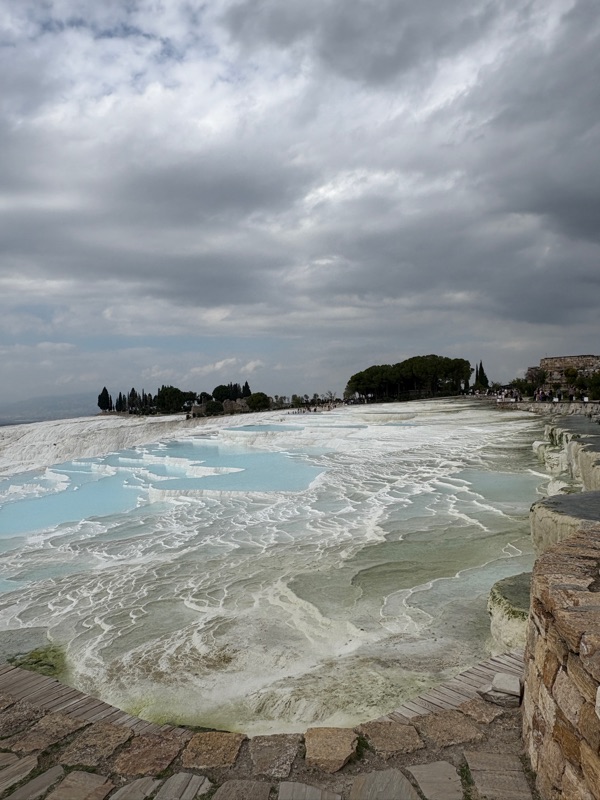
Pamukkale, meaning “Cotton Castle” in Turkish, is one of Turkey's most unusual natural wonders. Its brilliant white terraces were formed over thousands of years as calcium-rich thermal waters flowed down the hillside, leaving behind deposits of white travertine.
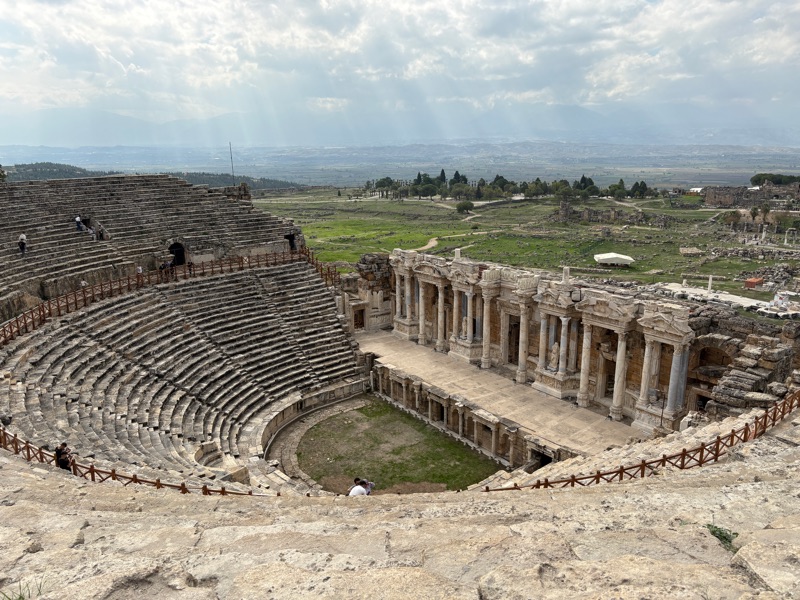
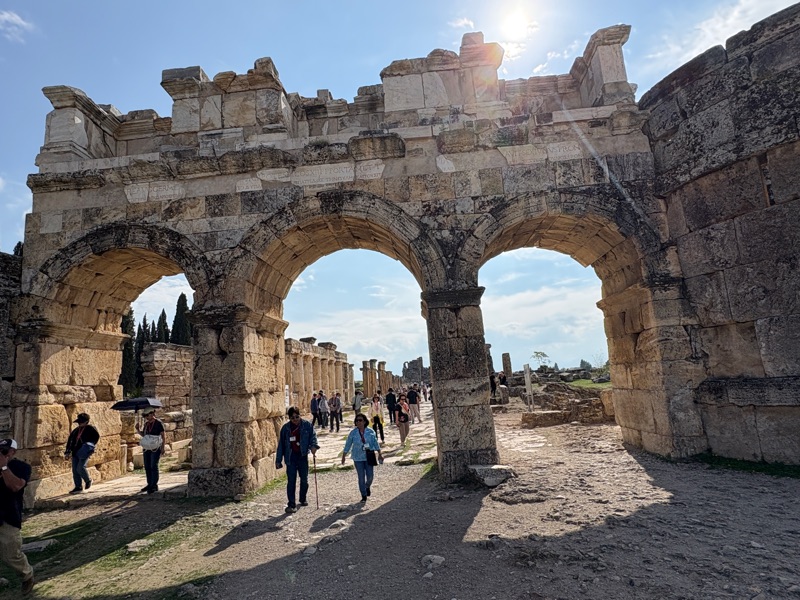
Pamukkale is part of a UNESCO World Heritage Site together with the ruins of the ancient Greco-Roman city of Hierapolis, which developed around the area's thermal springs. The waters were valued for their supposed therapeutic properties in ancient times, just as visitors are drawn to them today.
We stopped at Pamukkale on our way to Antalya, and the dazzling white terraces against the surrounding landscape were quite a sight.
ANTALYA AND THE HISTORIC OLD TOWN OF KALEICI
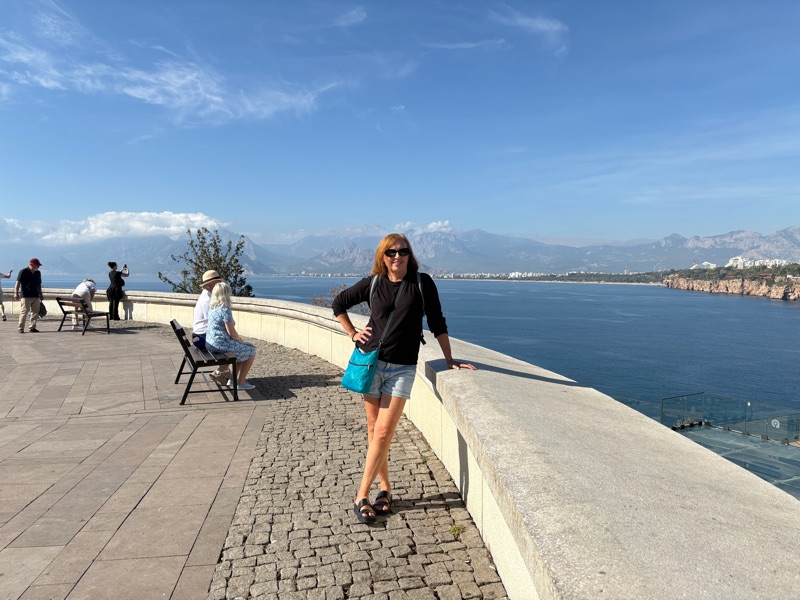
Antalya is a beautiful resort city on Turkey's Mediterranean coast, popular with both international and Turkish visitors. With its beaches, restaurants, nightlife and dramatic setting between the Mediterranean and the mountains, it has a very different feel from the ancient sites we had been visiting.
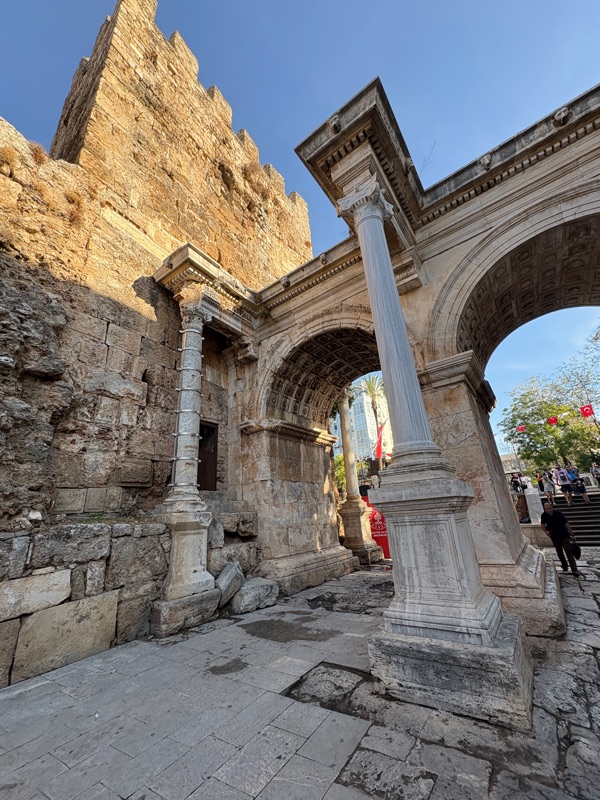
One of the highlights is Kaleiçi, Antalya's historic old town. Its narrow, winding streets are filled with traditional buildings, shops, restaurants and cafés.
One of its best-known landmarks is Hadrian's Gate, a Roman triumphal arch built to commemorate the visit of Emperor Hadrian in the 2nd century.
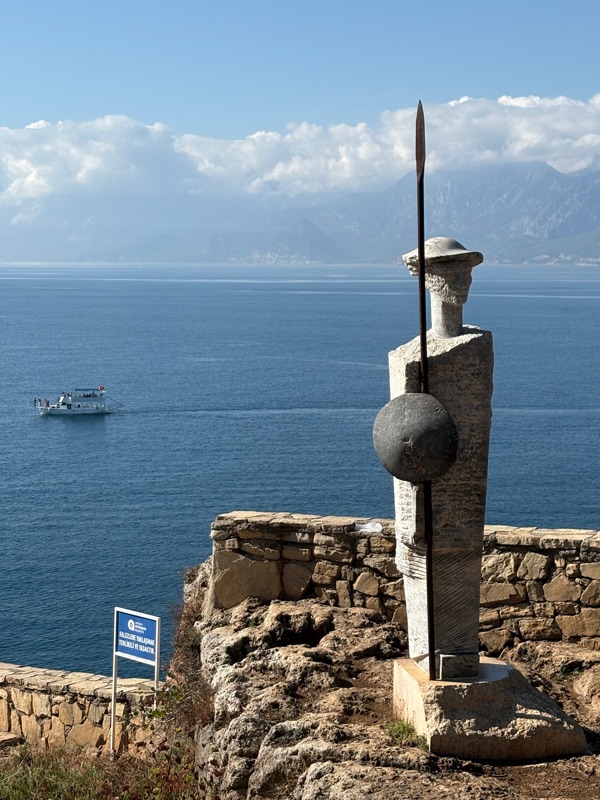
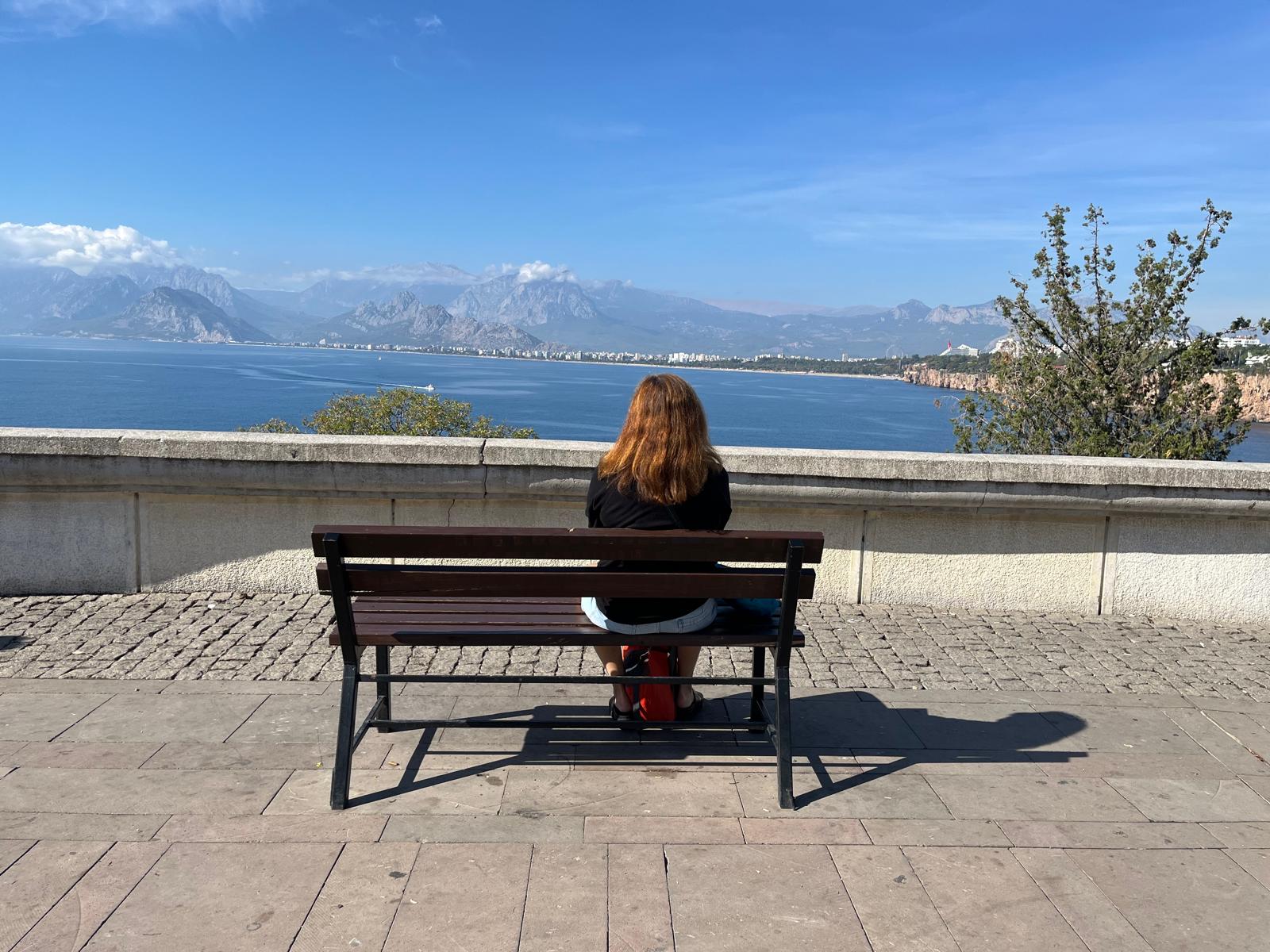
As you wander through Kaleiçi, there are lovely views of the Mediterranean, the harbor and the surrounding mountains. It's an easy area to explore on foot and a nice place to simply sit for awhile.
CARAVANSERAI OF SULTANHAN: A STOP ON THE ANCIENT TRADE ROUTE
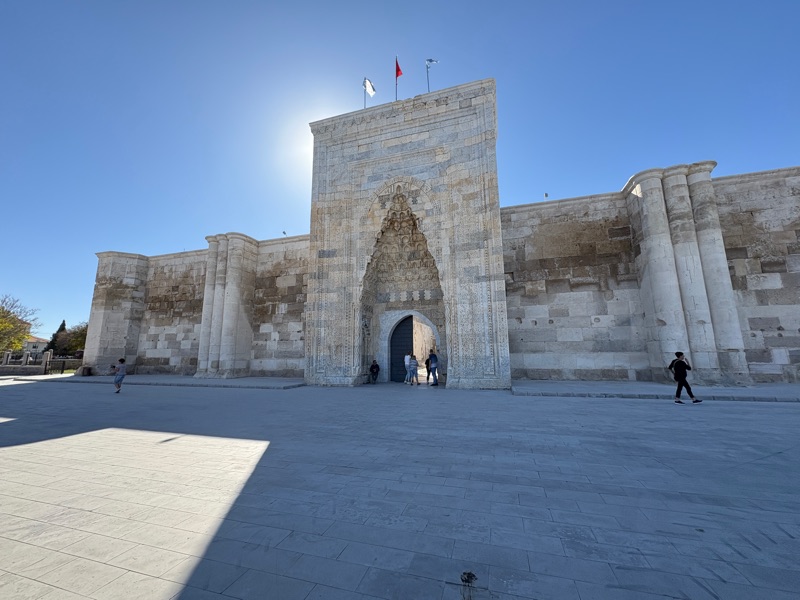
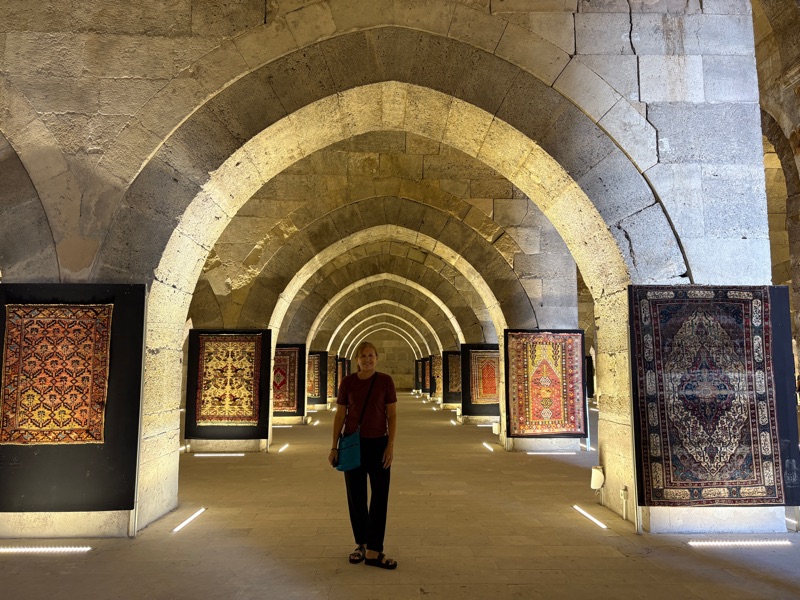
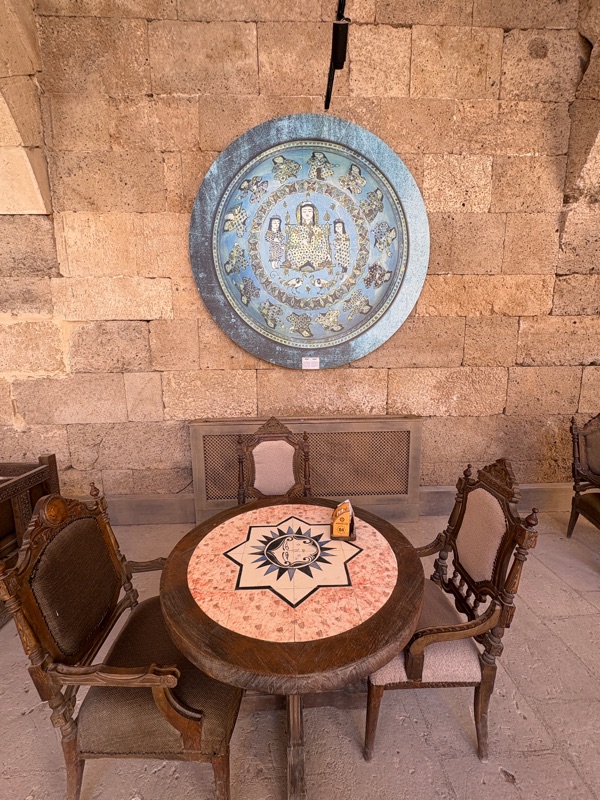
On our way to Cappadocia, we stopped at the Sultanhanı Caravanserai, an impressive 13th-century roadside inn in central Anatolia.
Caravanserais were built along important trade routes to provide merchants and other travelers—and their animals—with a safe place to rest during long journeys. Sultanhanı is one of the largest and best-preserved examples from the Seljuk period in Turkey.
Its massive stone walls and imposing entrance provided protection for travelers and their valuable goods. Walking through it gives you a sense of what traveling across Anatolia must have been like centuries ago.
 .
. 
CAPPADOCIA: FAIRY CHIMNEYS AND CAVE CHURCHES
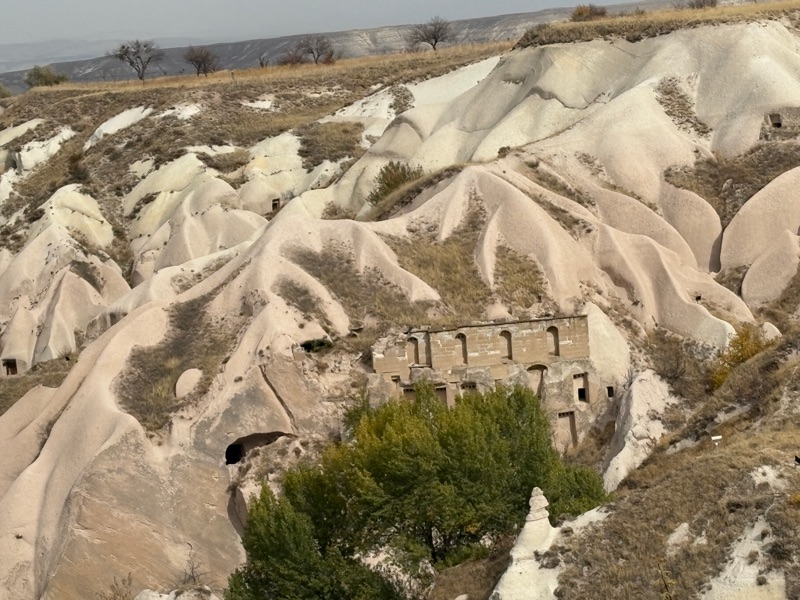
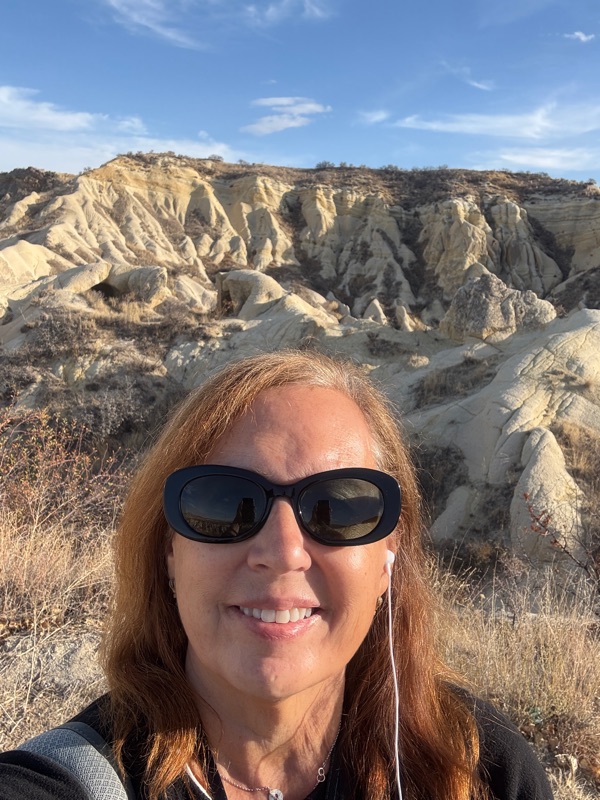
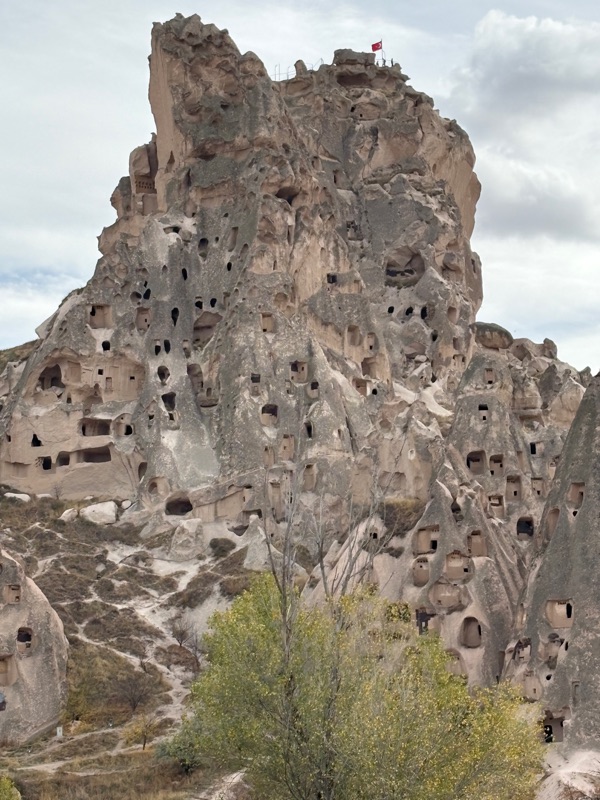
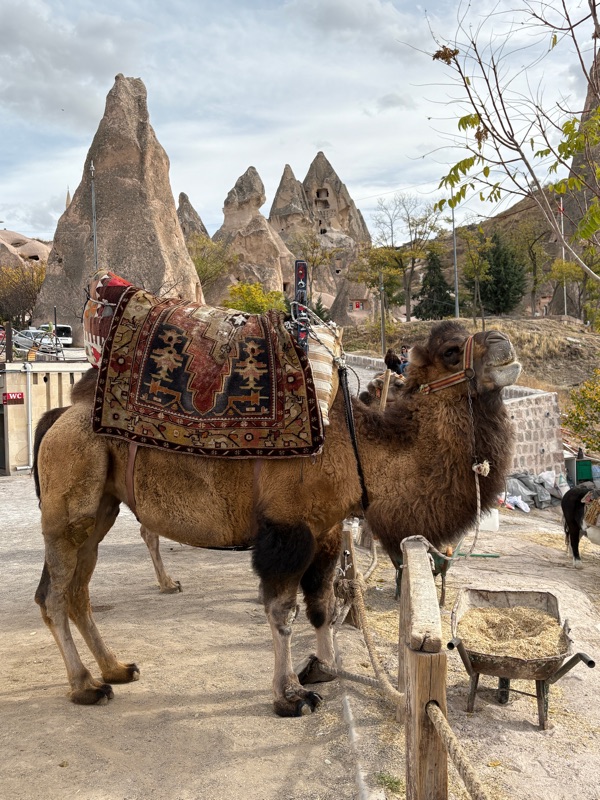
Cappadocia has one of the most extraordinary landscapes in Turkey. Millions of years of volcanic activity followed by wind and water erosion created the unusual rock formations and fairy chimneys for which the region is famous.
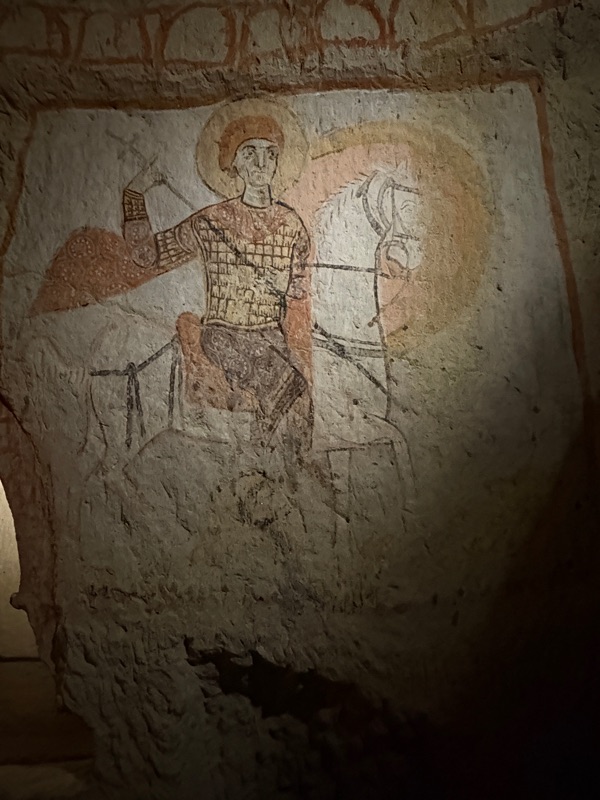
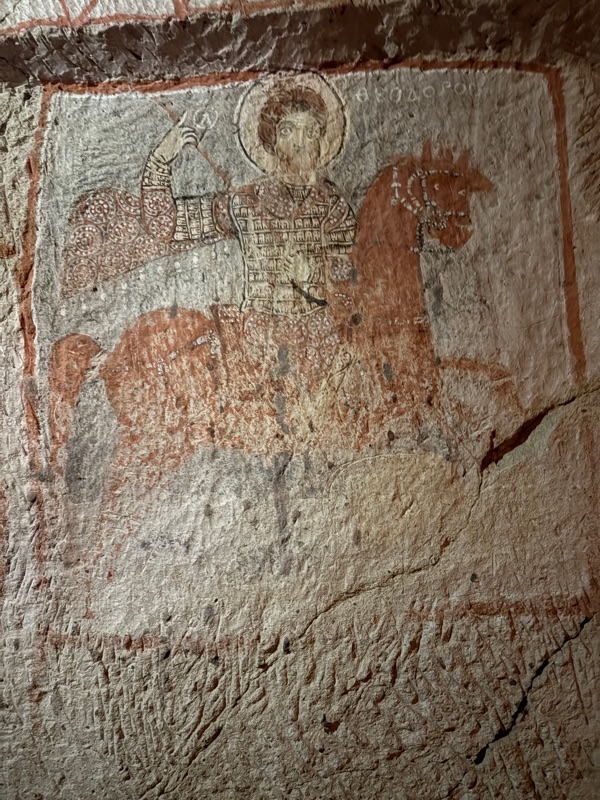
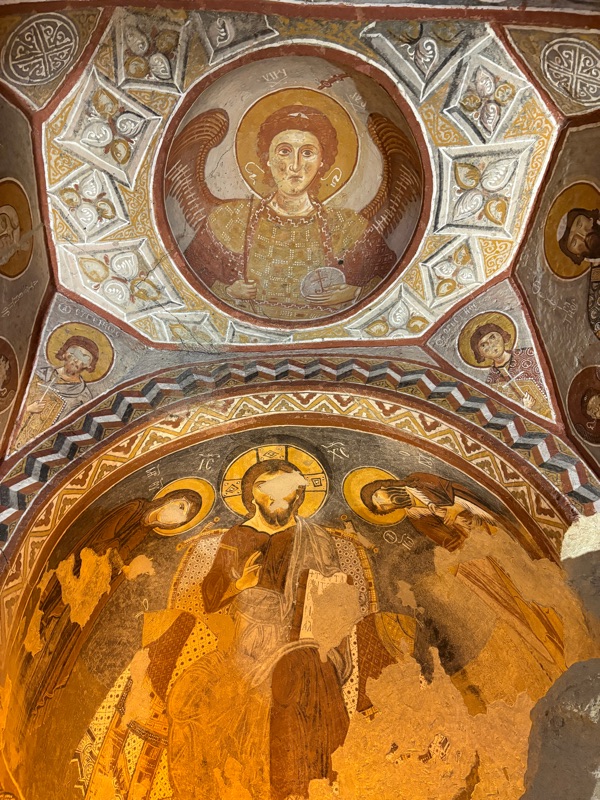
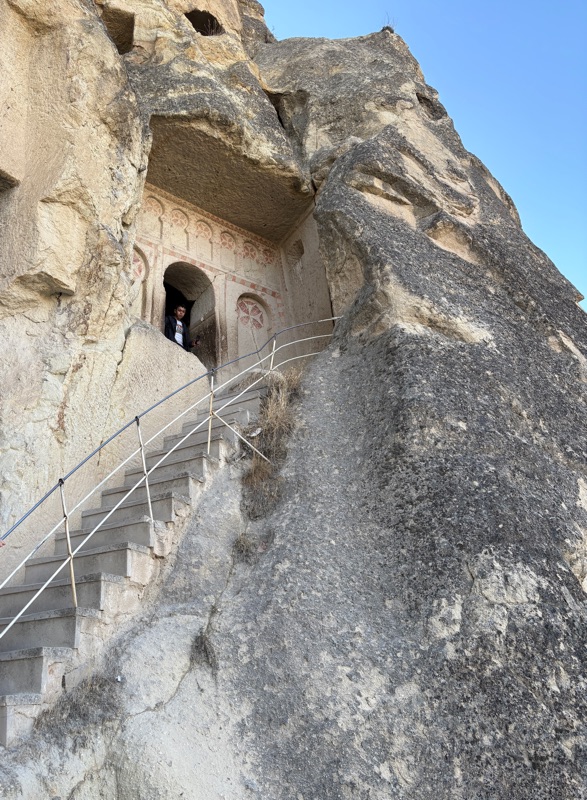
Over the centuries, people carved homes, churches and entire communities into the soft volcanic rock, creating the cave dwellings that are still visible throughout the region.
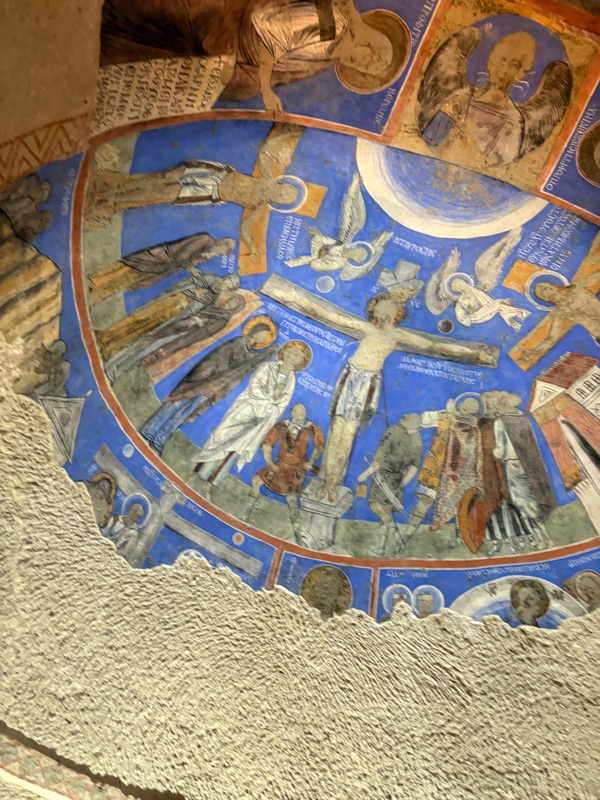
One of Cappadocia's highlights is the Göreme Open-Air Museum, a remarkable complex of rock-cut churches and monasteries, many containing beautifully preserved Byzantine frescoes.
The wider Göreme area is part of a UNESCO World Heritage Site, recognized for both its spectacular natural landscape and its extraordinary cultural history.
Cappadocia really does look otherworldly. It's one of those places where the landscape seems almost too strange to be real.
Hot-Air Ballooning in Cappadocia
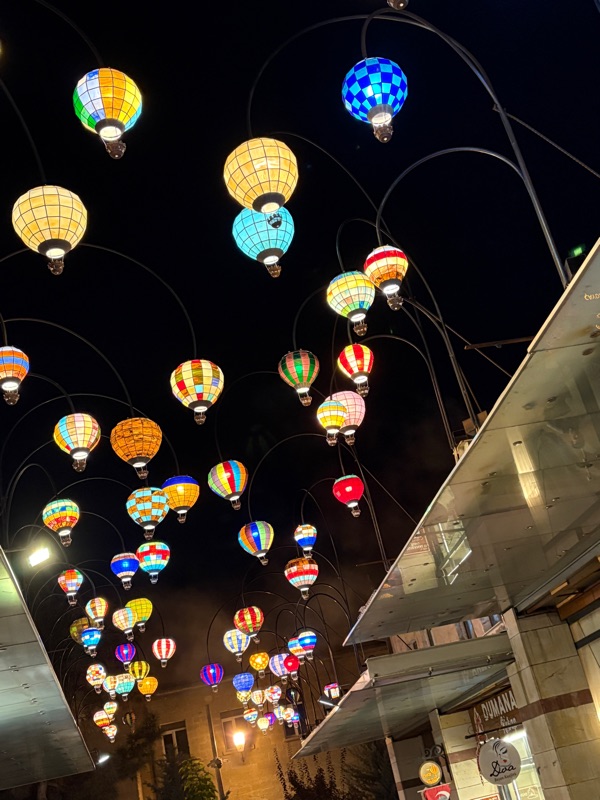
Cappadocia is famous worldwide for its hot-air balloon rides, which offer spectacular aerial views of the fairy chimneys, valleys and unusual rock formations.
Balloon flights are highly dependent on weather conditions, particularly wind, and flights can be canceled when conditions aren't considered safe.
Unfortunately, the wind did not cooperate during my visit, and our balloon ride was canceled. 😞 I was hugely disappointed. Seeing Cappadocia from a hot-air balloon had been one of the experiences I was most looking forward to.
But that's travel. Sometimes even the things you've planned and anticipated don't happen. You learn to roll with the punches, enjoy what you can experience—and move on to the next adventure.
OZKONAK UNDERGROUND CITY IN CAPPADOCIA
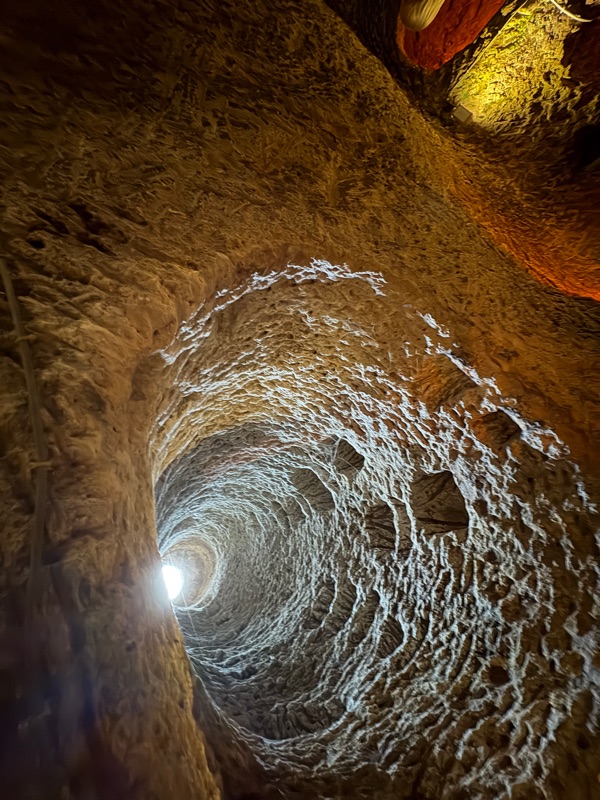
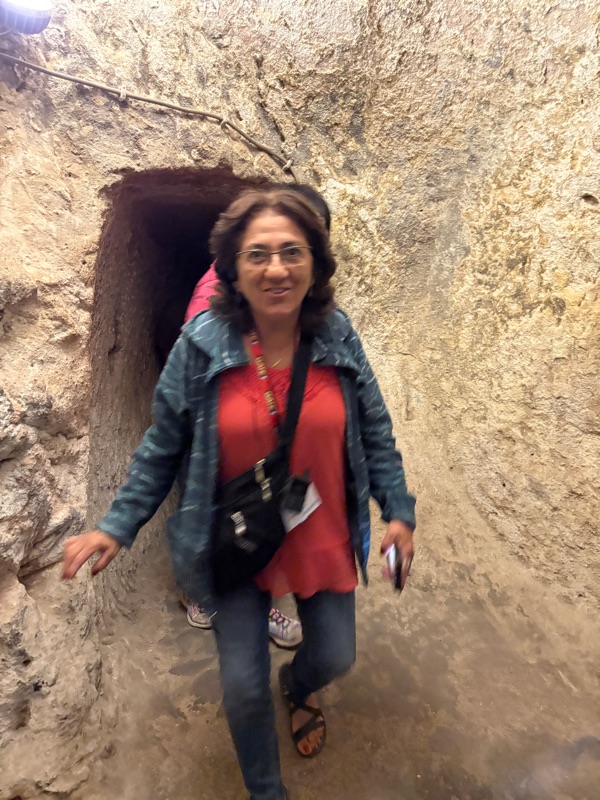
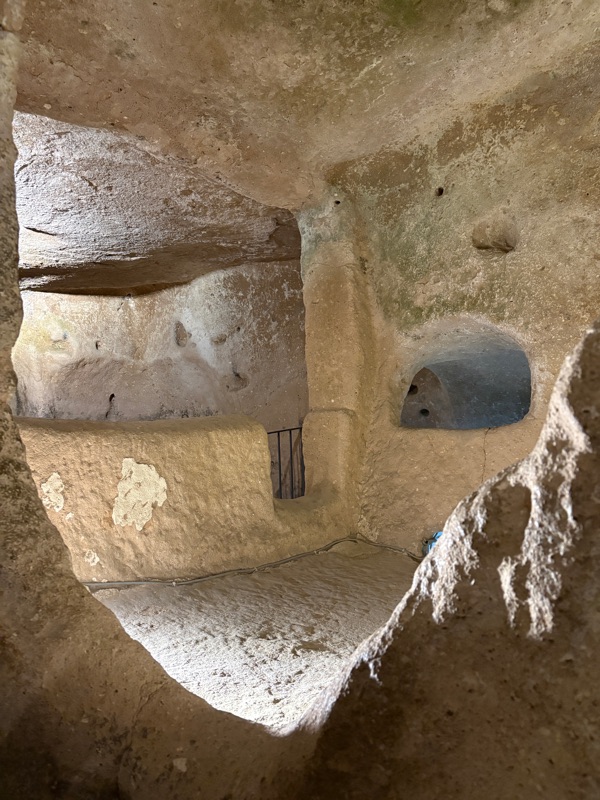
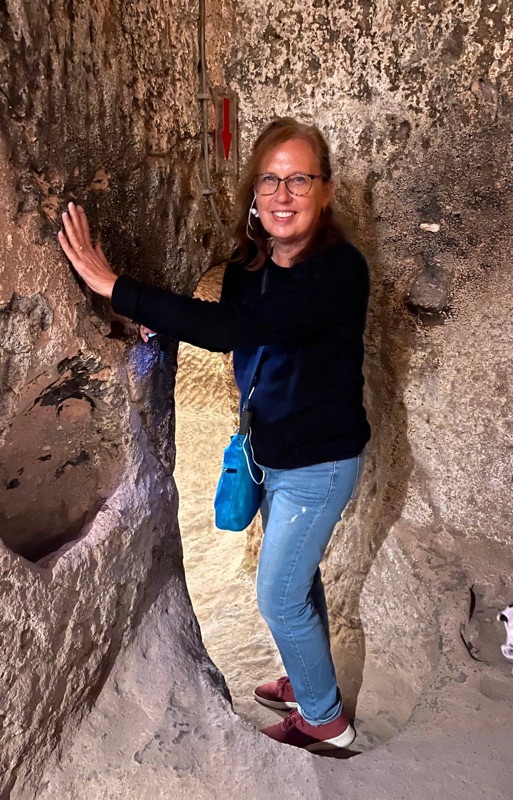
Özkonak Underground City, in Turkey's Cappadocia region, is an extraordinary network of underground rooms and tunnels carved into the volcanic rock. It was rediscovered by a local farmer in the early 1970s.
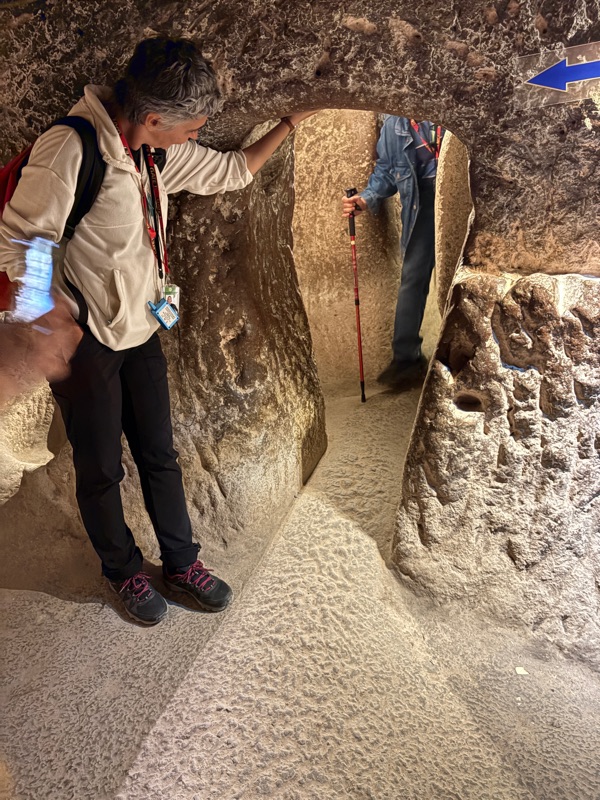
The underground complex provided a protected space where people could shelter during periods of danger. It included living quarters, kitchens, food-storage areas and spaces for animals, along with narrow passageways connecting the different levels.
One particularly interesting feature is a system of small holes associated with the tunnels. They may have been used for communication or defense against intruders.
It's remarkable to imagine families living beneath the ground, with spaces for their food, animals and everyday needs, while seeking protection from threats above.
PASABAG VADISI: CAPPADOCIA'S FAIRY CHIMNEYS
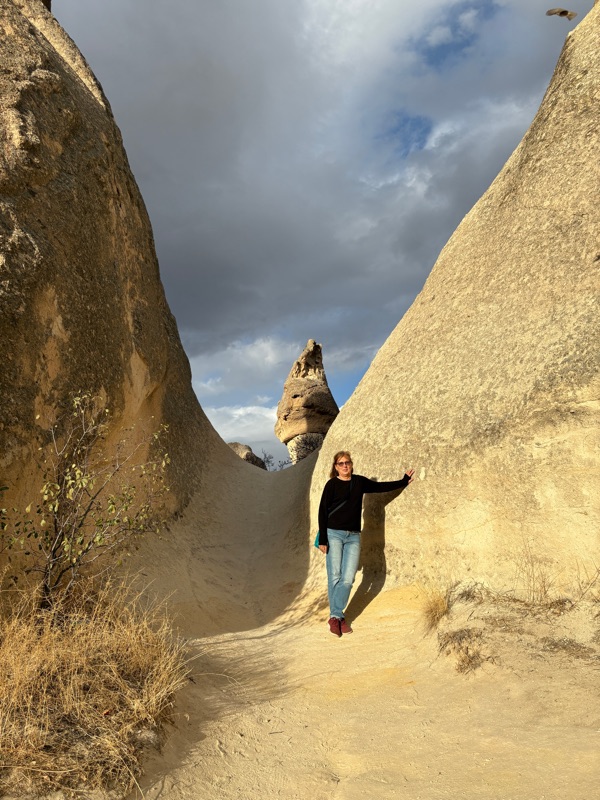
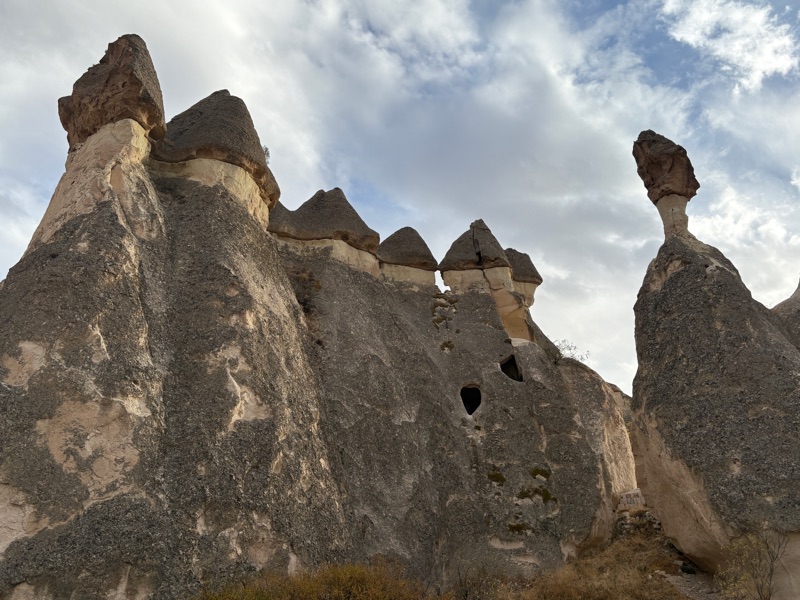
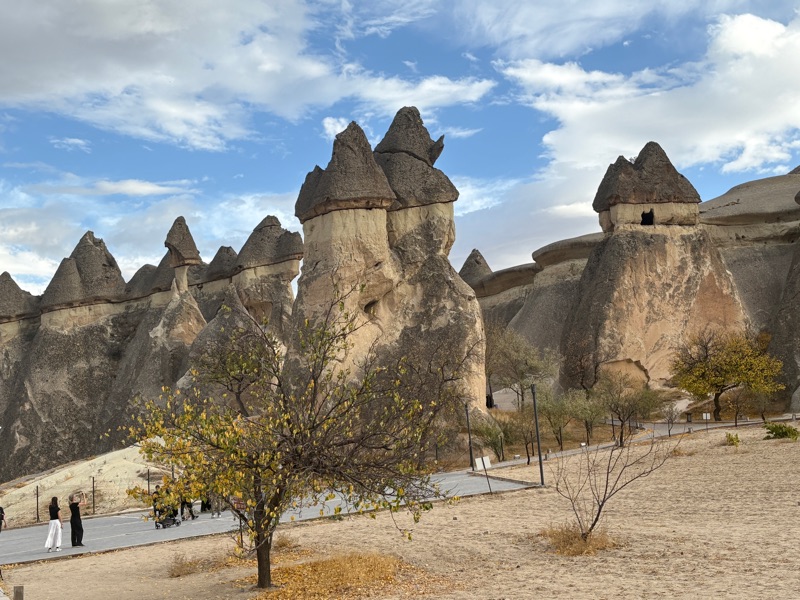
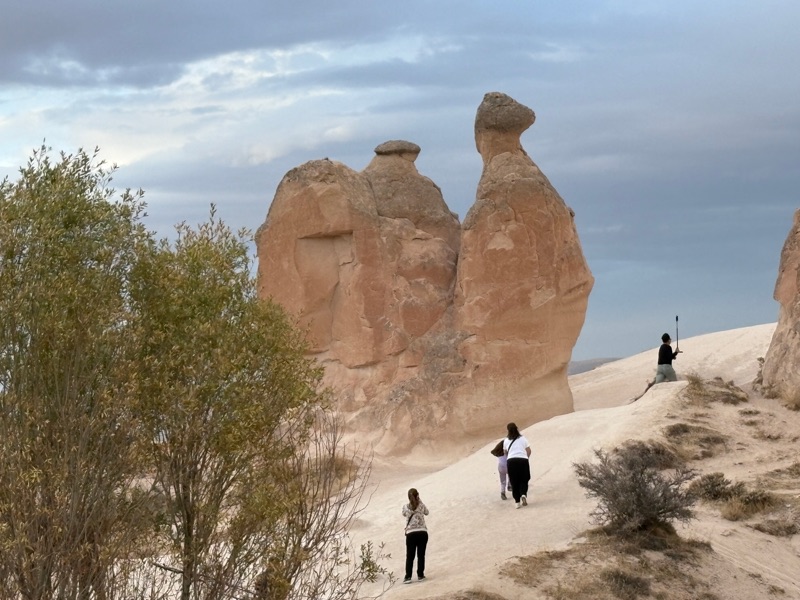
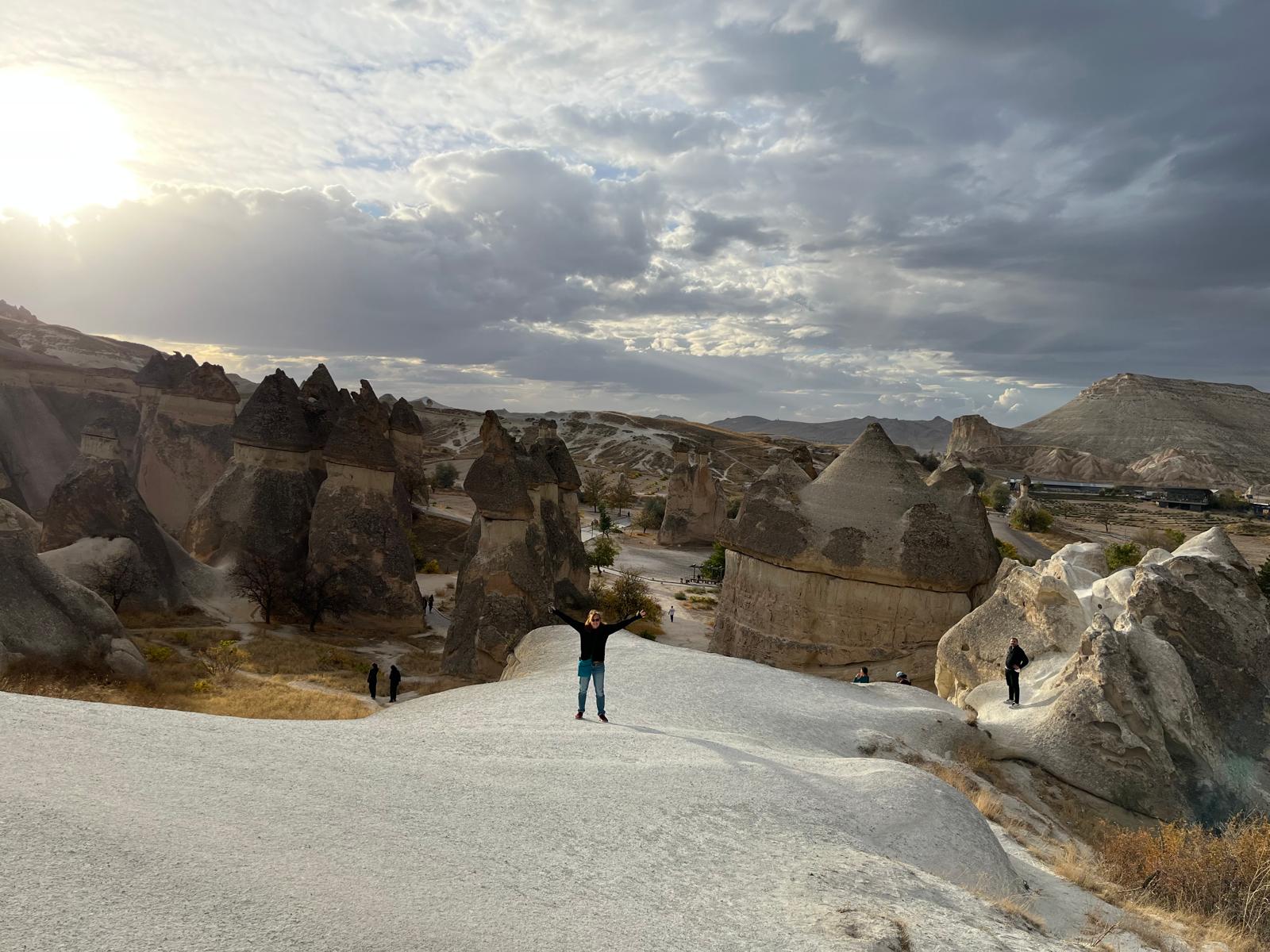
Nearby Paşabağ Valley, also known as Monks Valley, has some of Cappadocia's most striking rock formations. The valley is particularly famous for its fairy chimneys—tall formations of softer volcanic rock topped by harder stone caps that have resisted erosion.
Some of the formations have distinctive mushroom-like shapes, making this one of the most unusual landscapes in Cappadocia.
There are walking paths throughout the valley, allowing you to get close to the fairy chimneys and explore the remarkable landscape on foot.
SHOPPING FOR TURKISH RUGS, CERAMICS AND HANCRAFTED GOODS
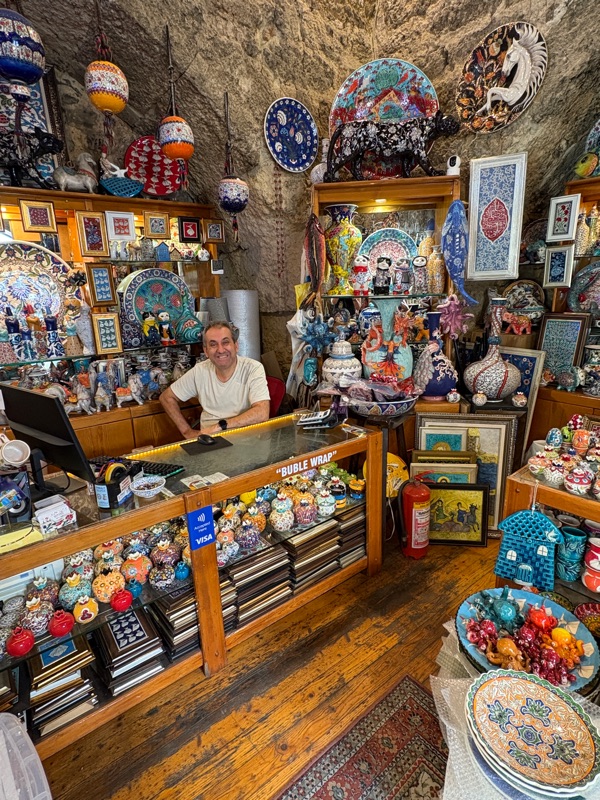
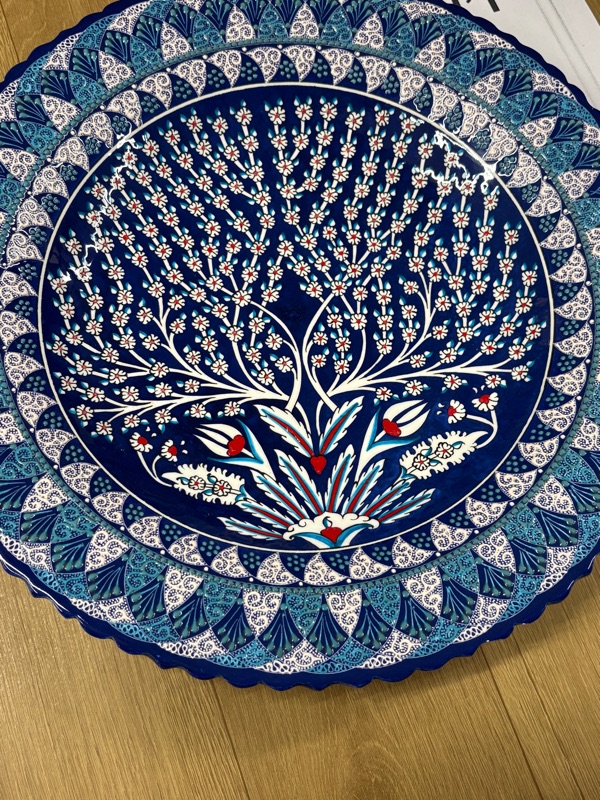
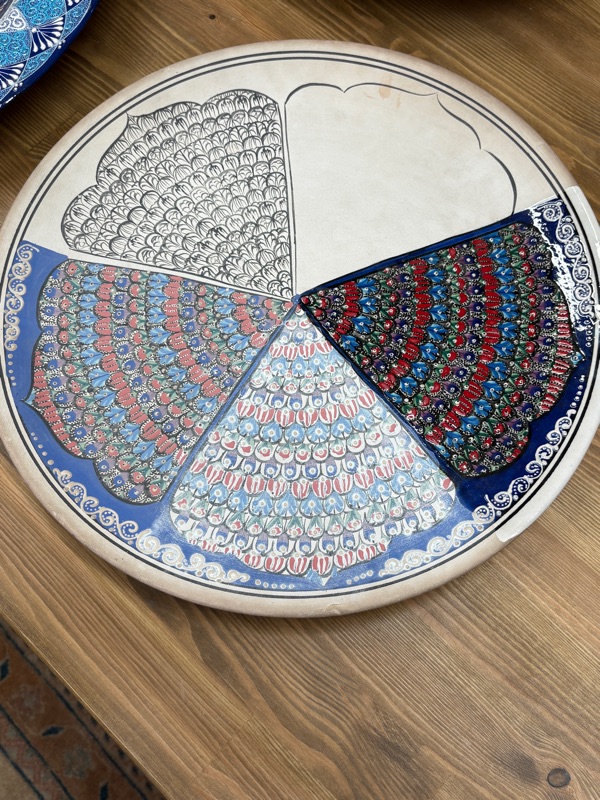
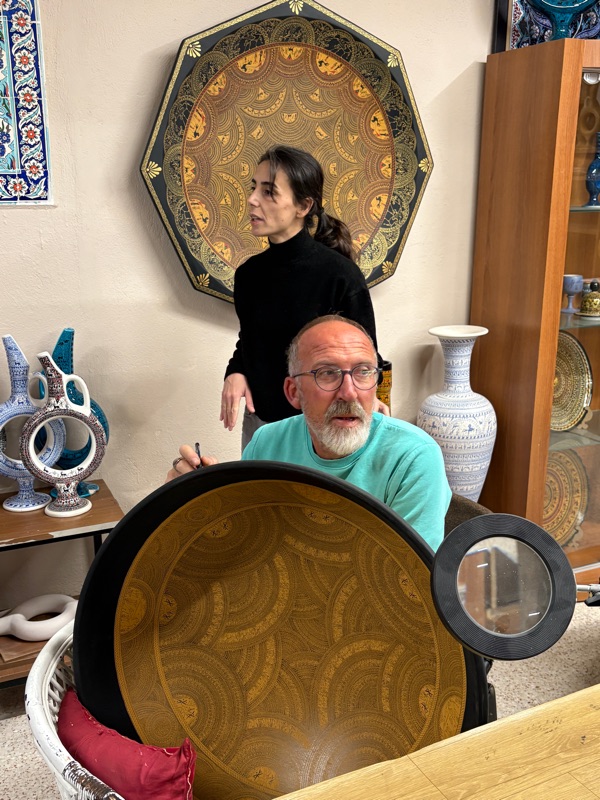
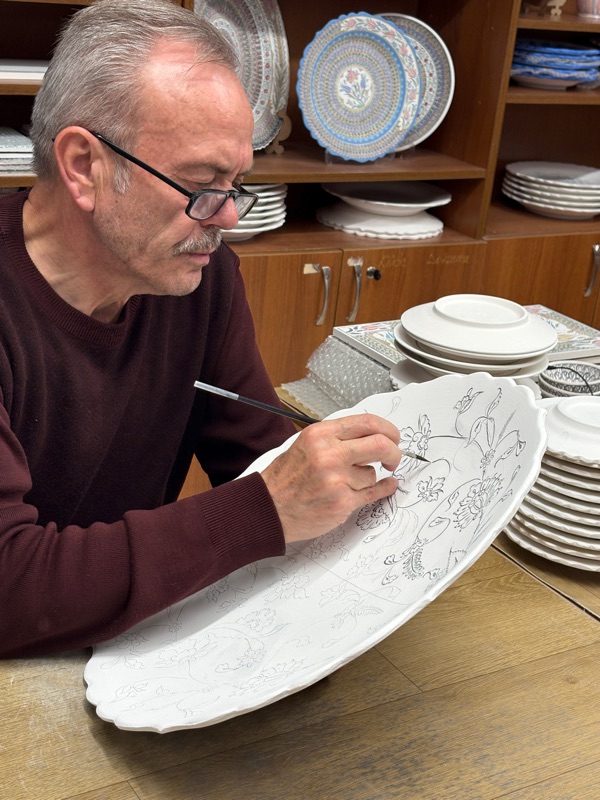
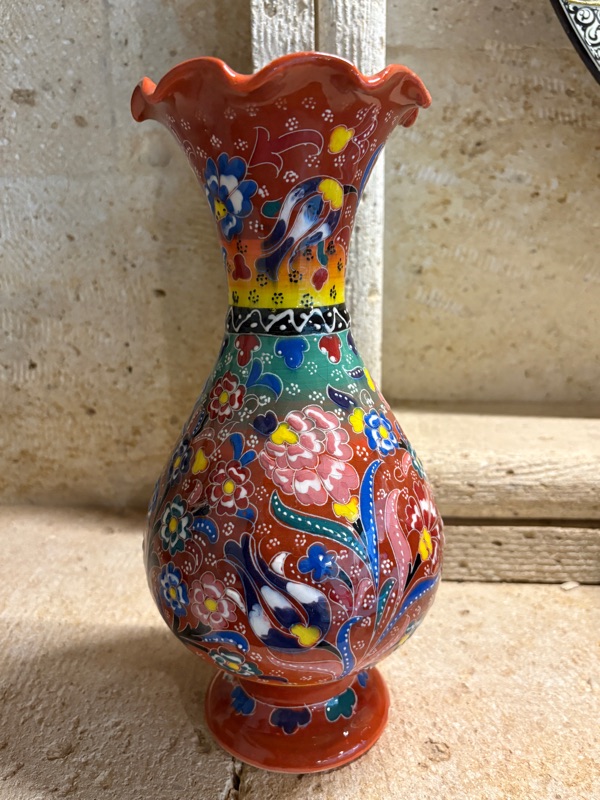
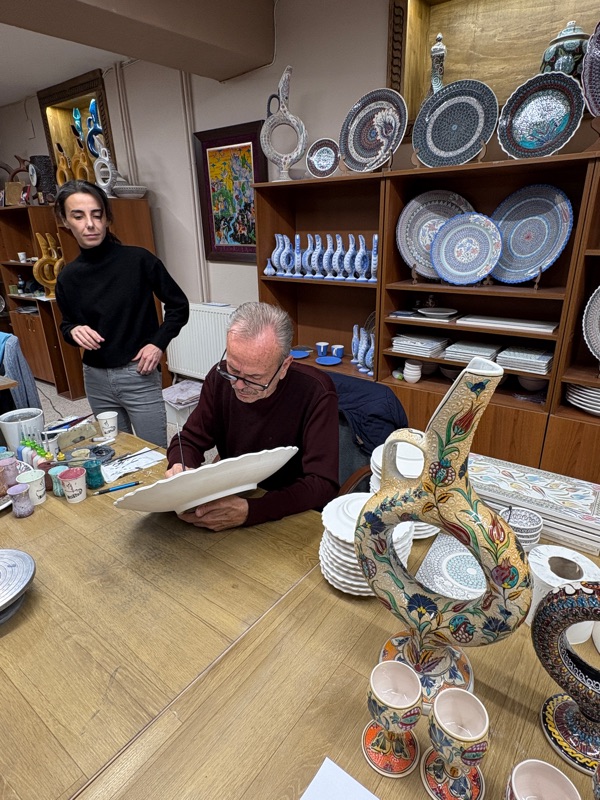
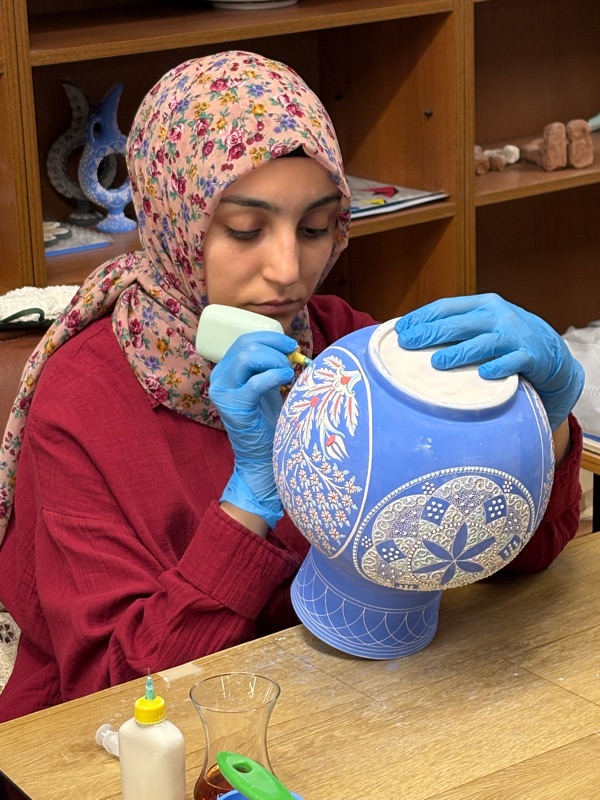
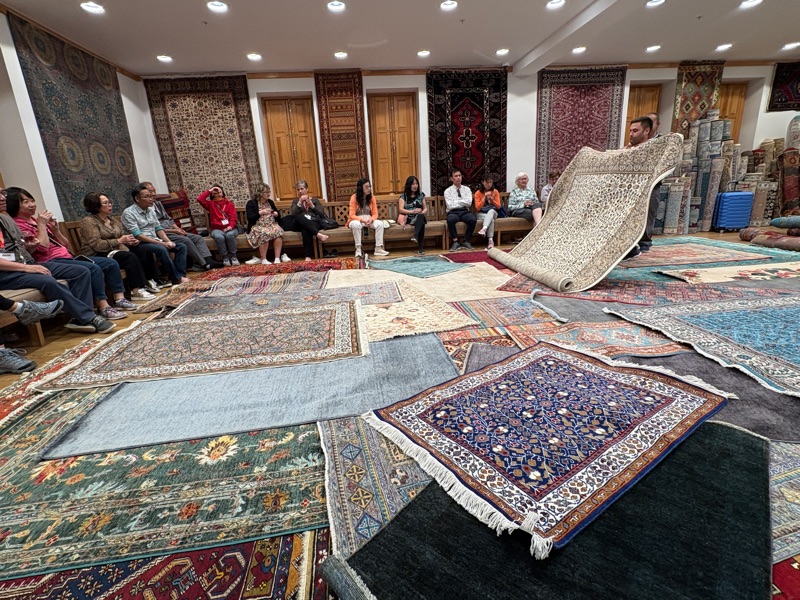
If you're traveling with a tour group in Turkey, chances are you'll be taken to a workshop or showroom where artisans produce beautiful handmade goods. Turkish rugs, ceramics and other traditional crafts can be gorgeous—and some of the finer pieces can be quite expensive.
If you do splurge on something special, it may very well become a family heirloom. Just make sure you're not training a puppy if you buy a rug—or keeping an expensive ceramic vase within reach of a toddler!
I have to admit that I have a weakness for handcrafted goods when I travel. The crafts in Turkey are wonderful, and you'll find beautiful pieces in shops throughout the country.
Find a little extra space in your luggage to bring something special home. I bought a few small ceramics and a small rug—nothing that cost a fortune—and I still enjoy looking at them. They're wonderful reminders of my trip.
REPUBLIC DAY IN ANKARA
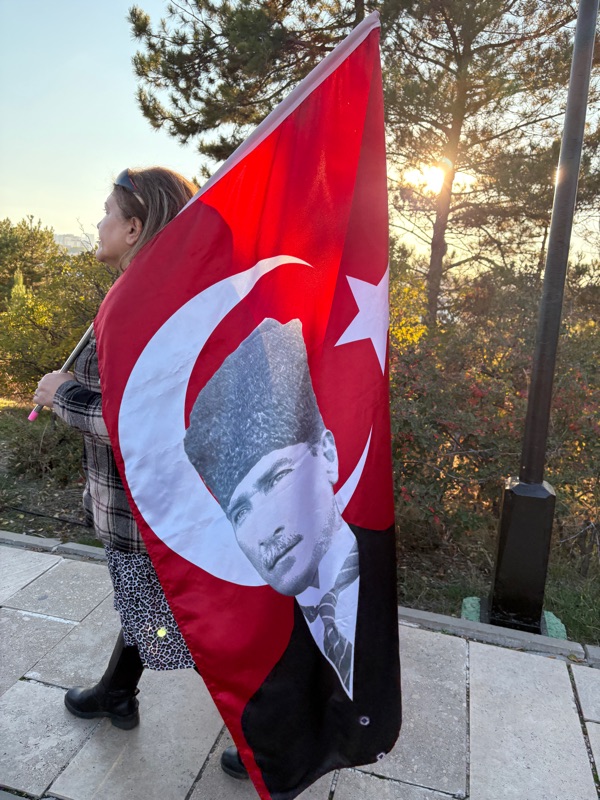
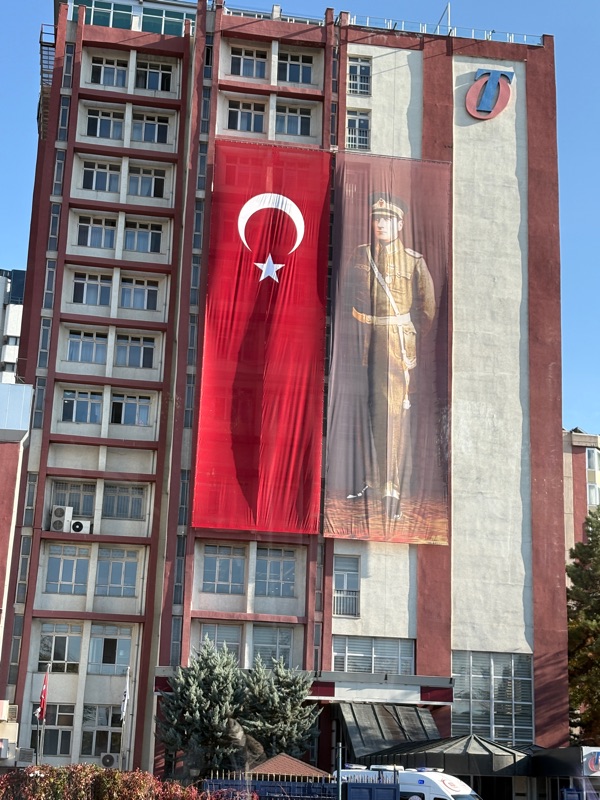
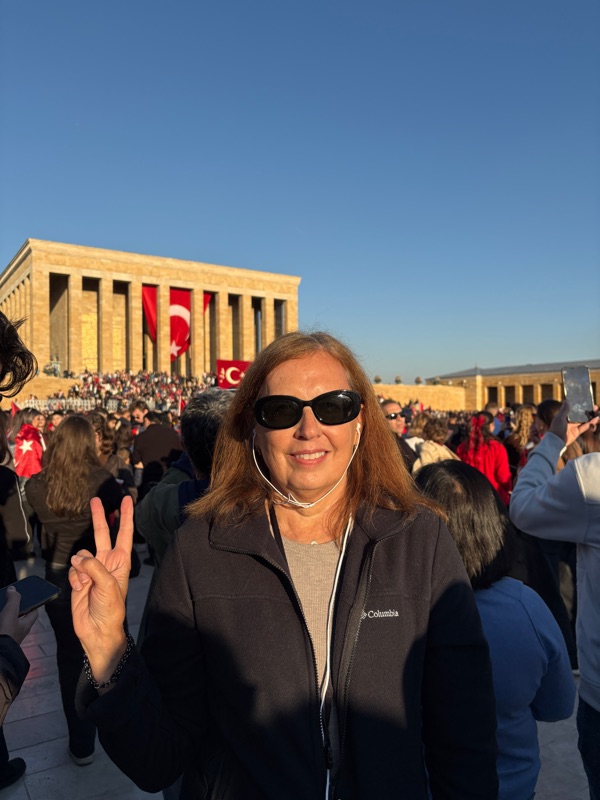
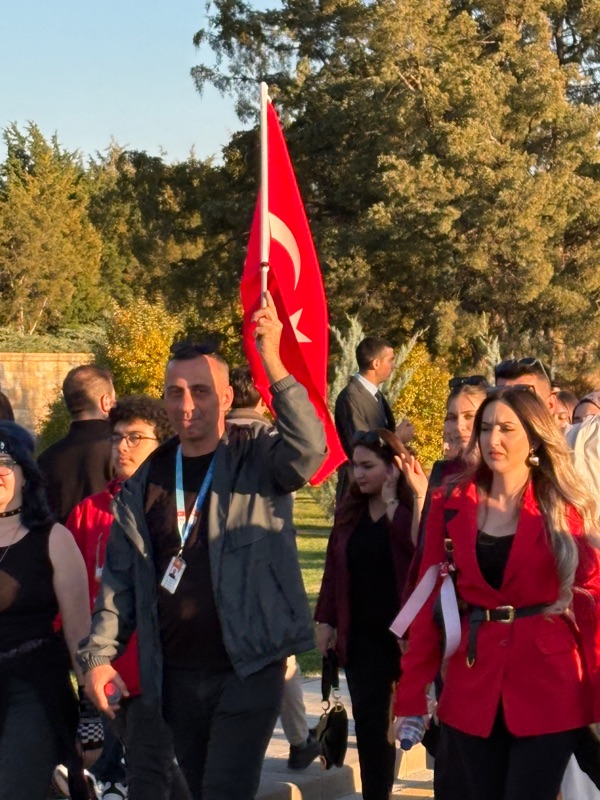
Republic Day is celebrated throughout Turkey on October 29, commemorating the proclamation of the Republic of Turkey in 1923. Mustafa Kemal Atatürk, the founder and first president of the republic, remains a central figure in the celebrations.
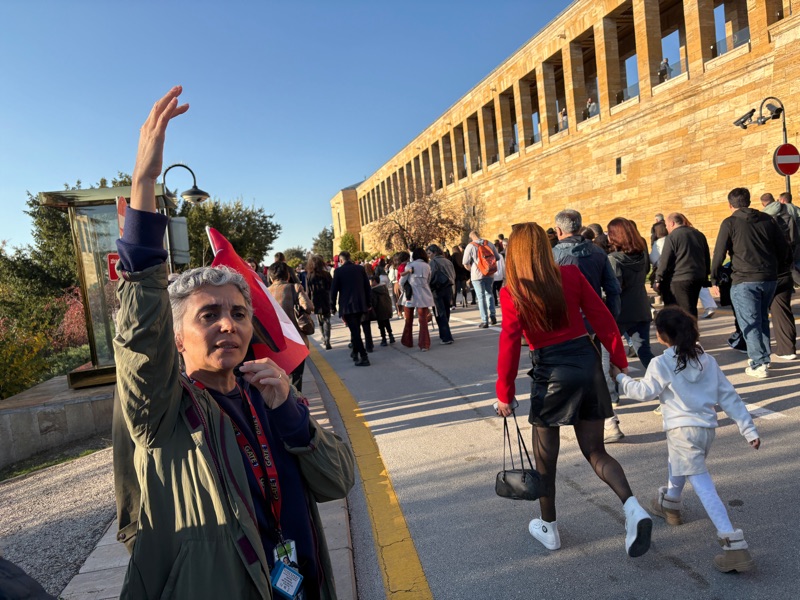
We happened to be in Ankara, Turkey's capital, during Republic Day, and the city was filled with people waving Turkish flags and celebrating. There was an incredible display of national pride, with images of Atatürk visible throughout the festivities.
Large crowds are not my thing. As the streets became more and more packed, I was already thinking about an exit strategy!
Thank you to Yazmen, our guide, for getting us through that massive crowd. I always kept my eye on her, and eventually we all made it safely back to the bus.
It was certainly a memorable way to experience one of Turkey's most important national holidays.
MUSEUM OF ANATOLIAN CIVILIZATION, ANKARA
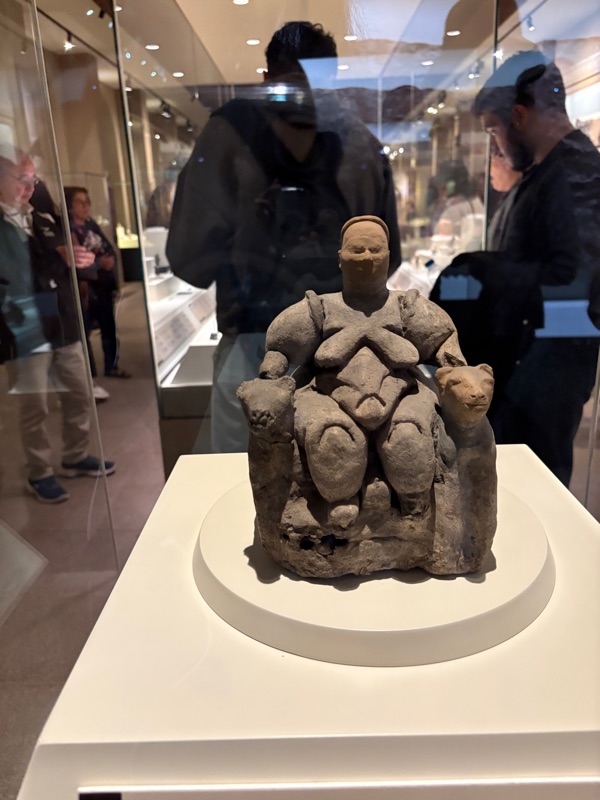
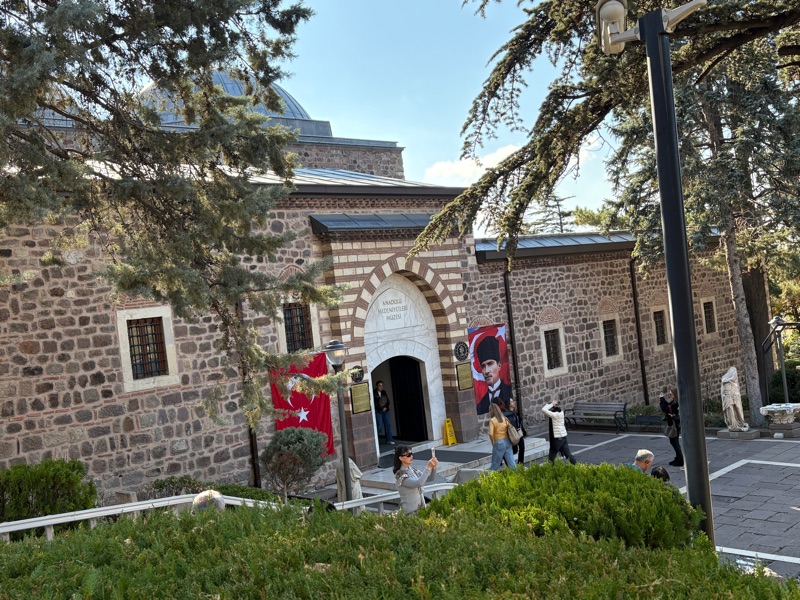
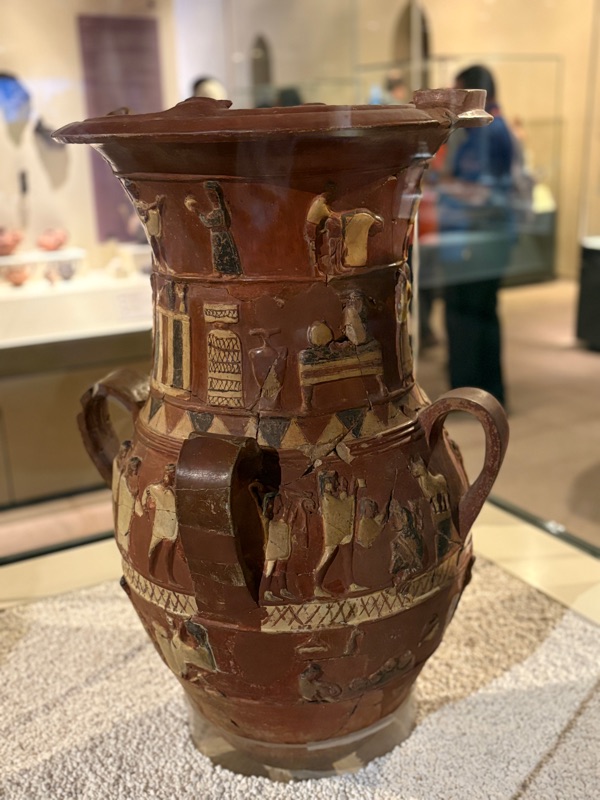
The Museum of Anatolian Civilizations in Ankara takes you through thousands of years of history in Anatolia, the region that makes up most of modern-day Turkey.
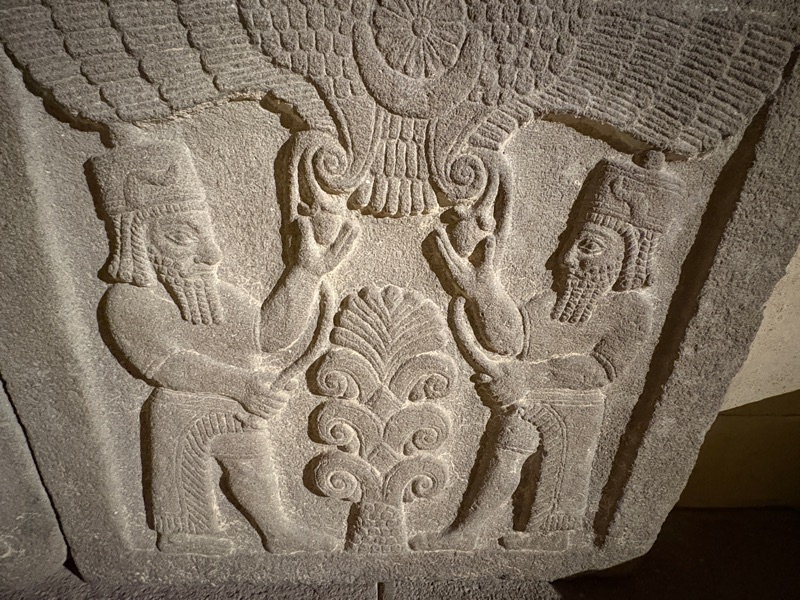
The museum contains an extraordinary collection of archaeological artifacts from many different civilizations and periods. I was particularly interested in the Hittite collection, which includes artifacts from a civilization that flourished in Anatolia thousands of years ago.
TOPKAPI PALACE
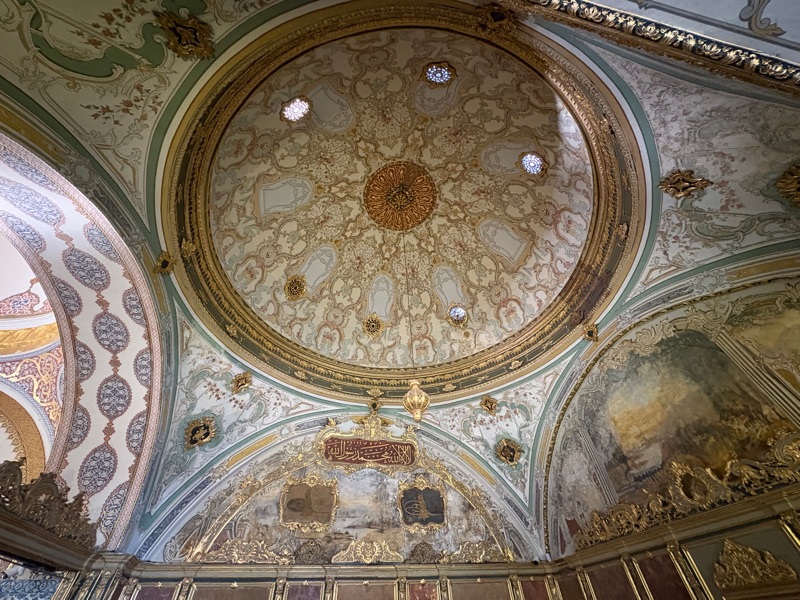
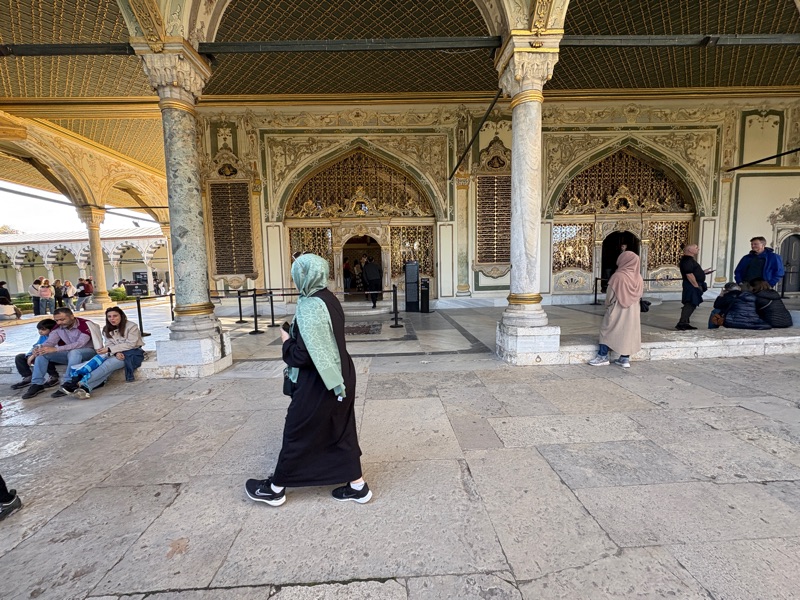
Topkapı Palace was built beginning in the 15th century following Sultan Mehmed II's conquest of Constantinople. For centuries, it served as the center of the Ottoman Empire and the residence of Ottoman sultans and their court.
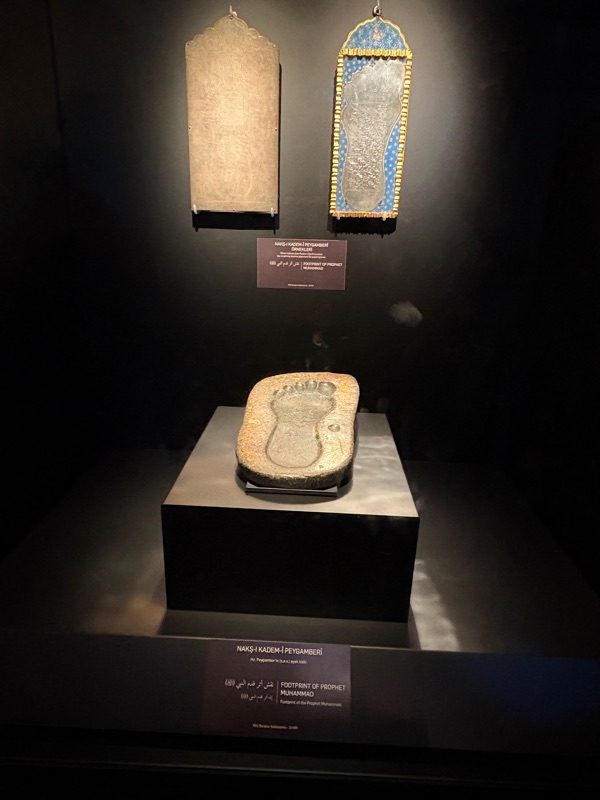
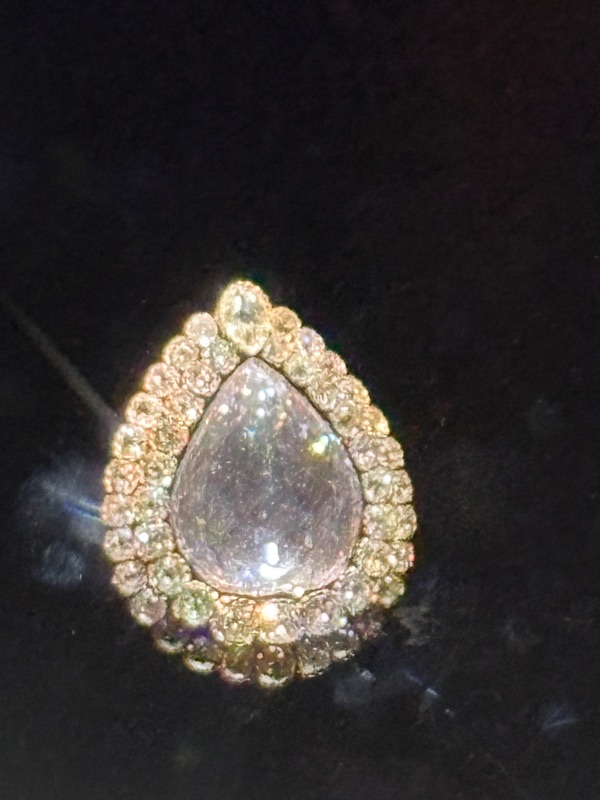
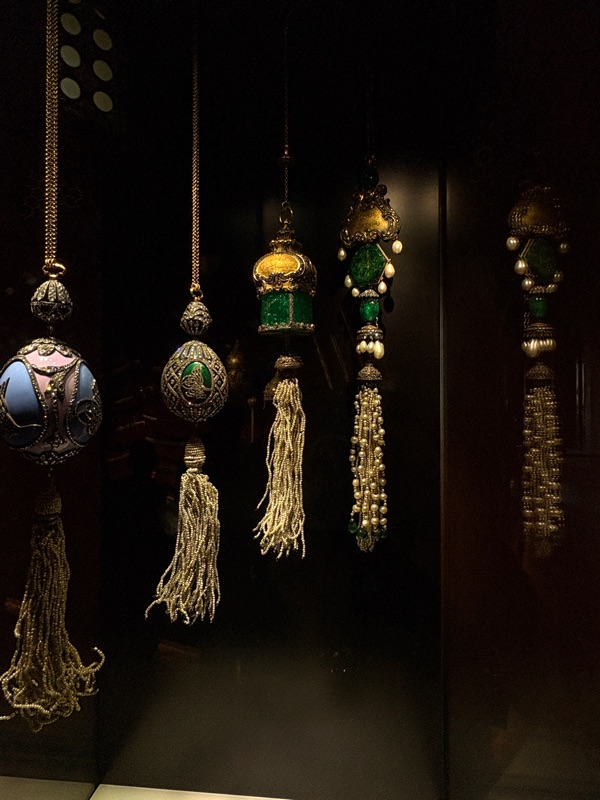
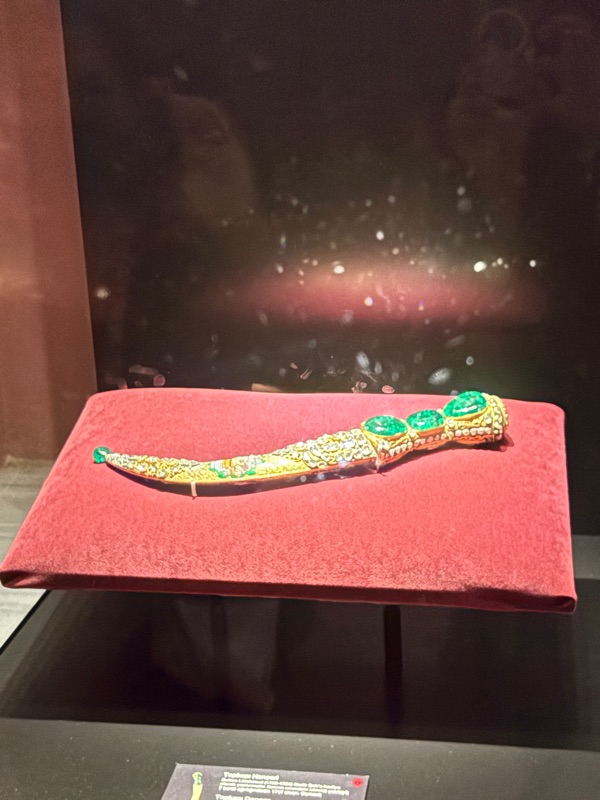
Today, the palace is filled with reminders of the wealth and power of the Ottoman Empire. Displays include spectacular jeweled weapons and other treasures, beautifully tiled rooms and important religious relics associated with Islamic history.
Among the sacred relics are objects traditionally associated with the Prophet Muhammad, including what is said to be his footprint.
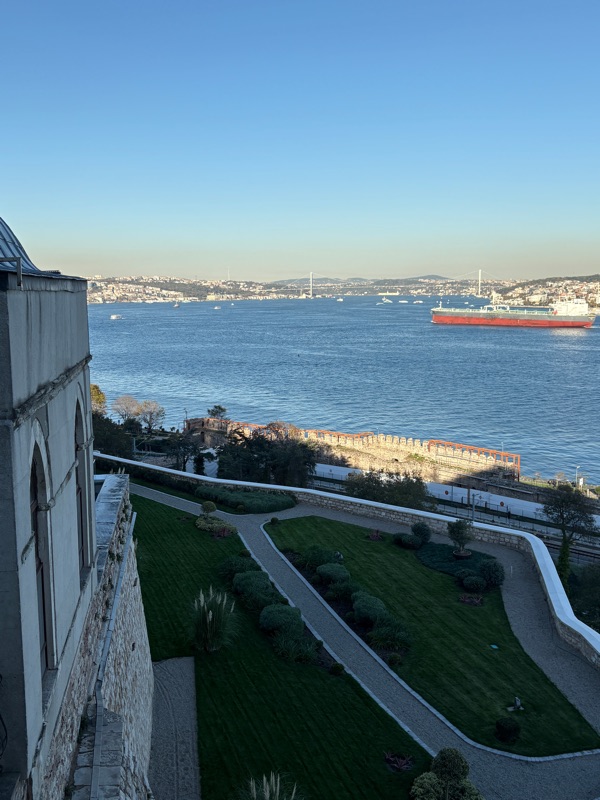
The palace itself is fascinating, but its location is equally impressive. From the palace grounds there are spectacular views over the Bosphorus, making this one of my favorite settings among Istanbul's historic sites.
My Take on Turkey
I found Turkey to be a fascinating and beautiful country. It blends East and West, modern life and ancient history, and has an extraordinary cultural heritage. Add its unusual natural wonders, delicious cuisine and beautiful handicrafts, and there is an incredible amount to experience.
What I loved most were the historical sites. From Ephesus and Troy to Cappadocia and Istanbul, I felt surrounded by thousands of years of history—and for someone who loves ancient ruins, it doesn't get much better than that.
I found the people friendly and welcoming, and there was always something new to see, taste or learn.
Turkey is a country I would definitely recommend adding to your travel bucket list.
Bay Laurel Turkish Towel with Travel Bag
Amazon Associate #commission earned