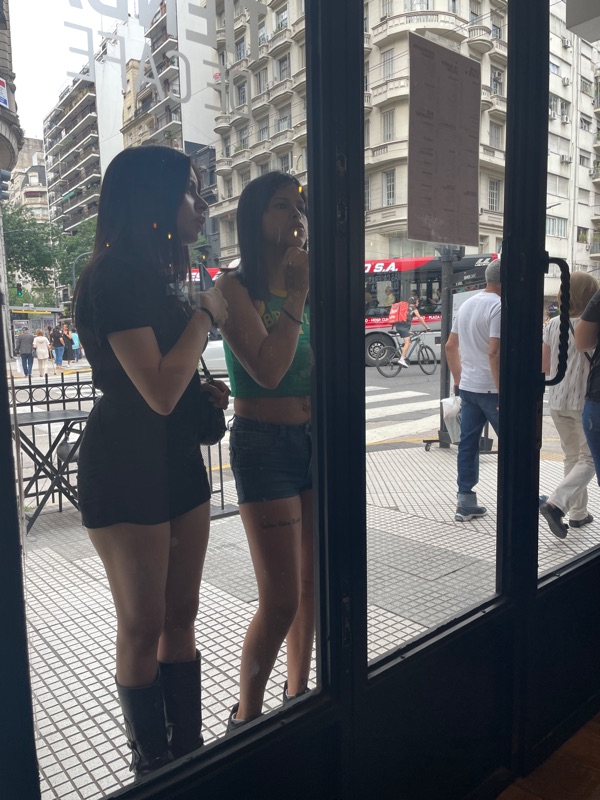
Arriving in Buenos Aires
Today was another travel day. We flew from the regional airport near Iguazu Falls to Buenos Aires in the afternoon and arrived at the Marriott by 6:00 p.m.
Meanwhile, a small crisis was unfolding back in Brooklyn. My neighbor informed me that the low-battery alarm on my smoke detector had been beeping for several days—and was driving him mad. Fortunately, the building superintendent changed the battery. Even when you travel thousands of miles from home, mundane household problems somehow manage to find you!
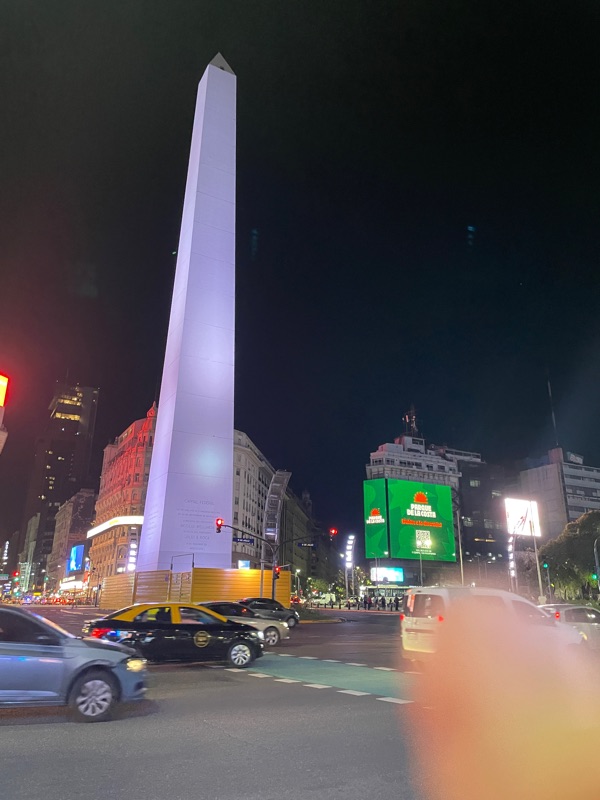
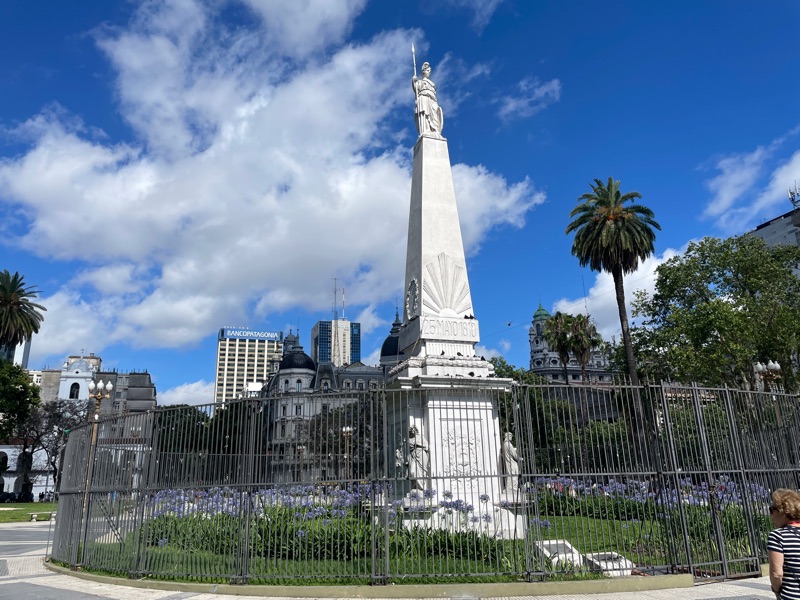
Our hotel was conveniently located near the Obelisk, one of Buenos Aires’ most recognizable landmarks. The monument is surrounded by the city’s lively theater district.
My first impression was that Buenos Aires felt more like the “New York of South America” than the “Paris of South America.” The busy avenues, bright lights, theaters, and late-night energy certainly reminded me of home. Still, I hoped that the city’s more elegant, European side would reveal itself soon.
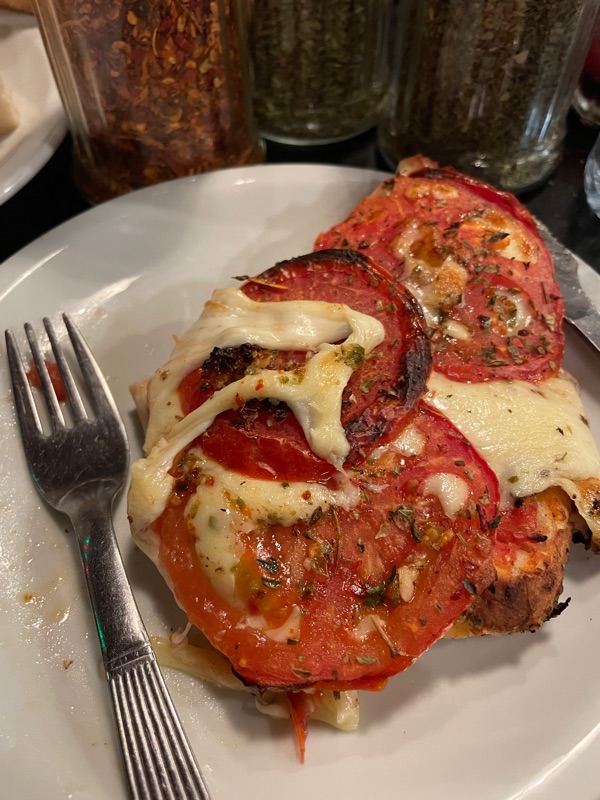
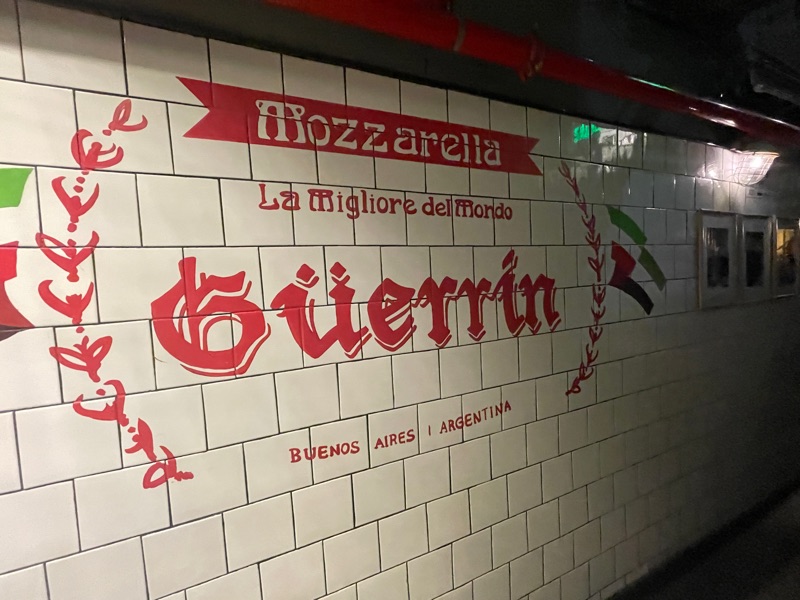
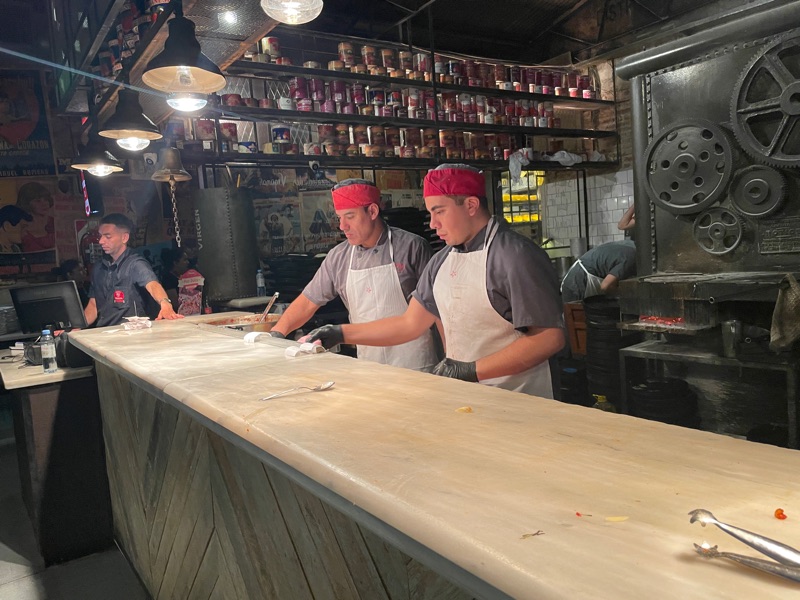
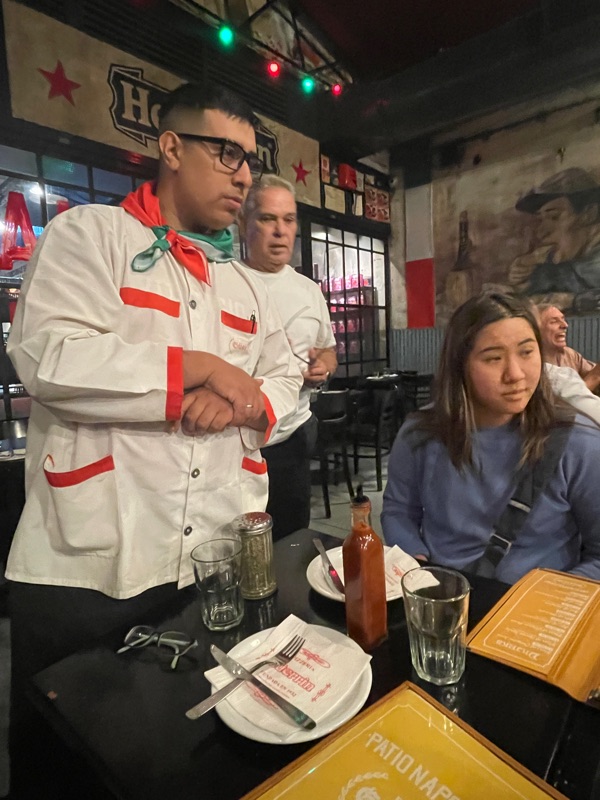
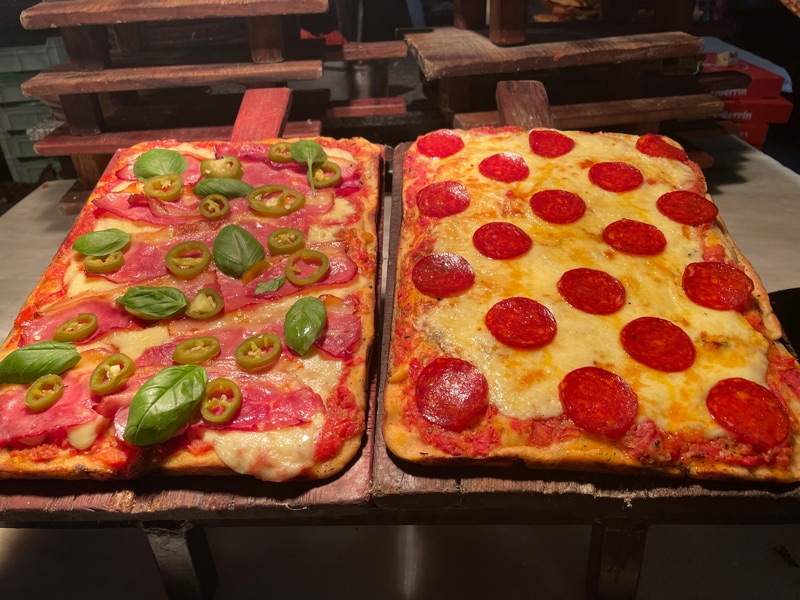
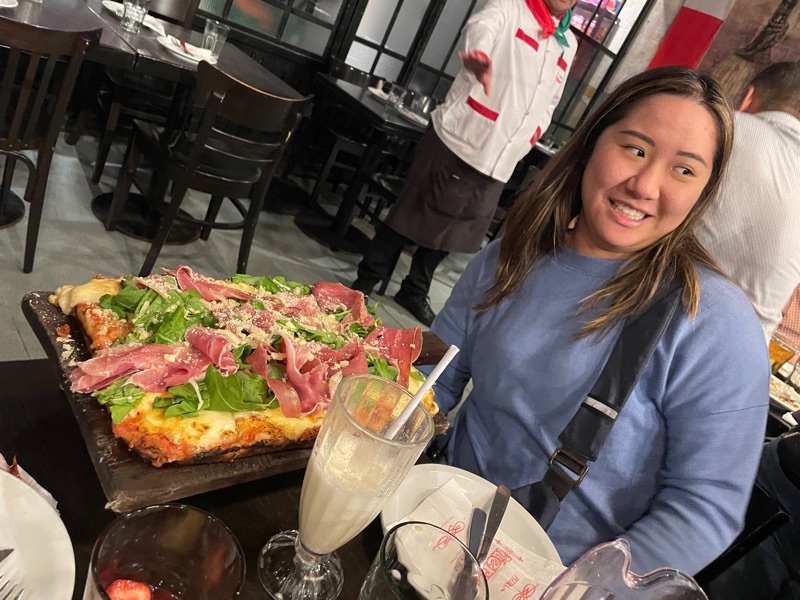
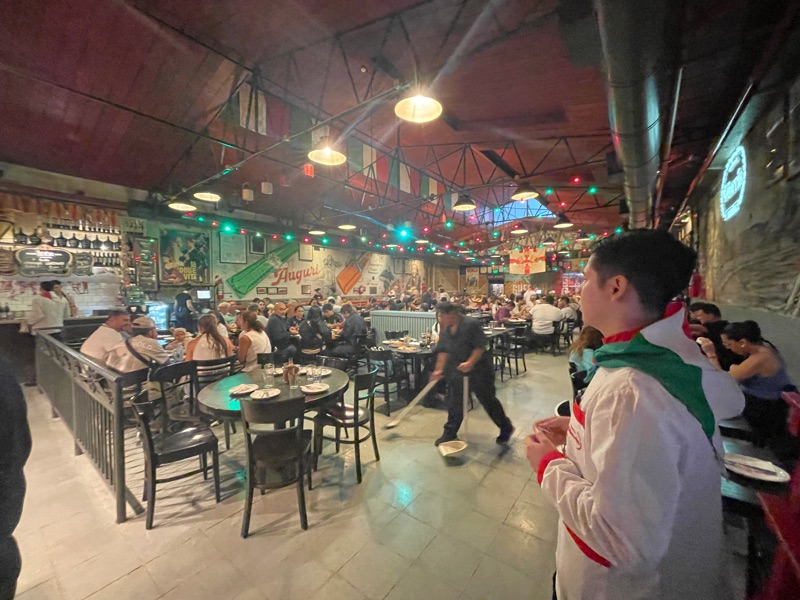
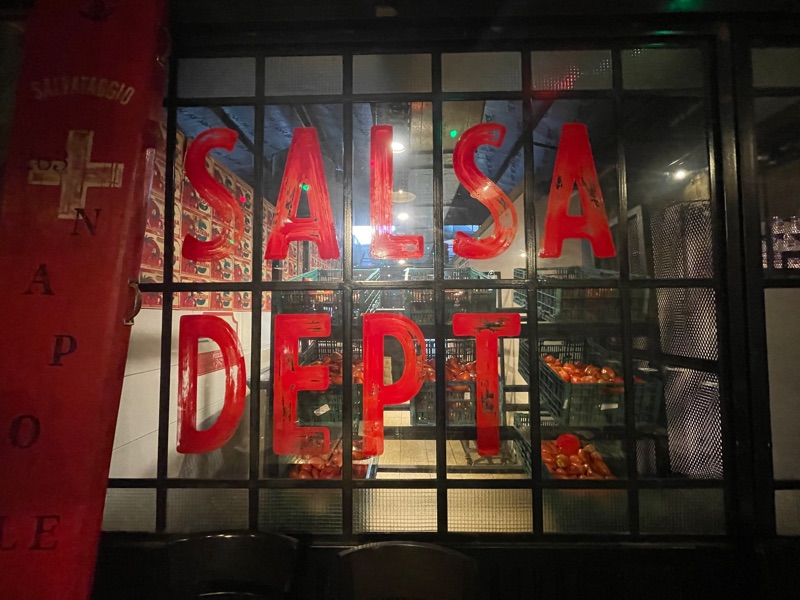
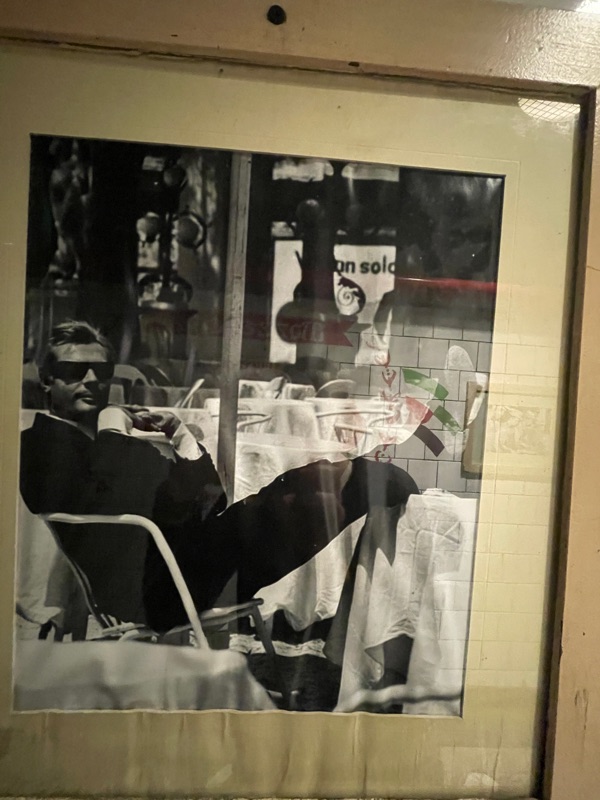
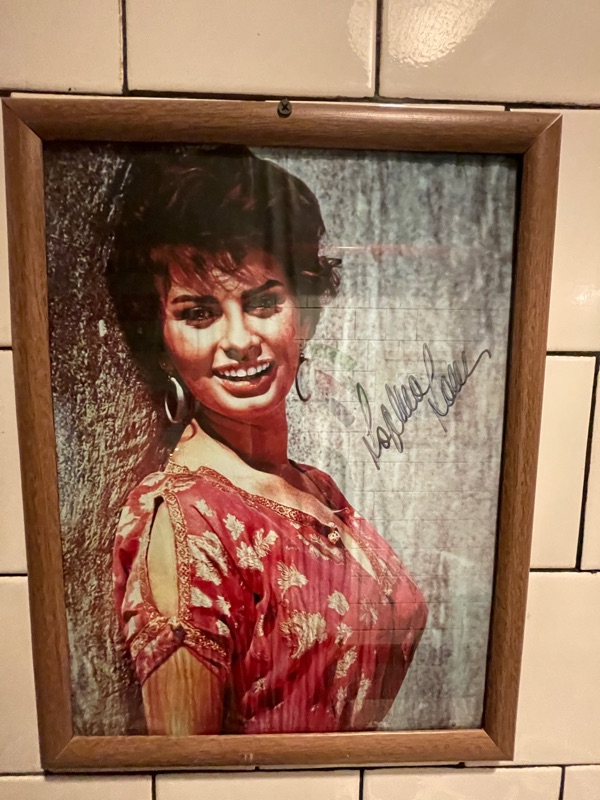
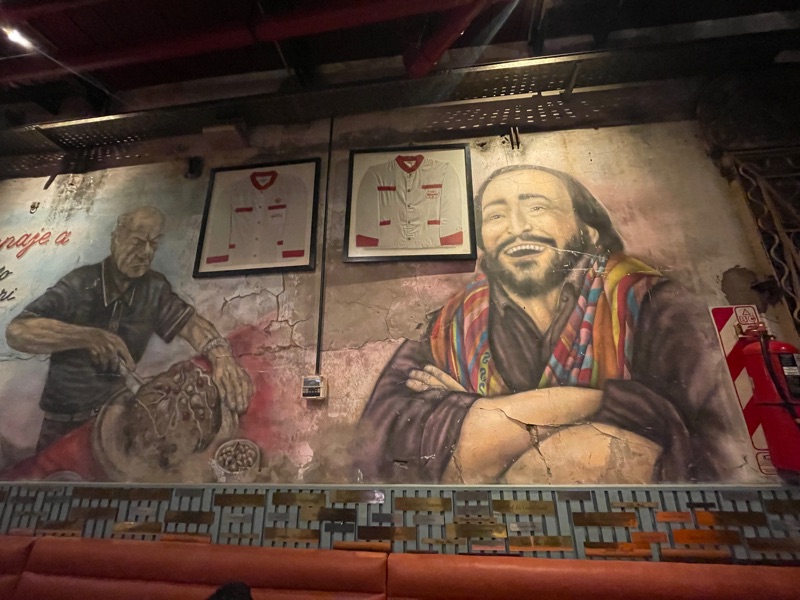
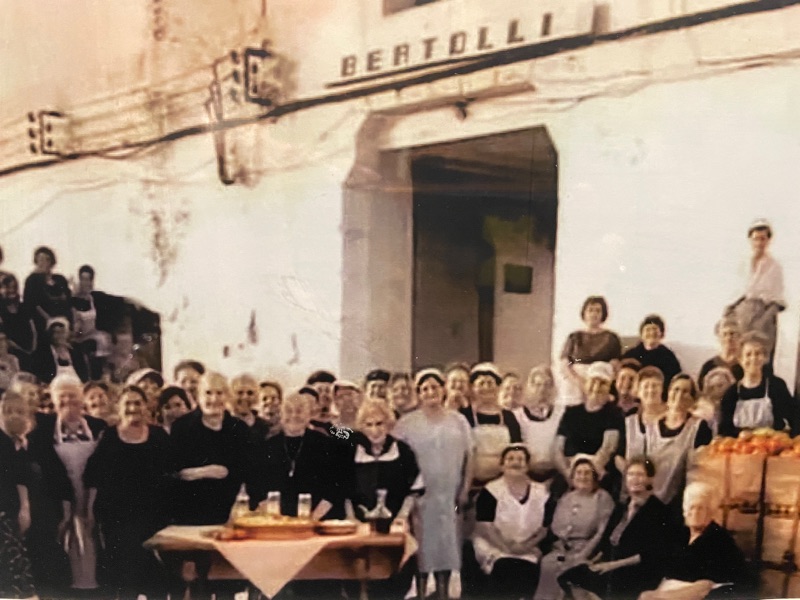
For dinner, we hurried to Güerrín, one of Buenos Aires’ most famous pizzerias. The restaurant was crowded and energetic, and the thick, Argentine pizza was very different from a typical New York slice. Everyone ate far too much, but the food and atmosphere were wonderful—a delicious beginning to our time in Buenos Aires.
Plaza de Mayo
The next morning, we visited Plaza de Mayo, the historic and political heart of Buenos Aires.
The square is home to the Metropolitan Cathedral, where Jorge Mario Bergoglio served as Archbishop of Buenos Aires before becoming Pope Francis.
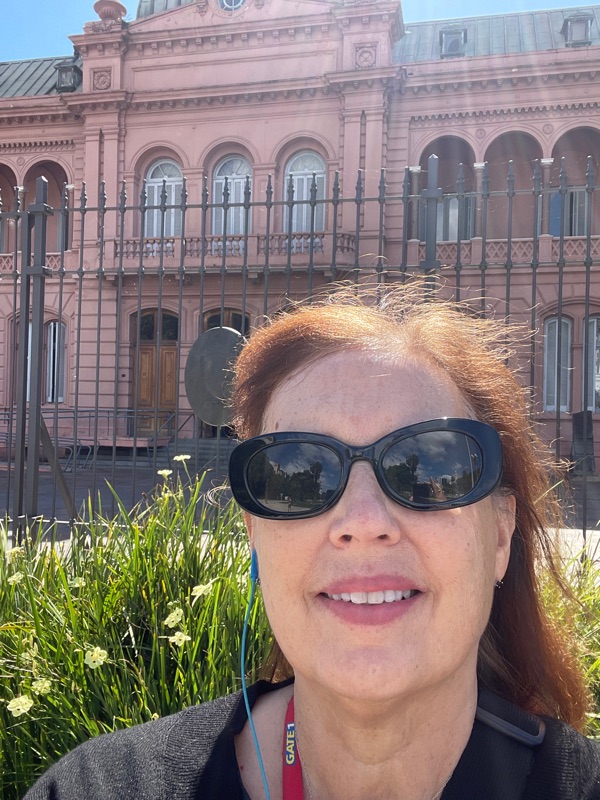
Nearby stands the Casa Rosada, or “Pink House,” Argentina’s presidential palace. From its famous balcony, Eva Perón—better known as Evita—addressed crowds of supporters.
Standing in the plaza felt like being surrounded by some of the most important moments in Argentina’s history.
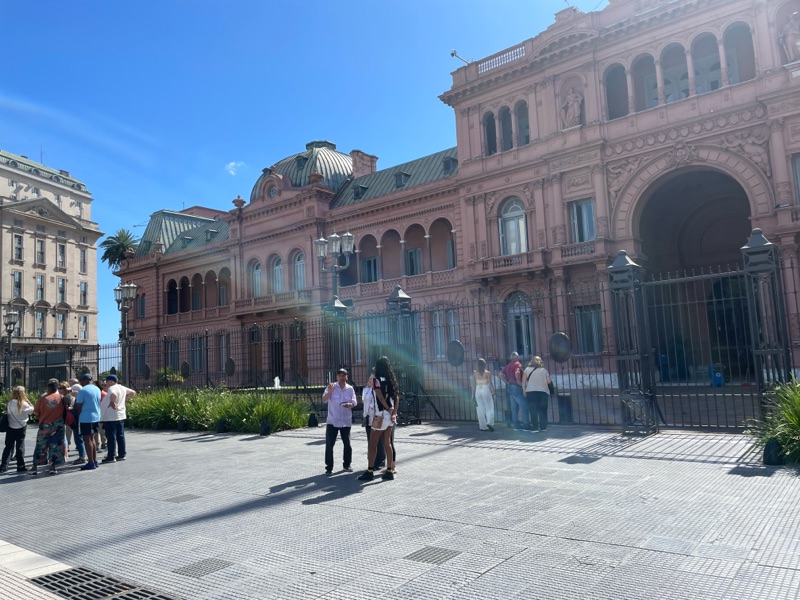
Argentina endured several military dictatorships during the 20th century, the most recent lasting from 1976 to 1983. During this time, known as the Dirty War, thousands of people were abducted, tortured, and killed. Human-rights organizations estimate that as many as 30,000 people disappeared.
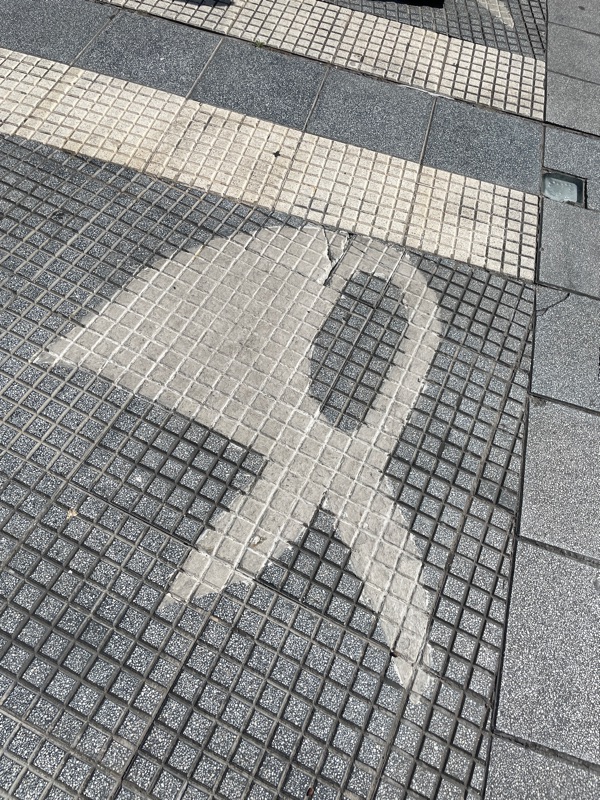
The Mothers of Plaza de Mayo began gathering in the square in 1977, demanding answers about their missing sons and daughters and courageously challenging the military regime. Their symbolic white headscarves are painted on the pavement around the plaza. The Mothers continued holding weekly marches and became an internationally recognized symbol of resistance and the fight for human rights.
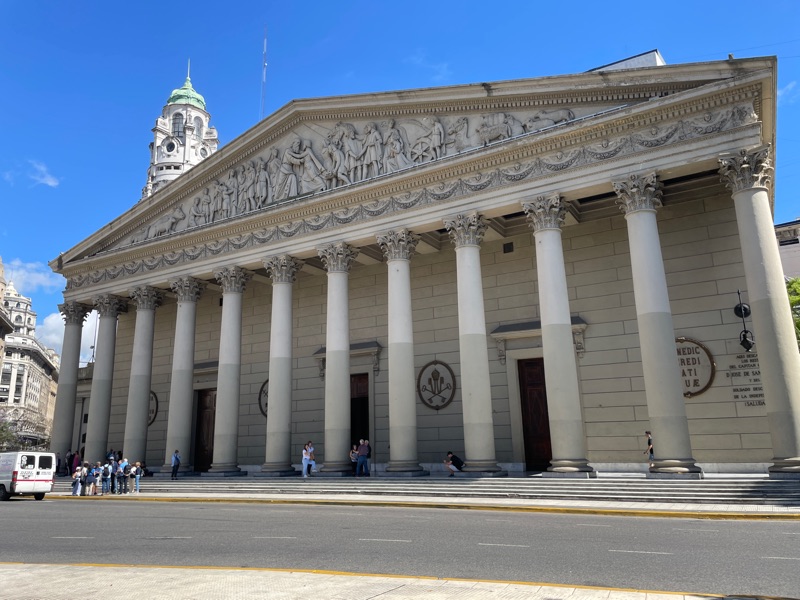 Pope Francis church, Metropolitan Cathedral
La Boca
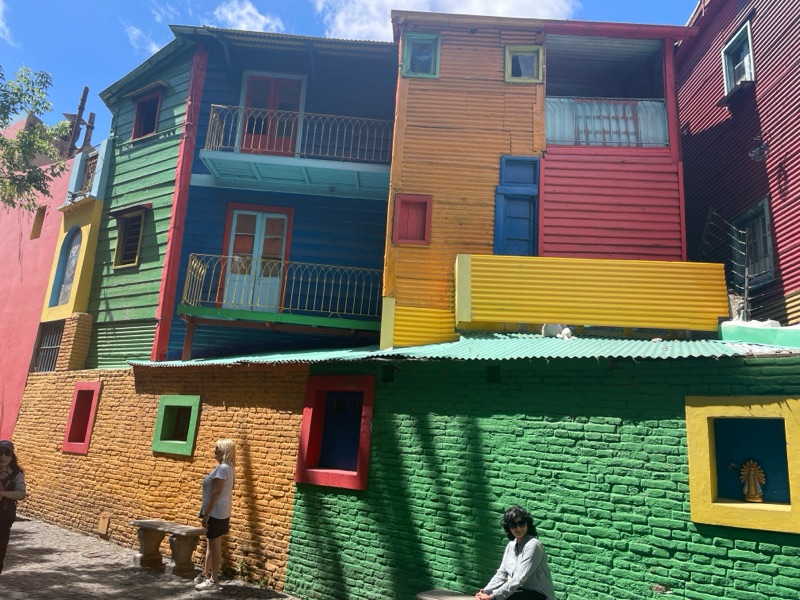
Next, we stopped in La Boca, Buenos Aires’ most colorful—and touristy—neighborhood. Its main attraction is El Caminito, a lively pedestrian street lined with brightly painted buildings, local artwork, souvenir shops, and outdoor tango performances. Its bold colors and atmosphere make it fun.

Recoleta Cemetery
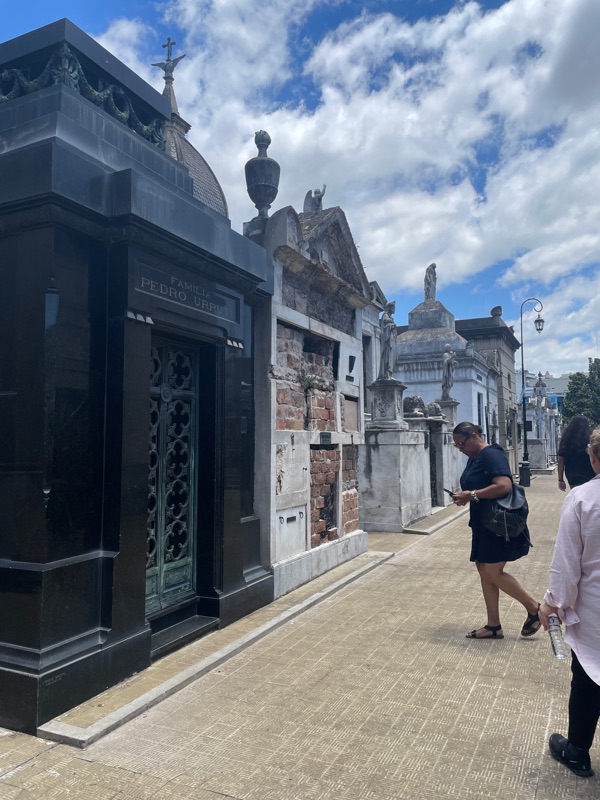
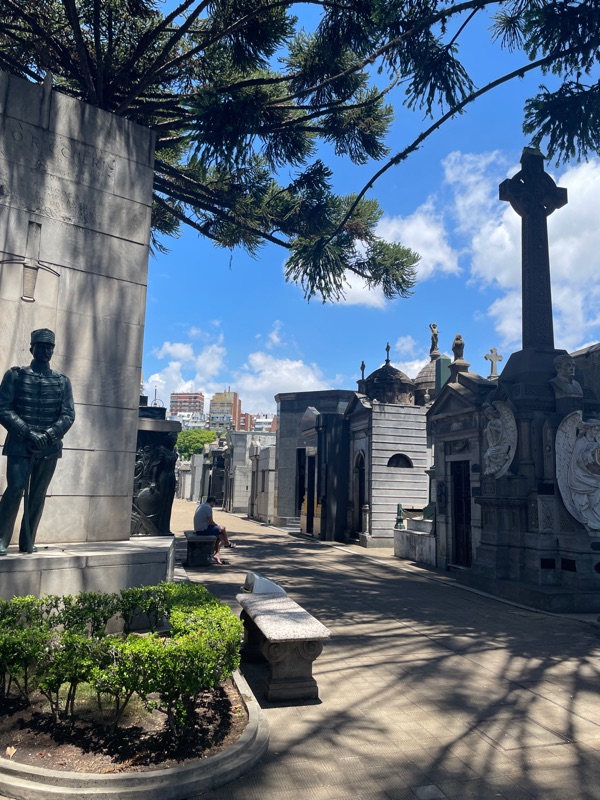
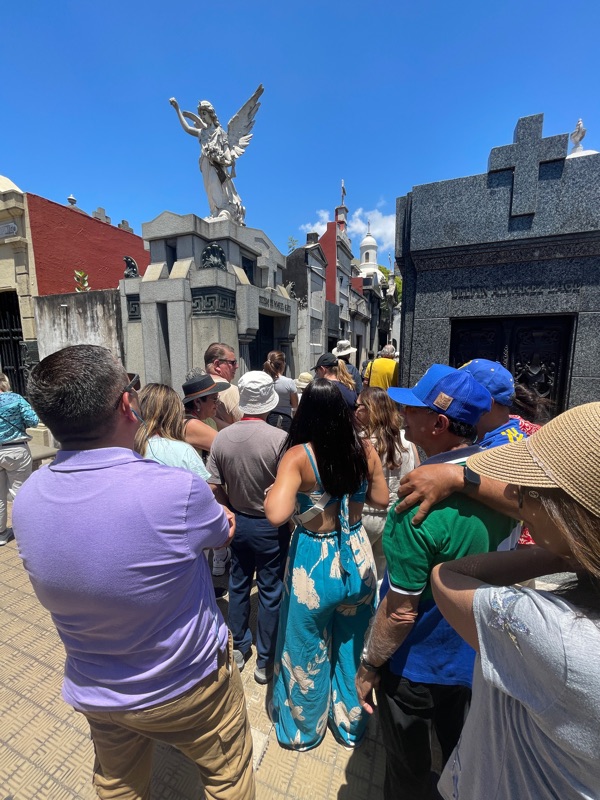
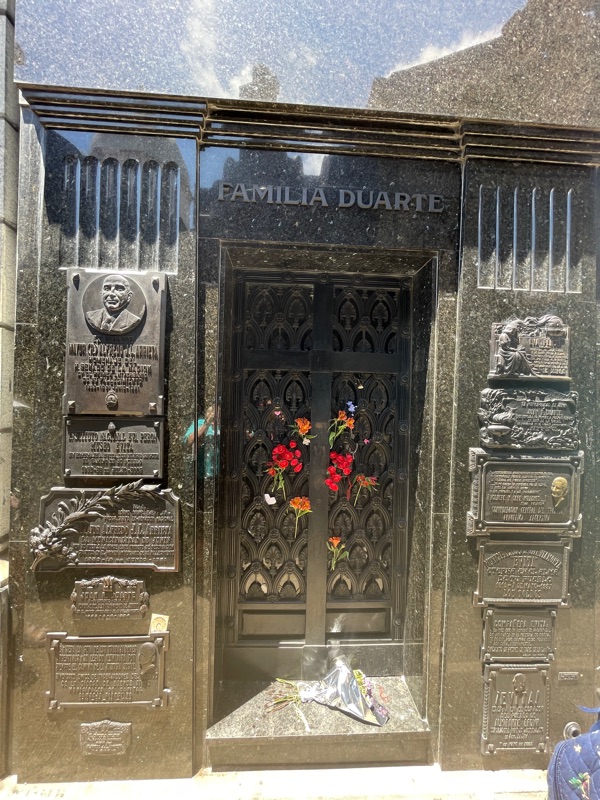
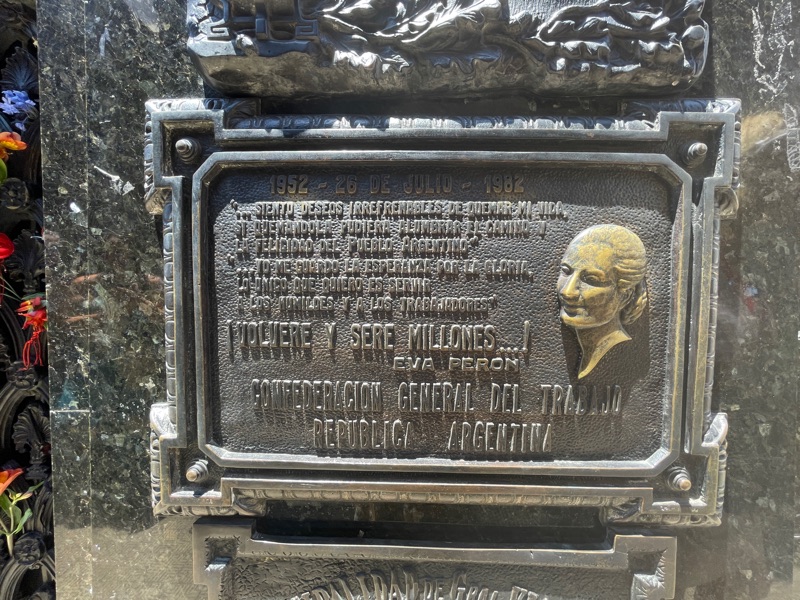
Then we headed to the famous Recoleta Cemetery, where Eva Perón rests in her family’s mausoleum. Her remains followed a long and extraordinary journey after her death in 1952. Following the military coup that overthrew her husband, President Juan Perón, in 1955, her embalmed body was secretly removed from Argentina and eventually buried in Italy under a false name.
In 1971, her remains were returned to Juan Perón, who was living in exile in Madrid. After his death, his third wife and successor as president, Isabel Perón, brought Evita’s body back to Argentina in 1974. In 1976, she was finally laid to rest in the Duarte family mausoleum at Recoleta Cemetery—nearly 24 years after her death.
 .
.
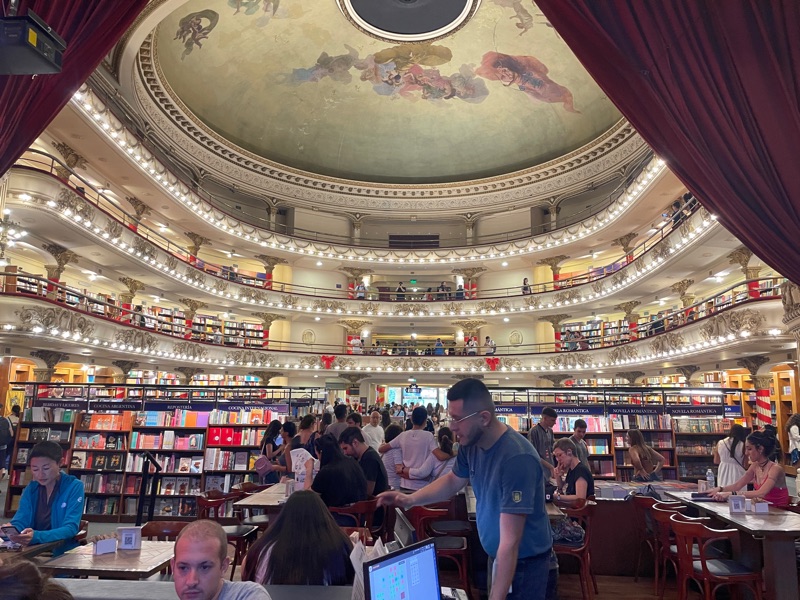
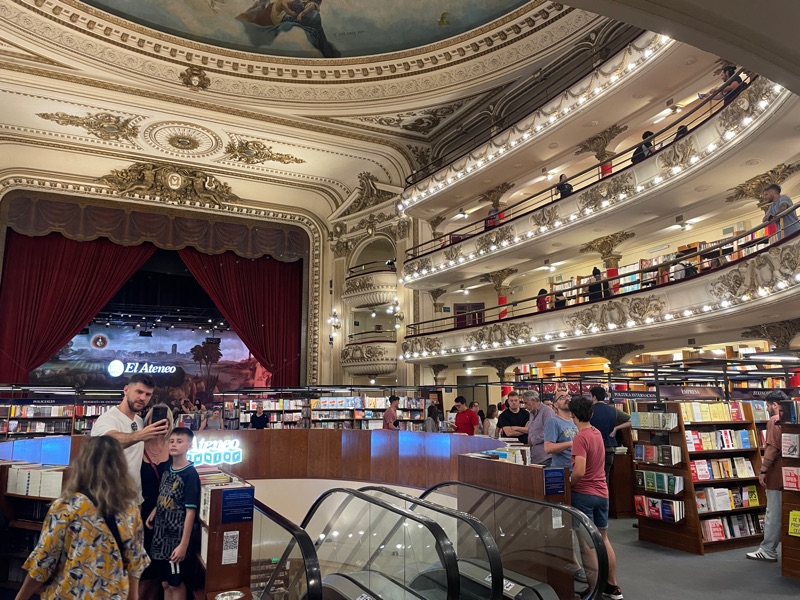
Afterward, I walked to El Ateneo Grand Splendid, a bookstore housed in a former theater. Frequently described as one of the most beautiful bookstores in the world, it retains many of the theater’s original details, including ceiling frescoes, elegant balconies, and crimson curtains. With more than 120,000 books and a cozy café on the former stage, it is the perfect place to settle in with a good book.
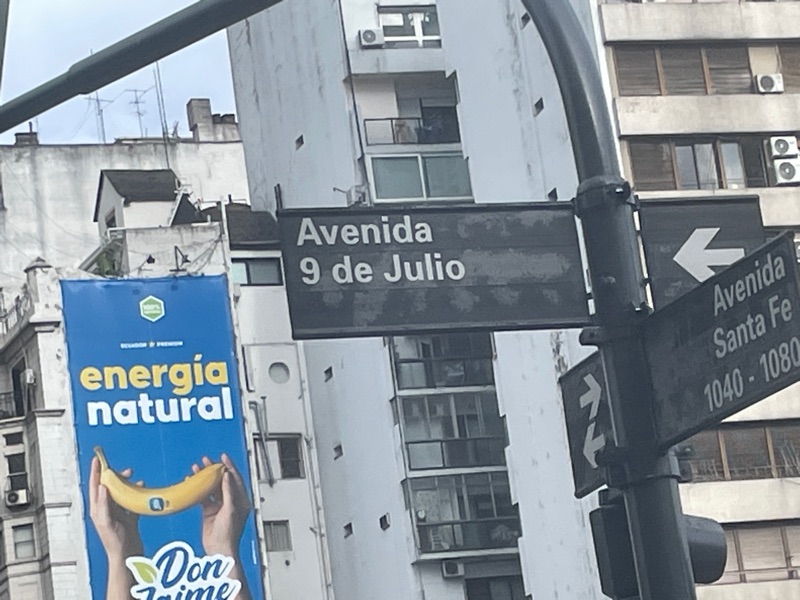
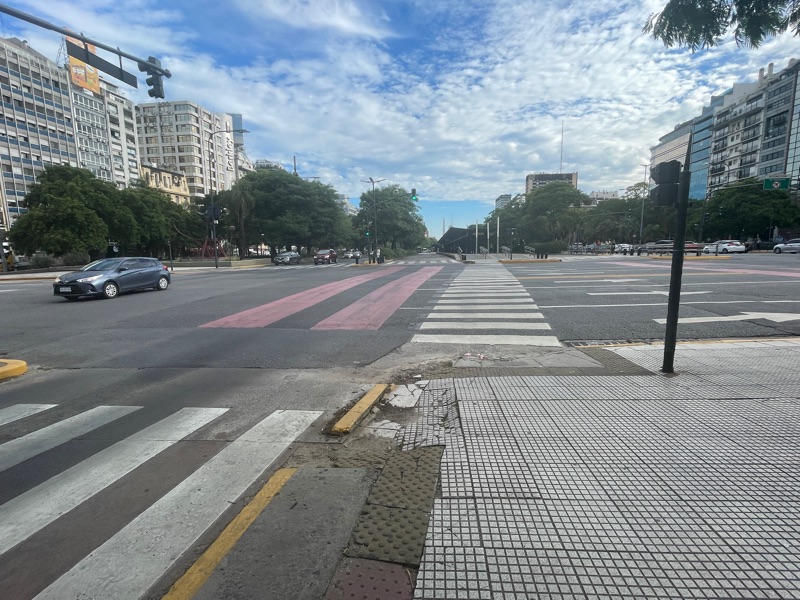
Returning to the hotel meant crossing Avenida 9 de Julio which has about 20 traffic lanes. It takes a while to get across the busy road. I rewarded myself with an Empanada at a local food stand when I reached the other side.😋
 .
. 
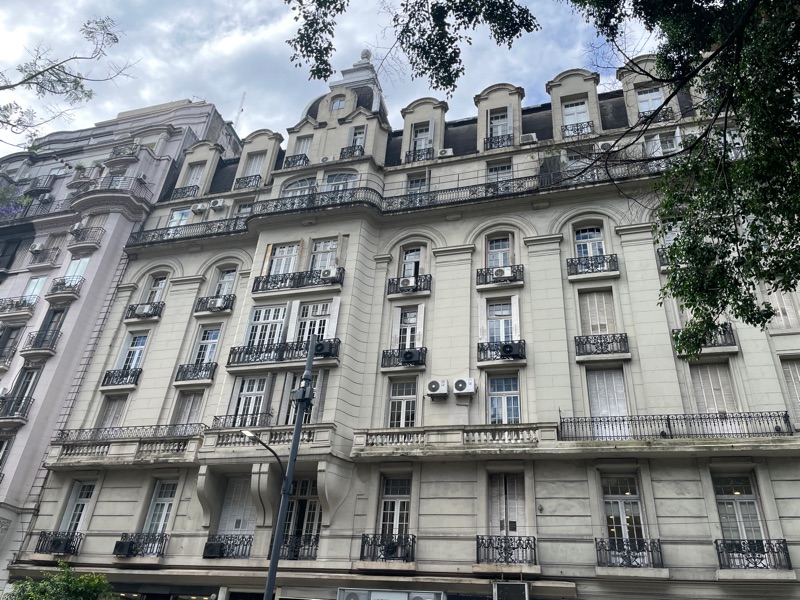
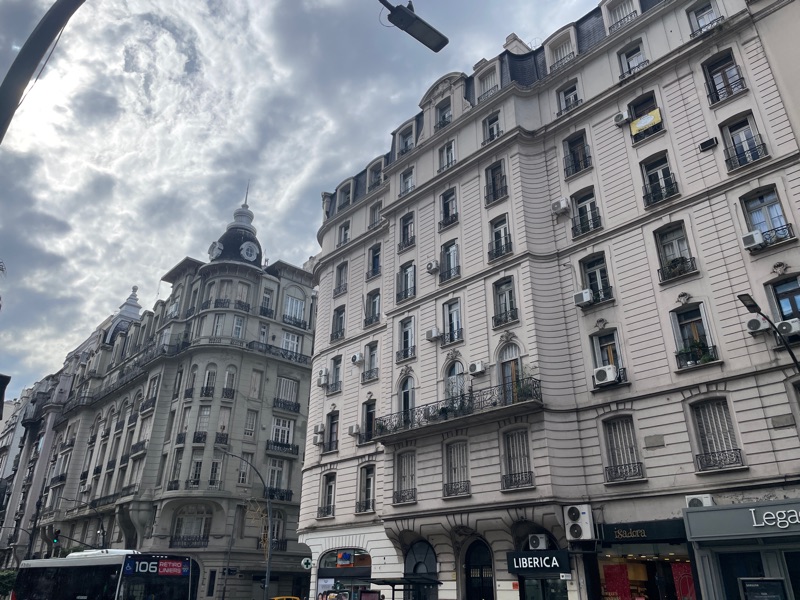
While walking through the elegant Recoleta neighborhood, I began to notice the strong Parisian influence in its architecture, with grand buildings, ornate façades, and tree-lined boulevards. After seeing more of the city, I now understand and agree with why Buenos Aires is called the “Paris of South America.” 😌
 .
. 
While Buenos Aires is a beautiful and sophisticated city, it also faces serious social challenges. Seeing people experiencing homelessness was troubling, particularly families with very young children living on the streets. It was a reminder that hardship exists alongside the city’s elegance and cultural richness.
Continue reading about the rest of my South America adventure:
Santiago Chile - Fascinating City Beneath the Andes
Valparaiso: A Colorful Day Trip from Santiago
Last Day in Santiago: Museum of Memory, La Chascona and Sky Costanera
Flying from New York to Brazil: What to Expect
Made It to Rio de Janeiro—Despite the Travel Hurdles
Rio De Janeiro Must-See Sights: Christ the Redeemer, Sugarloaf Mountain and More